8 SaaS pricing best practices with concrete examples
Eight practices with examples, from understanding the customer base to free plans generous enough to attract users and limited enough to prompt an upgrade.
Pricing pages that set the price in a conversation with sales: plans and what they include are public, the number is not. How each page earns the call, with packaging, proof and a clear next step, is the craft.
Of the 7, 3 show a free tier, 3 include a comparison table, 1 a calculator and 7 keep a contact-sales tier.
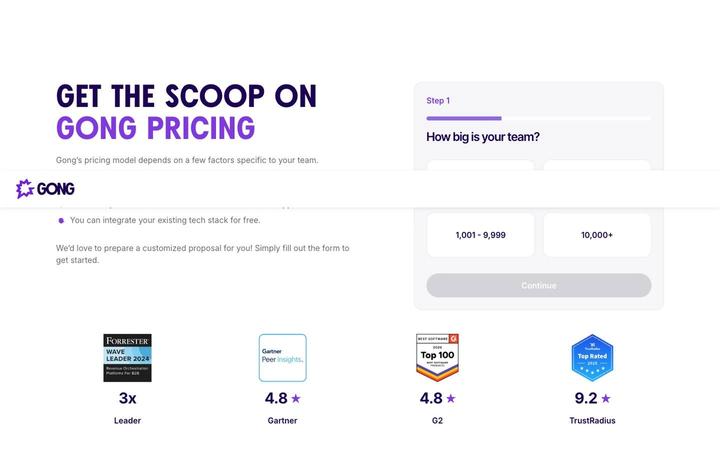
Gong prices through a customized proposal, and its pricing page is a short explainer beside a staged form. Three lines name the shape of the bill: licenses priced per user, a platform fee based on the number of users supported, and integrations with an existing tech stack at no charge. The form's first and defining question is team size, the variable that sets both charges.

Ironclad sells through a tailored quote and uses its pricing page to lay out the structure of the deal: pick your products, pick your deployment partner, then add extras such as API access, additional instances and an enhanced success plan. The hero names the price drivers outright, 'your products, users, workflows, and growth', and the rest of the page builds the value case with a Forrester study citing a 314% ROI and testimonials that quantify outcomes.
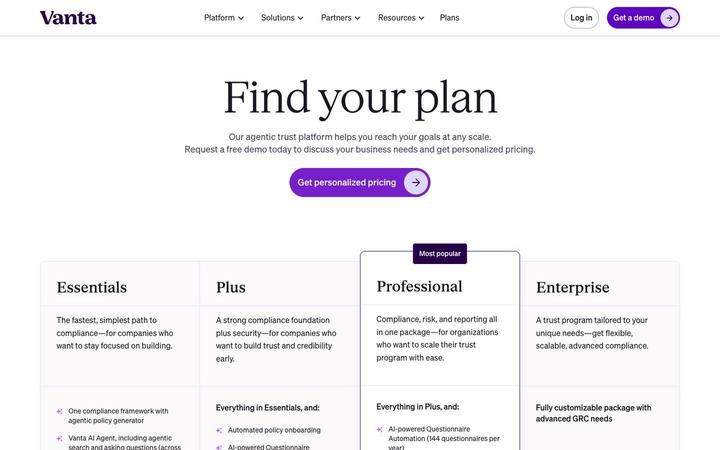
Vanta sells its trust platform as four packages, Essentials, Plus, Professional and Enterprise, each priced in a conversation that starts from 'Get personalized pricing'. Underneath the packages sits a set of modules, marked 'Add-on' in the comparison matrix, so a quote is a package plus the modules a company's trust program needs. Questionnaire Automation is metered as an annual allowance, 25 per year on Plus and 144 on Professional.
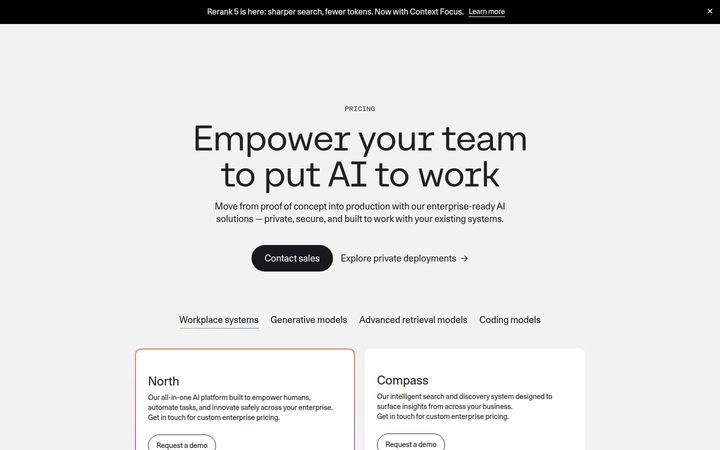
Cohere prices for the enterprise in three shapes: custom contracts for its North and Compass platforms, reserved capacity on Model Vault at $3.00 to $7.00 an hour or $2,000 to $4,300 a month per instance, and pay-as-you-go tokens behind a Production API key. A four-way toggle sorts the page by buying job, and the FAQ carries the billing mechanics, down to an invoice at month end or at $250 of outstanding balance.
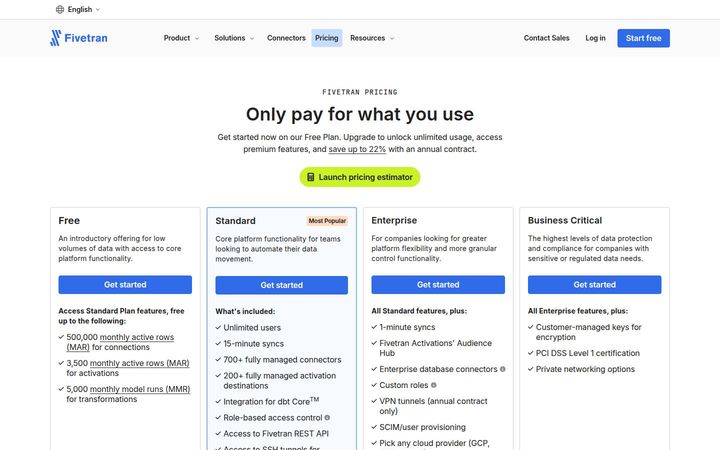
Fivetran meters three products, Connections, Transformations and Activations, on monthly active rows and monthly model runs, and sells them under one plan with consolidated usage-based pricing. The four plan cards separate capability, and the dollars arrive through a pricing estimator and a worked example that totals four named connectors to $511.15.
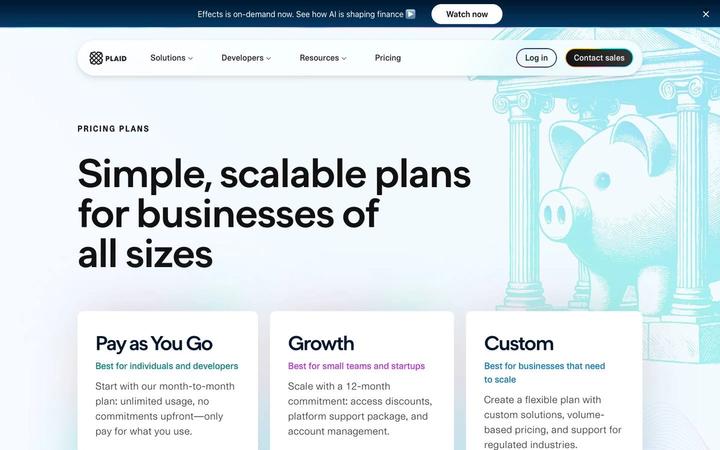
Plaid sells three plans defined by contract shape: Pay as You Go month to month, Growth on a 12-month commitment with 'Discounted product rates', and Custom with 'Volume discounts' and support for regulated industries. Rates are set per product and per customer, and the FAQ names the three billing models behind them: one-time per connected account, subscription per connected account, and per successful API call.
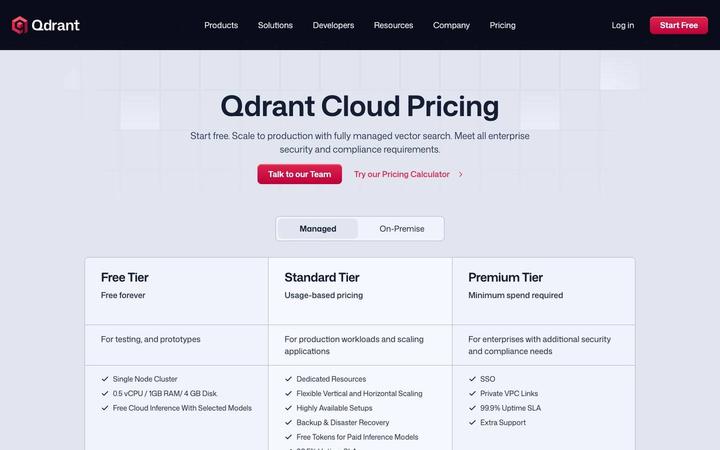
Qdrant Cloud bills on the resources a cluster consumes, metered hourly across compute, memory, storage, backups and paid inference tokens. The page sells the shape of the deal: a free tier stated as hardware, a usage-based Standard tier and a Premium tier with a minimum spend, with dollar figures handed to a dedicated pricing calculator.
Eight practices with examples, from understanding the customer base to free plans generous enough to attract users and limited enough to prompt an upgrade.
Orb's CEO on the main SaaS pricing models, from flat rate and per seat to usage-based and hybrid, how each structures the way customers pay, and how to choose among them.
Orb's CEO on enterprise pricing: how it differs from SMB pricing, the main enterprise models, and what to weigh when prices are set deal by deal.