8 SaaS pricing best practices with concrete examples
Eight practices with examples, from understanding the customer base to free plans generous enough to attract users and limited enough to prompt an upgrade.
Pricing pages that charge by the person: a price per user or seat, usually stepping up through plans that add features. The model buyers know best, and the one most hybrid and credit models start from.
Of the 64, 46 show a free tier, 48 include a comparison table, 11 a calculator and 52 keep a contact-sales tier.
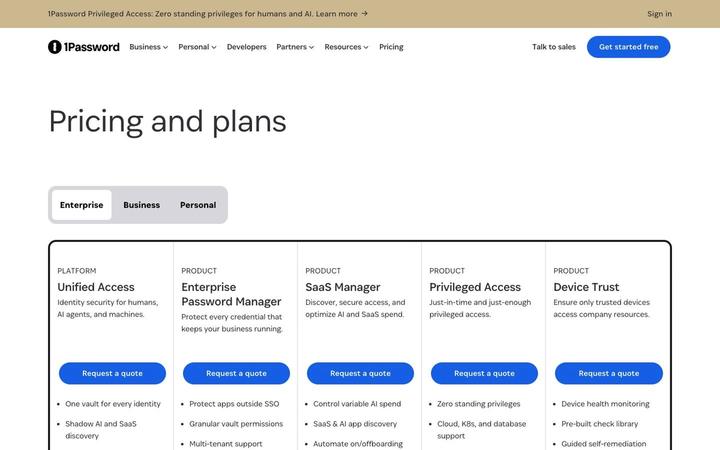
1Password's pricing page opens on its Enterprise tab, where a platform and four products sit side by side and each ends in 'Request a quote'. The packaging is the story: Unified Access is labeled PLATFORM, its four components are labeled PRODUCT, and the FAQ confirms a buyer can take the whole platform or any part of it. Business and Personal tabs carry the self-serve plans on the same URL.
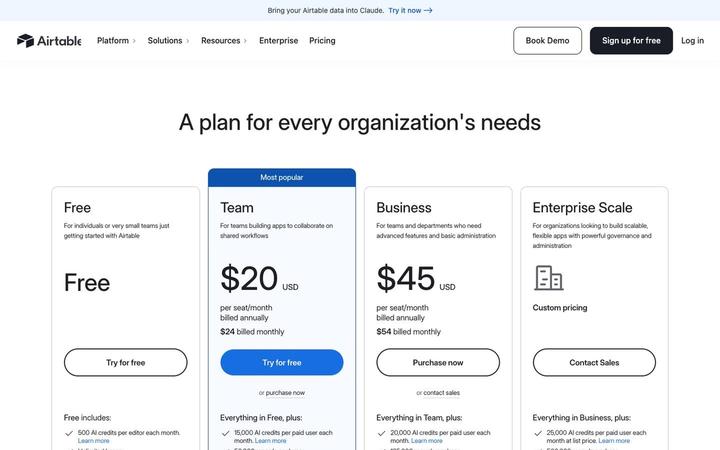
Airtable prices four plans per seat, Free, Team at $20, Business at $45 and Enterprise Scale on custom pricing, and attaches a monthly pool of AI credits to every seat. Credits are the first bullet on each card and step from 500 per editor on Free to 25,000 per paid user, with top-up packs priced in the table. Annual and monthly prices print together on each card, so the commitment discount is visible at a glance.
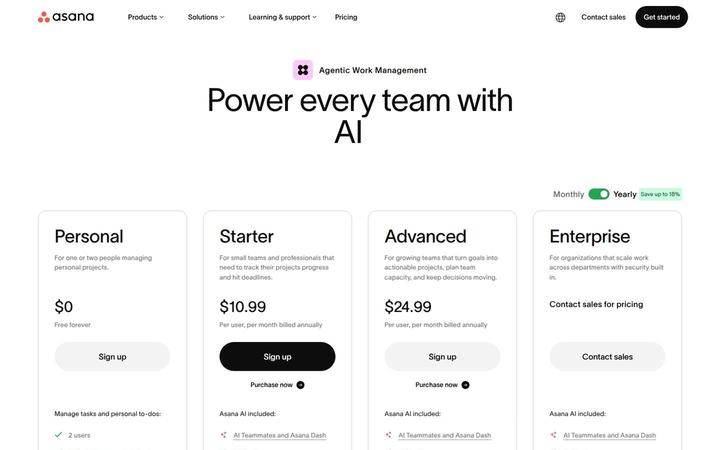
Asana pairs a per-user ladder, Personal at $0, Starter at $10.99, Advanced at $24.99 and Enterprise through sales, with a metered AI layer priced in the open. Each paid plan includes a pool of AI requests, and more cost $0.50 each in prepaid usage packs or $0.60 each pay as you go, under the banner 'One flat rate for every AI request'. Seats price the work management product, requests price the work AI Teammates and Asana Dash do, and optional modules such as Timesheets and Budgets extend down to Starter.

Calendly sells four plans, Free, Standard at $10/seat/mo, Teams at $16/seat/mo and Enterprise from $15k a year with a 50-seat floor, and it defines a seat on every paid card: hosts need one, invitees do not. The page leads with its AI add-on, Notetaker and Callie, sold as a switch inside the Standard and Teams cards, which shows a scheduling tool growing into a seat price plus an AI layer.
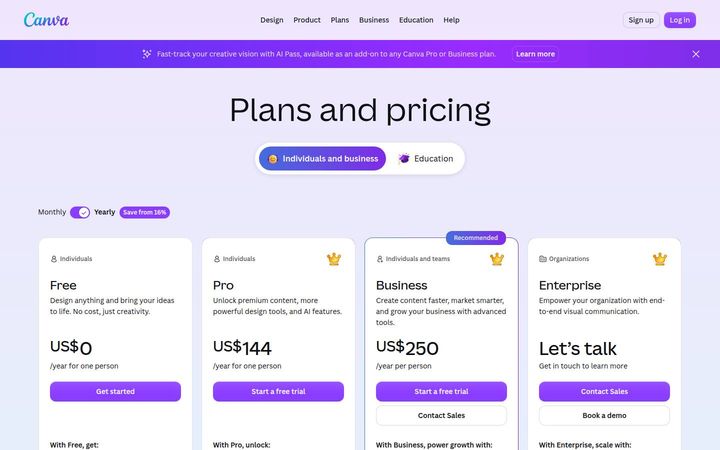
Canva sells a seat ladder, Free, Pro at US$144 a year for one person, Business at US$250 a year per person and Enterprise on 'Let’s talk', and inside every seat sits a shared AI allowance. Allowances are stated as multiples, 10x and 20x more AI than Canva Free, and a footnote explains that Standard, Premium and Ultra AI tools draw on the pool at different rates, a credit system running behind a seat price.

ClickUp prices on seats with AI built into every plan: Free Forever at $0, Core at $9 and Business at $17 per 'user / mo · billed yearly' against struck regular prices, Enterprise at 'Custom', and a MAX plan at $100. Each tier carries its own pooled credit allowance, with top-ups at '$10 per 10K credits', framed by a '100% Money-back Guarantee', a written 'SUPER FAIR BILLING POLICY' and a savings calculator that ends in 'Get a quote'.

Close sells four per-user plans, Solo at $9 through Scale at $139 per user per month on annual billing, and attaches a pool of AI credits to every seat, from 500 to 2,000 a month. Its AI sales agent, Chloe, is included on every plan and paid for by the work she does, while calling and SMS pass through at cost.
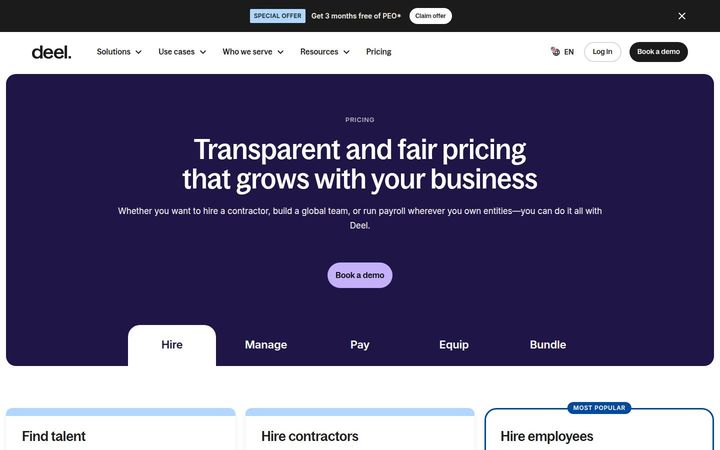
Deel prices per worker, and the price climbs with how much employment risk Deel takes on: starting at $14 per worker per month to source, $49 to manage and pay a contractor, $325 for a contractor of record, $125 for a US PEO employee and $599 for an EOR employee. Every rate carries a 'Starting at' label, so the five printed figures under 'Transparent and fair pricing that grows with your business' are floors, with the final rate set per country and per hire. Every card leads to 'Book a demo', since each hire involves contracts, benefits and compliance in a specific country.

Descript prices per person and attaches two monthly allowances to every seat, media hours and AI credits: Hobbyist at $16 with '10 media hours / month' and '400 AI credits / month', Creator at $24 with 30 and 800, Business at $50 with 40 and 1500, on annual billing. Each paid plan also caps team size, and Enterprise is 'Custom', with 'AI credits and media hours: sized to your team'.
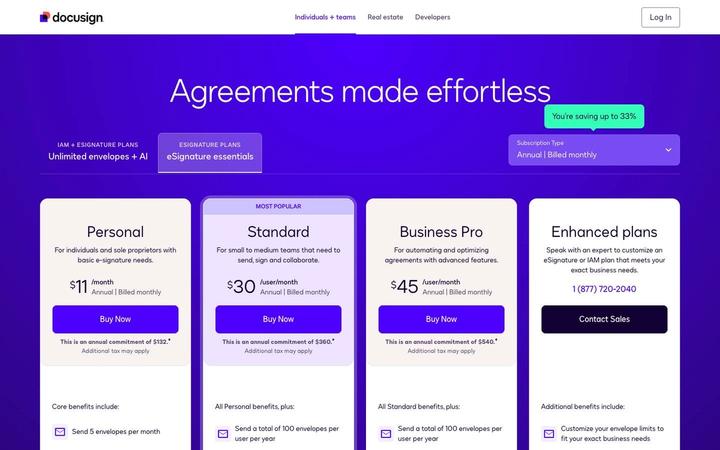
Docusign sells eSignature per user with an envelope allowance as the second meter: Personal is $11 /month for 5 envelopes a month, Standard (MOST POPULAR) and Business Pro are $30 and $45 /user/month with 100 envelopes per user per year, and Enhanced plans run through a phone number and Contact Sales. Every paid card prints its full annual commitment under the price. The upgrade beyond eSignature is IAM, sold on 'Unlimited envelopes + AI', so envelope volume is the axis that moves a customer up the product line.
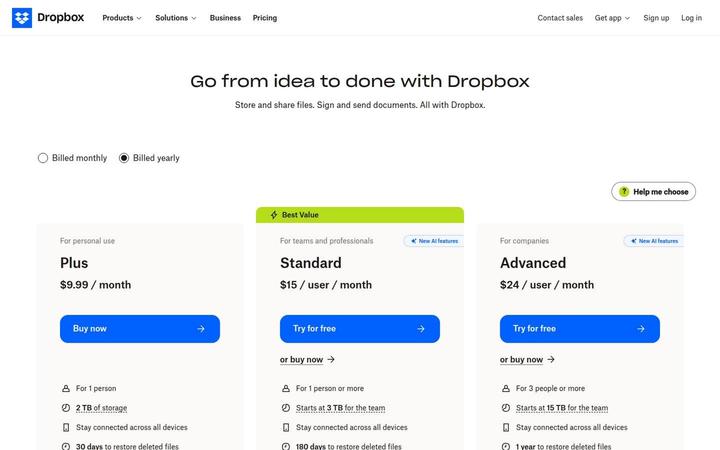
Dropbox shows three paid cards, Plus at $9.99 / month for one person, Standard at $15 / user / month tagged Best Value, and Advanced at $24 / user / month for 3 people or more, with Basic Free and Enterprise in a compact row beneath. Storage is pooled at the team level, 'Starts at 3 TB for the team' on Standard and 15 TB on Advanced, and both team plans now carry 'AI in Dropbox' with a monthly AI credit allowance that scales by tier. Seats buy access, while the plan sets both the storage pool and the credit pool.
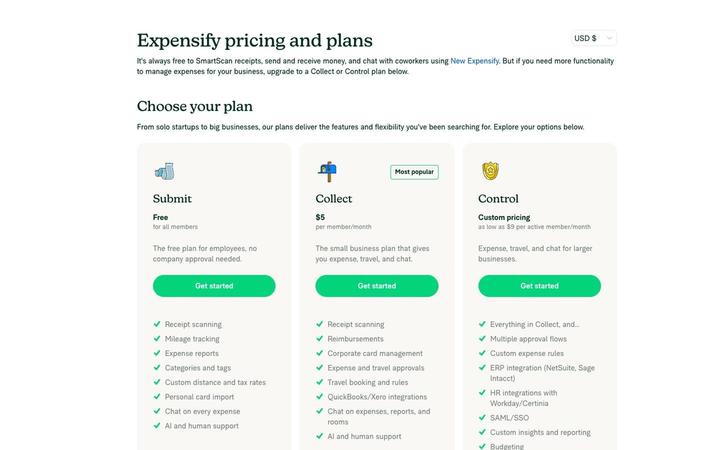
Expensify prices per member, with a free Submit plan for employees, Collect at $5 per member/month and Control on custom pricing from $9 per active member/month. The Expensify Card runs through the whole page: it earns cash back, unlocks savings of up to 50% on the subscription on Control, and backs an FAQ line that ties discounts to card use.

Figma prices a matrix: four plans, Starter, Professional, Organization and Enterprise, by three seat types, Full, Dev and Collab, with every price printed down to Enterprise at $90/mo for a Full seat. Each seat carries a monthly allotment of AI credits, which makes a credit pool attached to each seat the second layer of the model.
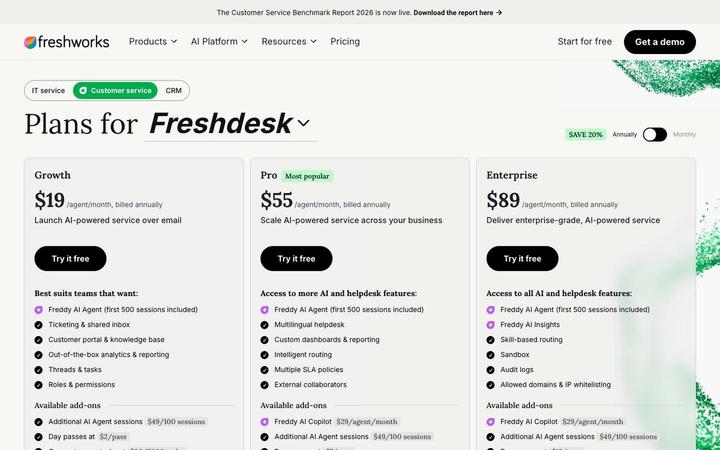
Freshdesk prices per agent across three plans at $19, $55 and $89 per agent per month billed annually, and puts a metered AI layer on every one: 500 Freddy AI Agent sessions included, then printed rates for more sessions, MCP actions and connector tasks. Each card carries its own add-on list, so the seat, the AI meters and part-time access are priced side by side.
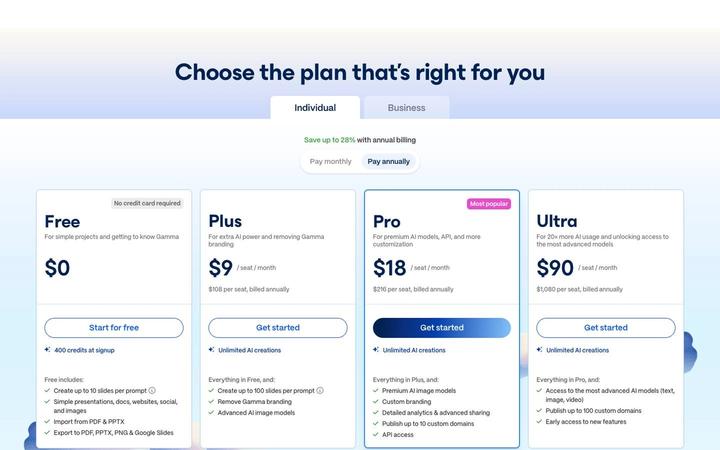
Gamma prices per seat across four plans, $0, $9, $18 and $90 per seat per month on annual billing, and pairs every paid seat with 'Unlimited AI creations' under fair use. Credits run underneath: Free starts with '400 credits at signup', and the footnote states that 'Premium features (Agent, advanced models, & API) require credits'. The page is compact, cards then an eleven-question FAQ, and every plan is bought online.
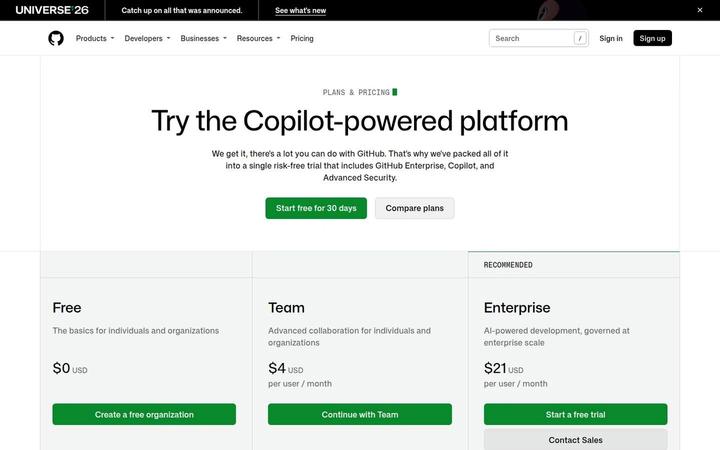
GitHub sells three per-user plans, Free at $0, Team at $4 and Enterprise at $21, under the headline 'Try the Copilot-powered platform' and a single 30-day trial of GitHub Enterprise, Copilot and Advanced Security. Enterprise now carries Copilot inside the seat, with 'GitHub Copilot access' and 'Agent governance' on its list, while security is sold as modular add-ons: GitHub Code Quality, GitHub Code Security and GitHub Secret Protection. Usage allowances for CI/CD minutes and Packages storage ride on each seat, and the table keeps many paid features free on public repositories.
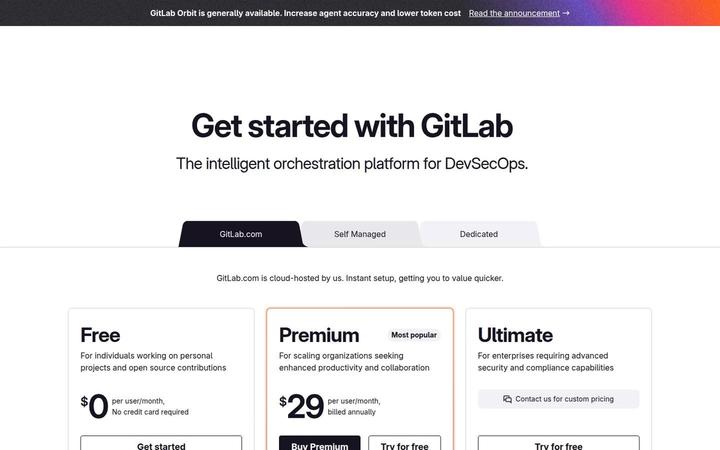
GitLab runs a seat license at its core, $0 Free and $29 per user per month for Premium, with Ultimate set through 'Contact us for custom pricing'. Around the seats sit priced meters for AI, CI, storage and now platform capacity: GitLab Credits at $1 each, compute minutes at $10 per 1,000, storage at $5 per 10GiB and a Coming soon Advanced Capacity add-on at $12,000 per top-level group per year. GitLab Orbit, sold in query packs, and GitLab Flex, one annual commitment for seats and credits, complete a catalog built for agent-scale workloads.

Grammarly sells three plans, Free, Pro and Enterprise, and measures the step between them in AI prompts: 100 a month on Free, 2,000 per member per month on Pro and unlimited on Enterprise. The page is built around the Pro trial, with '$12 USD' struck through beside a 'Try for free' chip and the trial terms written into the card. Enterprise is 'available through Superhuman Go', which places the top plan inside the wider Superhuman platform.
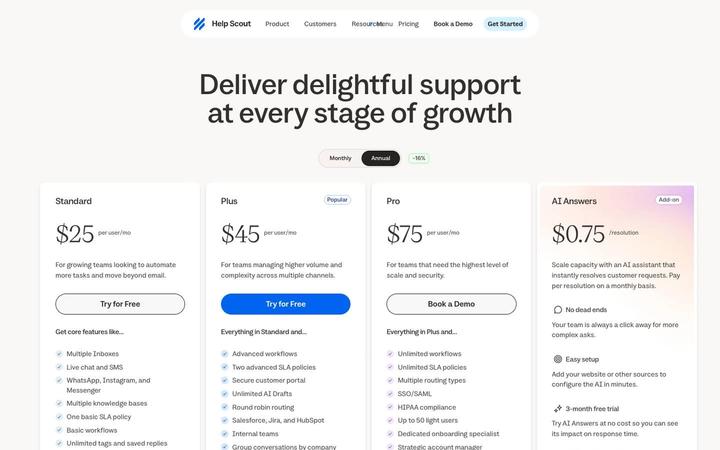
Help Scout prices the helpdesk per user, Standard at $25, Plus at $45 and Pro at $75 per user/mo on annual billing, and sells its AI agent as a fourth card, AI Answers at $0.75 per resolution. A savings calculator, a monthly spending cap and a 3-month free trial all serve the outcome meter, and a free plan for 5 users sits one line below the cards.

Jasper sells two plans: Pro at $59 per seat per month on the yearly term, scoped to one seat with 2 Brand Voices, 5 Knowledge assets and 3 Audiences, and Business at custom pricing with unlimited customization and team features. The FAQ adds the usage layer: GEO Hub reports and Agents 'run on credits, which sit alongside seat-based pricing on the Business plan', a seat-plus-credits model for AI work.

Jira prices per user with volume tiers. The page opens with a 'Team size' input and a Monthly or Annually switch that reprice the cards in place: Standard at '$8.48 per user / month' and Premium at '$15.56 per user / month' for the team size entered. Each seat carries automation steps and Rovo AI credits per user per month, and data analysis now runs through the tiers, from 'Cross-source data analysis' on Standard to 'Advanced data analysis' on Enterprise.

Linear prices per user, with annual billing switched on by default and a free plan that caps scope, not headcount: 'Unlimited members', '2 teams' and '250 issues'. The Free card now carries the agent layer too, 'Agent platform', 'Linear Agent' and 'Loops', while agent work such as coding sessions and loops draws on a separate AI credit meter. Four cards run from $0 to Custom, and a long comparison table marks each feature 'Included' or 'Not included' and prints real limits.

Loom prices per user across four plans, and its AI is a tier of its own: Business at '$18 per user / month' and Business + AI at '$24 per user / month', marked 'MOST POPULAR'. Starter is free with '25 videos' and '5 minute screen recordings', Enterprise is a conversation, and a dedicated Loom AI band sells the AI tier between the cards and a long comparison table.
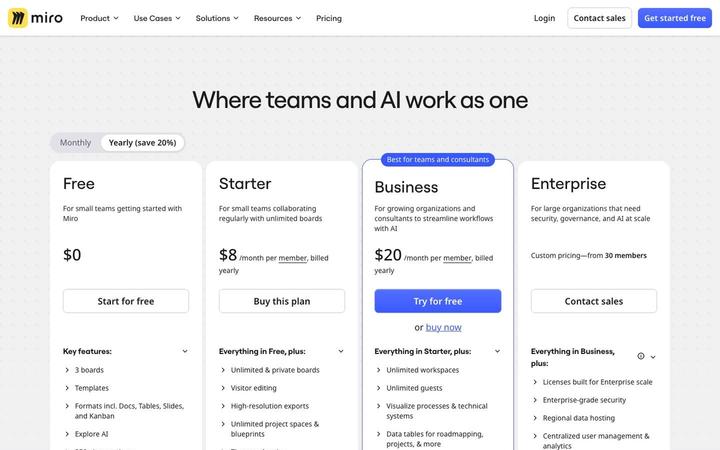
Miro sells seats with AI on top: Starter at $8 and Business at $20 per member per month billed yearly, each adding AI credits per member and a daily allowance of MCP calls for connected AI tools. At Enterprise, from 30 members, the credits become an org-wide pool that 'Starts from 2500 credits per month', a clear view of seat pricing taking on AI usage.
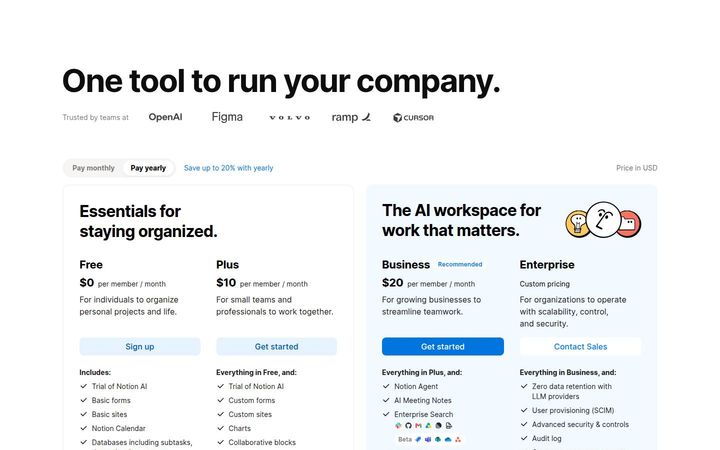
Notion sells four per-member plans in two framed groups, 'Essentials for staying organized' for Free and Plus and 'The AI workspace for work that matters' for Business and Enterprise, so the line between organizing and AI runs straight through the plan row. AI agents carry their own meter: Custom Agents are 'Free to try, then $10 per 1,000 monthly Notion credits', and the Workers beta runs on the same credits, which lets autonomous work scale apart from seats.
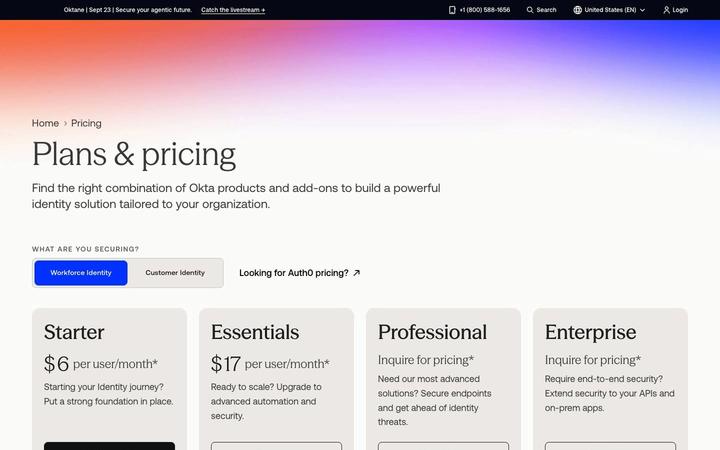
Okta sells Workforce Identity as per-user suites billed annually: Starter at $6 per user a month, Core Essentials at $14, Essentials at $17, and Professional and Enterprise at 'Inquire for pricing*'. Every product in a suite shares one license count, and a catalog of add-ons lets a buyer build out any suite, so the bill grows with headcount and with the depth of identity security a company takes on.

Perplexity's Enterprise view prices per seat with a credit allowance attached to each one: Enterprise Pro at '$34 / month per seat when billed annually' with '500 monthly Computer credits/seat', and Enterprise Max at $271 with '15,000 monthly Computer credits/seat'. A third card for 'Additional security and governance' reads 'Custom pricing', and an organization can mix Pro and Max seats in one account.

Pipedrive sells four per-seat plans, Lite at US$ 14 through Ultimate at US$ 79 per seat per month billed annually, and every card leads to the same 'Free 14-day trial. No credit card required.' Packaging stacks cleanly, each plan opening with the one below it plus a short list, and five add-ons with 'Starting from' prices, Projects now at $16, extend any plan without moving the buyer up a tier.

Postman sells seats with AI credits attached: Free at $0, Solo at $9 a month and Team at $19 per user a month billed annually, with Enterprise set through 'Contact sales for pricing'. Overage steps down by plan, from '$0.05 / credit' on Solo to '$0.035 / credit (volume pricing available)' on Enterprise, and a new Context Graph meter adds included API queries on every plan, then '$0.01 / query'.

Remote prices per person employed or paid, and the rate climbs with how much legal responsibility Remote carries: $29 per month to run payroll or manage a contractor, $99 for a US PEO employee or a contractor with indemnity, $325 for a contractor of record and $599 for an employee of record. Six products each print a 'Starting at' price, every card leads to 'Book a demo', and each one closes on the same line, 'Remote Platform included, no base fee'.
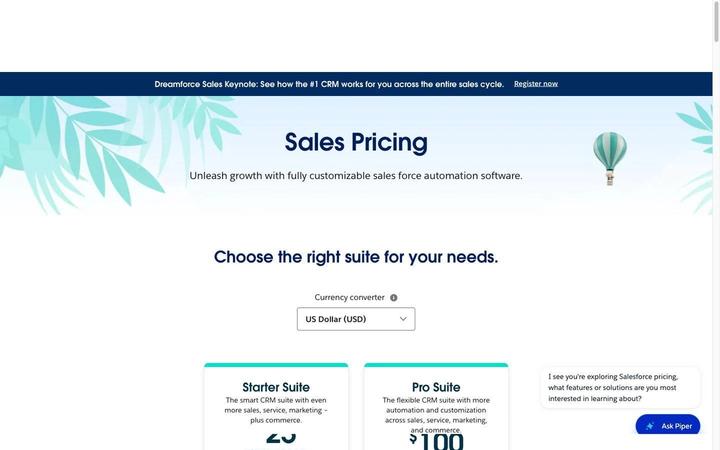
Salesforce prints a per-user list price for every Sales Cloud edition, from Starter Suite at $25 to Max at $550 USD/User/Month, then prices the layers around the seat: add-ons with 'From' floors, a Premier Success Plan at '30% of net license fees', and '2.75M Flex Credits per org per year' on Max. The seat stays the core metric while AI arrives as a consumption meter alongside it.
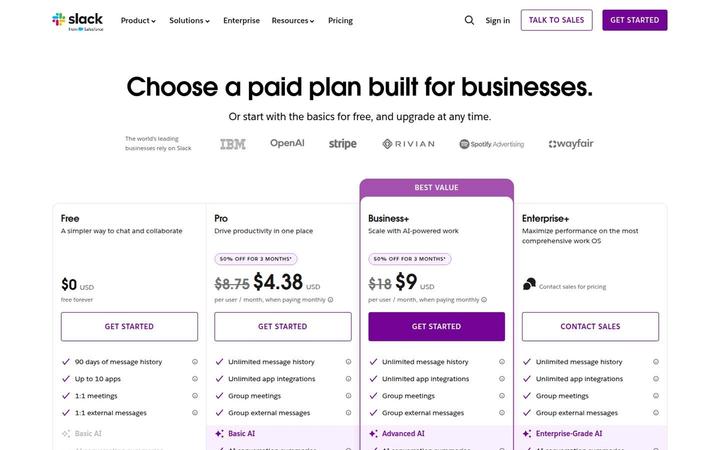
Slack sells a four-plan per-user ladder, Free, Pro at $8.75 and Business+ at $18, with Enterprise+ priced through sales, and names an AI band on every paid card: Basic AI, Advanced AI and Enterprise-Grade AI. A launch offer of 50% off for three months brings Pro to $4.38 per user per month for the first quarter, and the comparison table closes with Success Plans, three support levels that are included or sold as add-ons by plan.
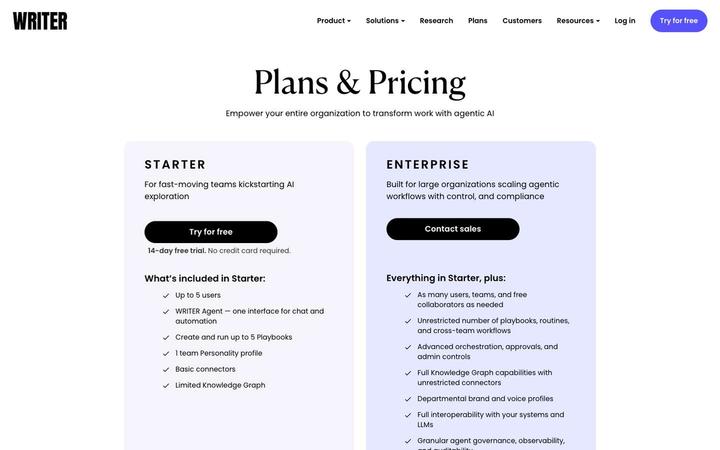
Writer sells two plans, Starter for a team of up to five and Enterprise for the whole organization, and presents them through capability: two cards, a long matrix in seven blocks and a FAQ that states the model. Per the FAQ, Starter is 'monthly or annual per-seat plans with fixed credit limits', and Enterprise adds unlimited free users, a Lite seat for new users, and solution packs and services as the account grows.

Zendesk sells four per-agent plans, from Support Team at $19 to Suite Professional at $115, marked MOST POPULAR, and Suite Enterprise + Copilot through sales, and prints its add-ons at $50, $50 and $83 per agent. Beneath the seat price sits an outcome meter: AI agents come with every plan and bill by the Automated Resolution, a request the AI resolved with no escalation to a human agent.
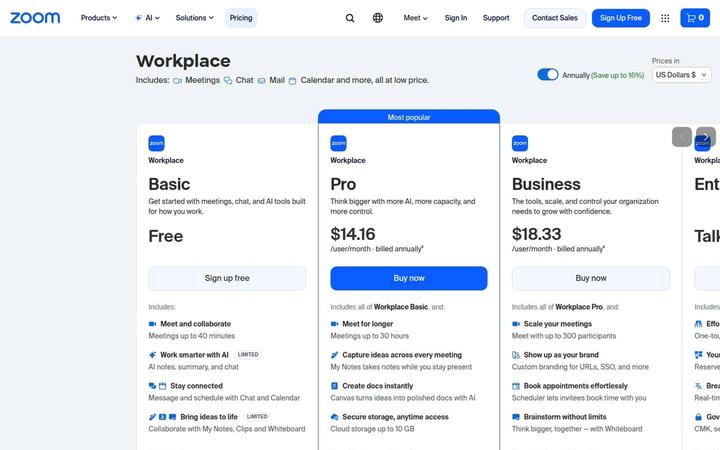
Zoom Workplace sells a per-user suite on four plans, Basic free, Pro at $14.16, Business at $18.33 and Enterprise through sales, each price the monthly equivalent of an annual upfront charge. Each plan card leads with a tagline and four benefit-led rows while the comparison table carries the exact limits, and a catalog of seventeen add-ons, from ZoomMate at $20 to Zoom Mesh through sales, lets a paid account grow capacity, AI and governance one line at a time.
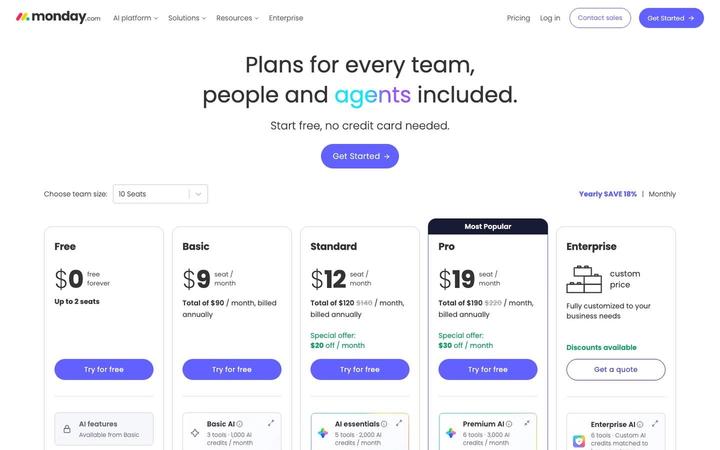
monday.com prices work management per seat with a pool of AI credits on every paid plan, and the headline says why: 'Plans for every team, people and agents included.' A team-size selector turns each seat price into a monthly total, so Basic at $9 a seat reads 'Total of $90 / month, billed annually' at 10 seats. The same page carries full pricing for monday CRM, monday service and monday dev.
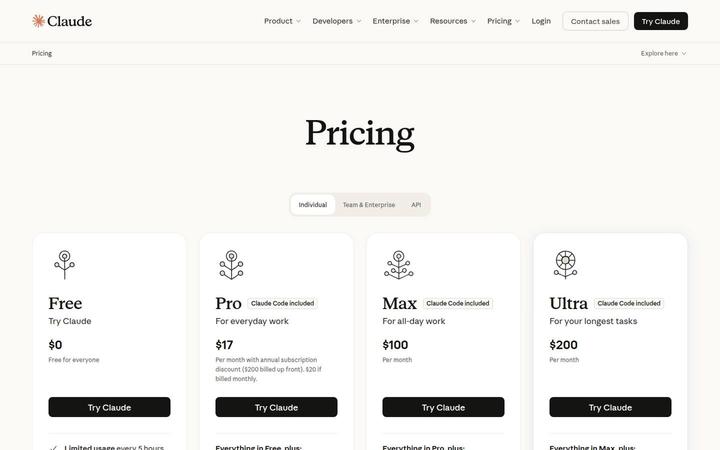
Claude sells four individual plans, Free, Pro at $17 a month on annual, Max at $100 and Ultra at $200, and what separates them is usage itself. Max is 5x Pro in both the five-hour and weekly windows, Ultra is 10x Pro weekly with no 5-hour limit for verified accounts, and both top plans carry a monthly API credit. One URL carries individual, team and API pricing, and the FAQ prints the enterprise rate.

Attio prices its CRM per user and runs usage on credits in two pools: seat credits that grow with headcount, from 100 to 2,500 per user per month, and a shared workspace pool. A published top-up ladder sells more workspace credits from +5,000 a month at $70 annually to +50,000 at $475, so a growing bill can be modeled from the page. Credits open the comparison table, ahead of every feature.
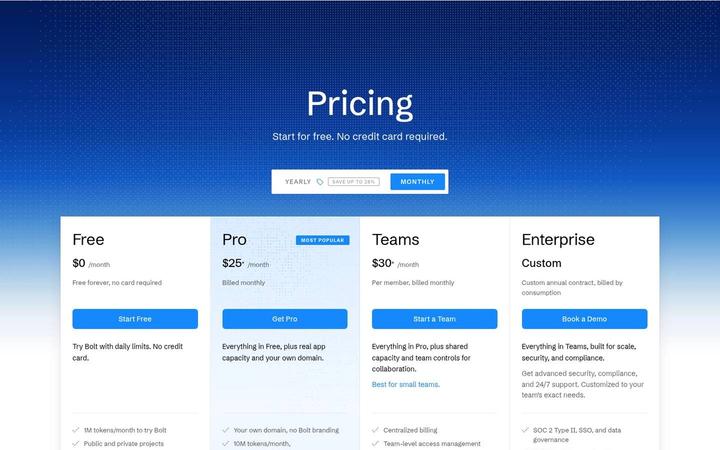
Bolt sells its AI app builder on tokens, the unit of model work behind every prompt. Free offers '1M tokens/month to try Bolt', Pro at $25 a month carries the MOST POPULAR badge with '10M tokens/month, rollover included', Teams adds a per-member price, and Enterprise moves to 'Unlimited tokens, priced by consumption'. The page now runs from cards through logos, security credentials and a full Compare table to a closing call to action, so one URL serves the solo builder and the procurement team.
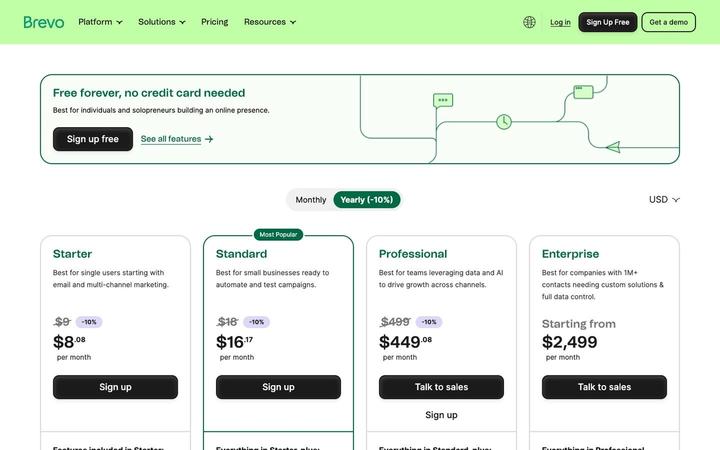
Brevo bills on monthly email volume, with contacts included at no charge, and the 'Customize your plan' configurator turns that meter into a live total with a slider from 5k to 100k emails. The card ladder, Starter $9, Standard $18, Professional $499 and Enterprise 'Starting from $2,499 per month', separates on capability, while volume is sized inside each plan.
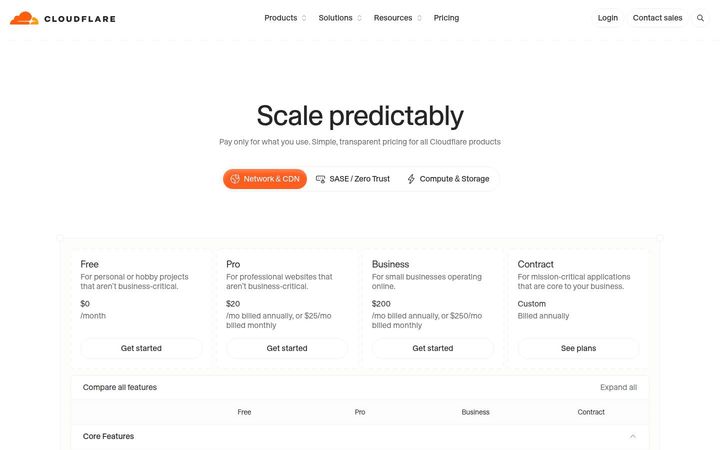
Cloudflare runs three pricing models on one page, each behind its own tab: flat site plans at $0, $20, $200 and Custom for Network & CDN, $7 /user/month for SASE / Zero Trust, and a metered rate card with free allowances for the Compute & Storage primitives, now including Basin's per-stage data rates. Each business line gets the value metric that fits its cost, and the default tab prints both billing cadences on every card.

Convex pairs a developer seat with a full resource rate card. Free & Starter runs at 'Free or $0/month and pay as you go', Professional is '$25 per developer/month' with larger allowances and lower unit rates, and Business & Enterprise opens at a '$2,500 monthly minimum'. Below the cards, every compute, storage, I/O and egress meter is priced per plan, with a region selector that sets the multiplier.
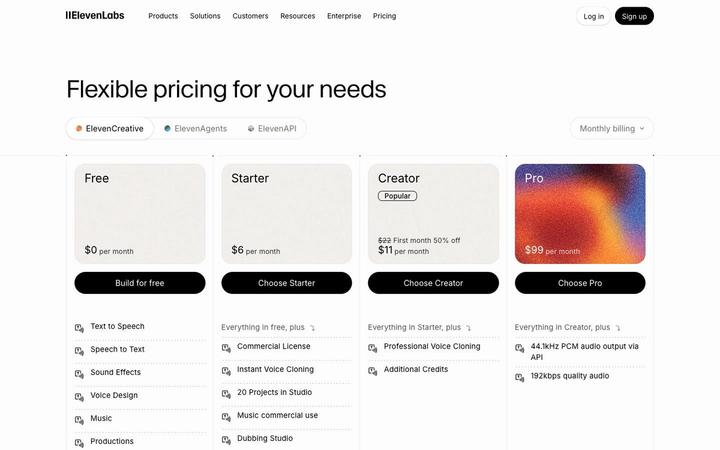
ElevenLabs sells monthly credit bundles across seven plans, from Free with 10k credits per month to Business at $990 per month with 6M credits and 10 seats, split into an individual row and a For Businesses row. One credit currency meters speech, music, dubbing, image and video, and the page translates it into minutes of audio twice: in a calculator that recommends a plan and in a table that prints the price of an extra minute for every tier. Seats arrive at Scale, so the model is credits first with team access layered on for businesses.

Framer sells a flat site subscription at $0, $10 and $30 a month and Custom, and layers a monthly AI credit allowance that the buyer picks from a dropdown inside each paid card, with '2× credits first month' on both paid plans. Its comparison table prints overage rates and hard ceilings together, such as '150 then $20 per 100 (700 max)' for pages, so a buyer can model both the next increment and the worst case.

Front prices three seat tiers at $25, $65 and $105 per seat per month and layers Front AI on top: Copilot at $20 per seat on Starter and Professional, and Autopilot metered at $0.05 per conversation. Every rate is printed, Enterprise included, and Enterprise carries Copilot, Smart QA and Smart CSAT in its seat price, which makes the top tier the home of the full AI suite. External AI agents and Compass are included on every plan.
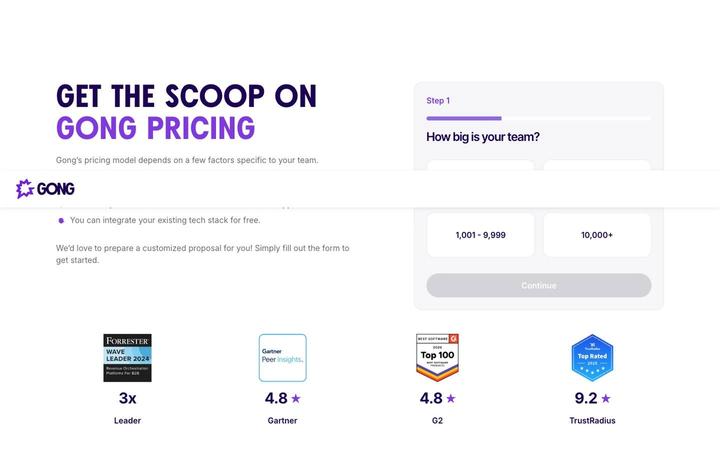
Gong prices through a customized proposal, and its pricing page is a short explainer beside a staged form. Three lines name the shape of the bill: licenses priced per user, a platform fee based on the number of users supported, and integrations with an existing tech stack at no charge. The form's first and defining question is team size, the variable that sets both charges.

Hex bills per Editor, "$36 per Editor / month" on Professional and "$75 per Editor / month" on Team, and opens its comparison table with "Unlimited users", so the people who read published apps carry no seat cost. Alongside the seat, AI credits and compute profiles step up by plan, from Limited to Premium credits and from Small compute to advanced compute add-ons, a hybrid of seats for builders and capacity for the work they run.
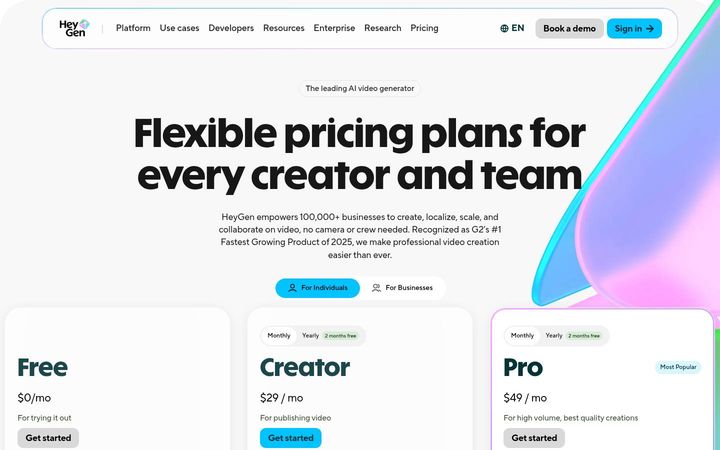
HeyGen prices AI video on credits, a monthly allocation spent across every feature, and packages its three individual plans around which AI models each one unlocks. Free caps output at '3 videos a month, watermarked', Creator at '$29 / mo' carries '600 credits' and 'Avatar V, with limited usage', and Pro at '$49 / mo' wears the 'Most Popular' badge, opens a dropdown of credit tiers and adds a 'PRO ONLY FEATURES' panel with Seedance 2.5 and Cinematic Avatars.
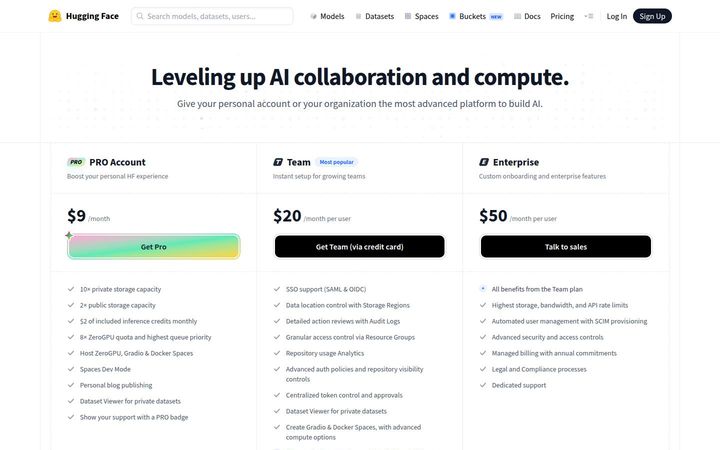
Hugging Face publishes four price lists on one page: seats at $9, $20 and $50 per month, storage from $8 to $18 per TB with volume breaks, Spaces hardware by the hour from FREE, and Inference Endpoints from $0.033 per hour. PRO now includes '$2 of included inference credits monthly', a dollar-denominated allowance beside its storage multiples. The seat buys governance and collaboration, while the meters carry the cost of storing and running models, so the account scales with the AI workload it hosts.
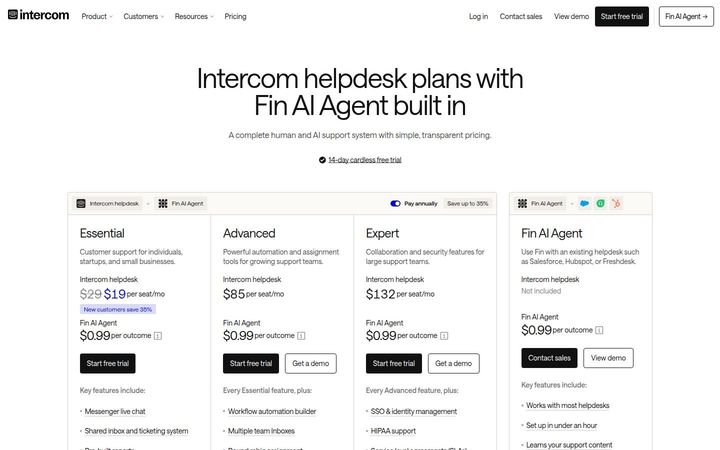
Intercom prints two price lines on every card: an Intercom helpdesk seat price of $19, $85 or $132 per seat/mo with 'Pay annually' on, and 'Fin AI Agent $0.99 per outcome' for the AI agent's resolved work. A fourth card sells Fin on its own with the helpdesk 'Not included', and a live cost estimator plus a section of outcome rules sit between the cards and the add-ons.
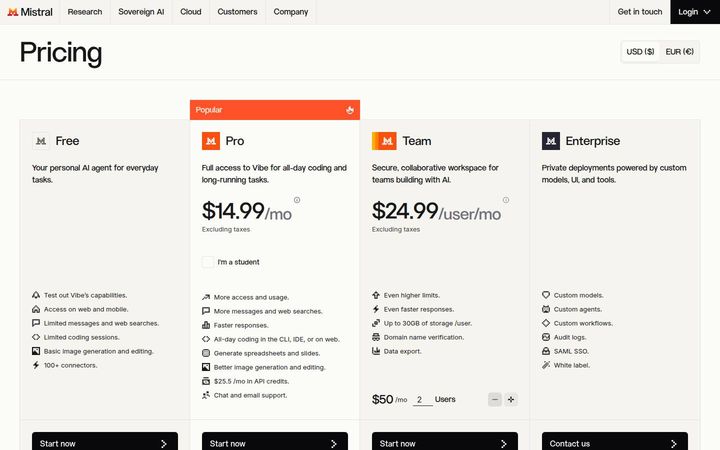
Mistral's pricing page sells Vibe through plans that are bands of usage: Free is a capped entry, Pro at '$14.99 /mo' includes '$25.5 /mo in API credits', and Team at '$24.99 /user/mo' adds 'Even higher limits.' and workspace controls. Allowances written as multiples of Free, an included API credit allowance and a pay-as-you-go row tie each subscription to the token meter the FAQ sets out.
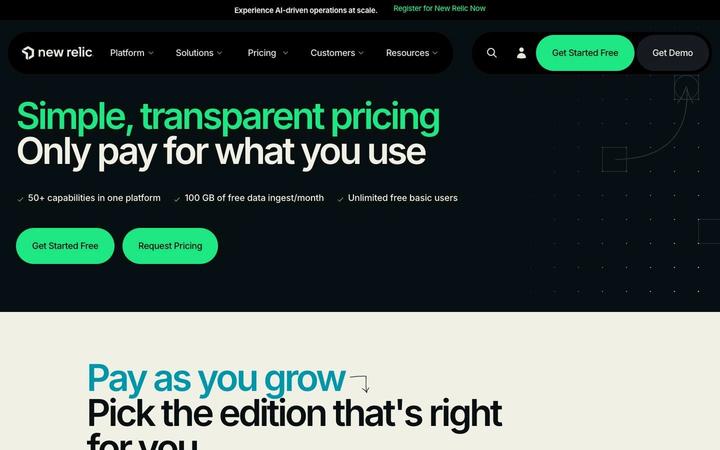
New Relic bills observability on three components: data ingest at $0.40/GB beyond a free 100 GB, users priced by type, and Advanced Compute in compute capacity units. Hosts are free, 'unlimited hosts at no additional cost', so the bill follows the two things that grow with an observability practice, the data flowing in and the people who work with it.
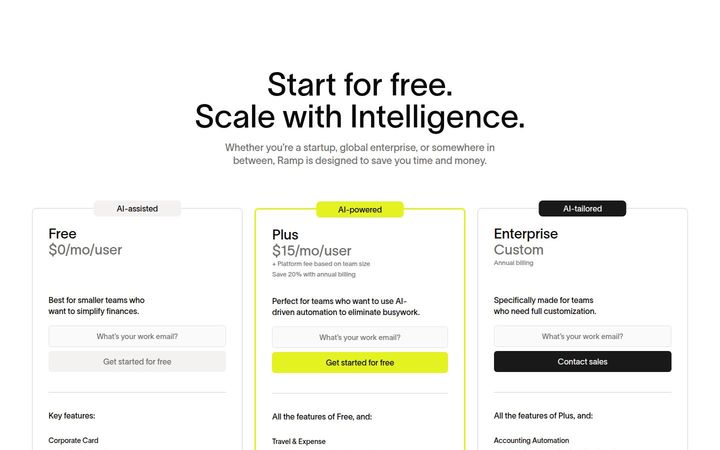
Ramp prices spend management per user with a platform fee on top: Free at '$0/mo/user', Plus at '$15/mo/user' plus a 'Platform fee based on team size', and a custom Enterprise. The Free column now carries Accounts Receivable alongside unlimited cards, bill pay and banking yield, while revenue recognition and recurring billing sit behind an 'Accounts Receivable Add-on'.

Retool prices two seat types as a sum on each card, $10 a month per builder plus $5 a month per internal user on Team and $50 plus $15 on Business, and layers workflow runs, pooled AI credits and agent hours on top. The cards read as aligned checklists of included and not-included features, and the comparison table publishes the secondary meters, from an external user volume curve to additional workflow runs at '$75 per 5,000 runs per month'.
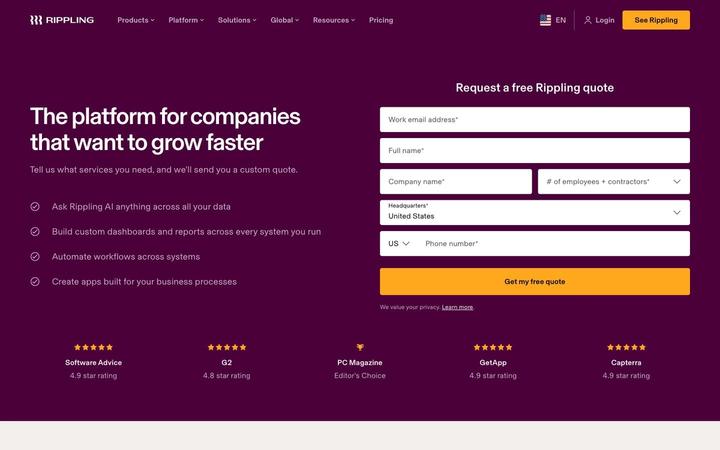
Rippling's pricing page is a quote request: 'Tell us what services you need, and we'll send you a custom quote.' The form asks for headcount in five bands and a headquarters country, the two inputs a modular HR, IT, payroll and finance suite needs to build a price, and the page backs the ask with third-party ratings and named customer results.
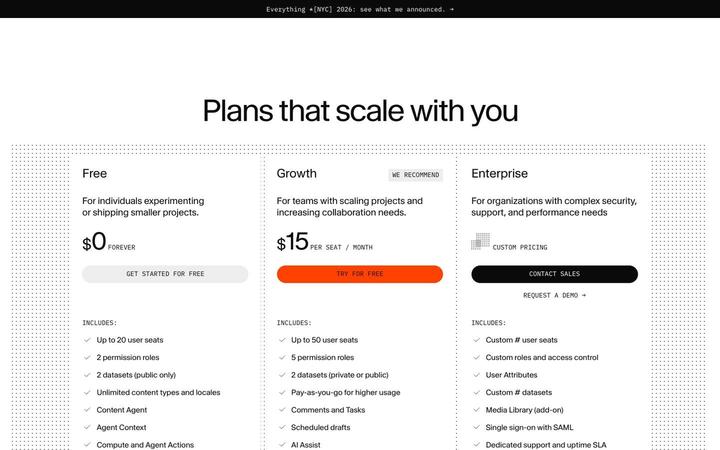
Sanity charges '$15 PER SEAT / MONTH' on Growth and meters the content platform underneath: documents, API requests, bandwidth, assets, embeddings, AI credits, functions and compute each carry a printed overage rate in the comparison table. Seats price the editorial team, usage prices the delivery workload, and three add-ons price support, quota and datasets as fixed monthly blocks.
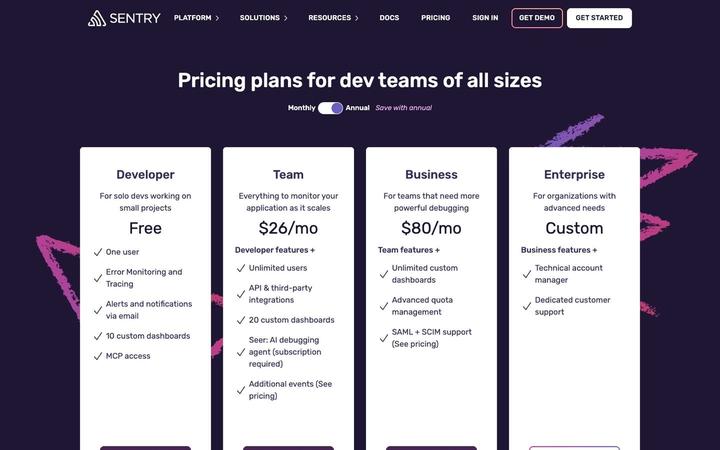
Sentry sells a base plan with a quota on every telemetry type, Developer free, Team '$26/mo', Business '$80/mo' and Enterprise 'Custom', and bills usage above the quota at published pay-as-you-go rates, with errors priced on five volume tiers. The comparison table prints each quota and its overage rate in the same cell, and the estimator turns usage into an itemized receipt, so the base plan, the meters and the bill all read off one page.
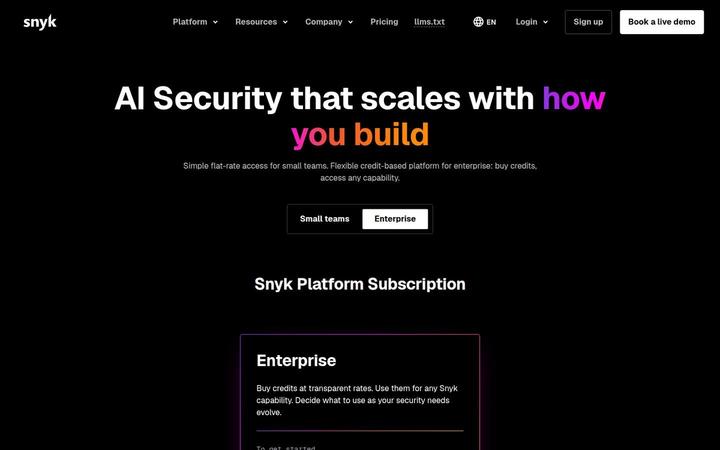
Snyk now presents its platform as one Enterprise Snyk Platform Subscription bought in prepaid credits, where '1 credit = $1' and a Platform Rate Card prices each capability in its own unit, from 'per Active Contributor / per Day' to 'per Assessment'. A Small teams tab sits beside it, and the page is built to explain the credit pool step by step: buy credits, use any capability, read the rate.
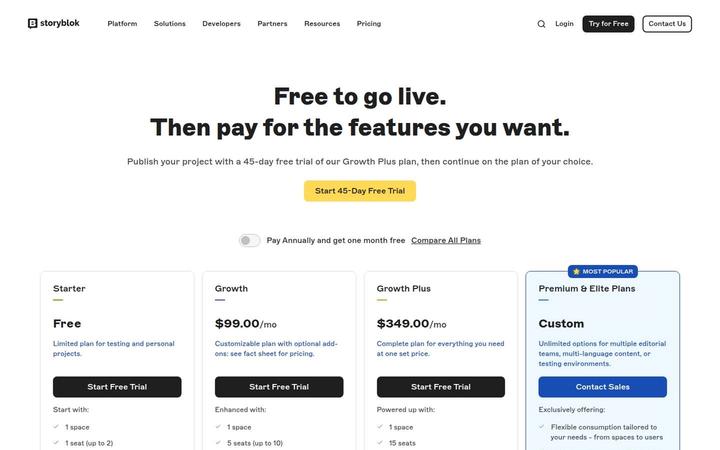
Storyblok prices its headless CMS as a base plan plus five meters, seats, traffic, API requests, locales and AI credits, and each card prints the allowance with its ceiling. Growth at $99.00 /mo is a 'Customizable plan with optional add-ons: see fact sheet for pricing.', Growth Plus at $349.00 /mo is a fixed bundle positioned as 'Complete value', and the 'MOST POPULAR' star sits on the custom Premium & Elite plans.
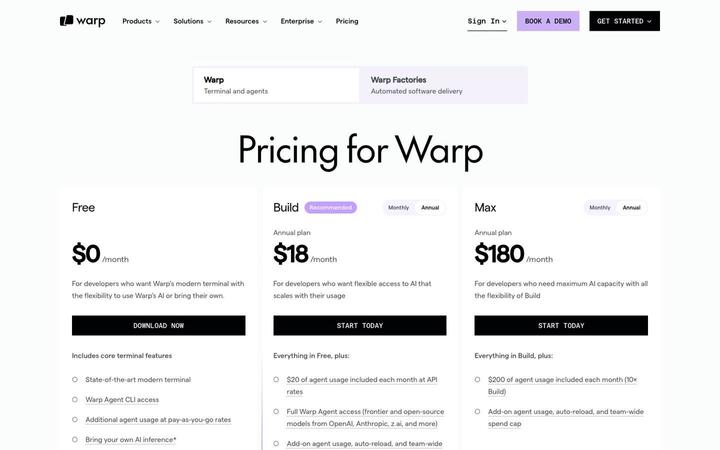
Warp prices AI work as a dollar balance converted to credits: Build at $18 a month includes '$20 of agent usage included each month at API rates', Max at $180 includes $200, and Business at $45 per user includes $20 per seat. The free plan keeps the terminal and opens AI through pay-as-you-go top-ups or the buyer's own inference, so the subscription prices access and the credits price the agent's work.

Webflow prices per site: Starter is free, Basic is $15/mo and Premium $25/mo billed yearly, and Platform plans begin with Team at $2,500/mo on an annual contract before a custom Enterprise. Premium carries a bandwidth dropdown from 50 GB to 2.5 TB, and the add-ons are metered on their own units, page views, sessions and locales, so traffic and reach set the bill alongside the plan.
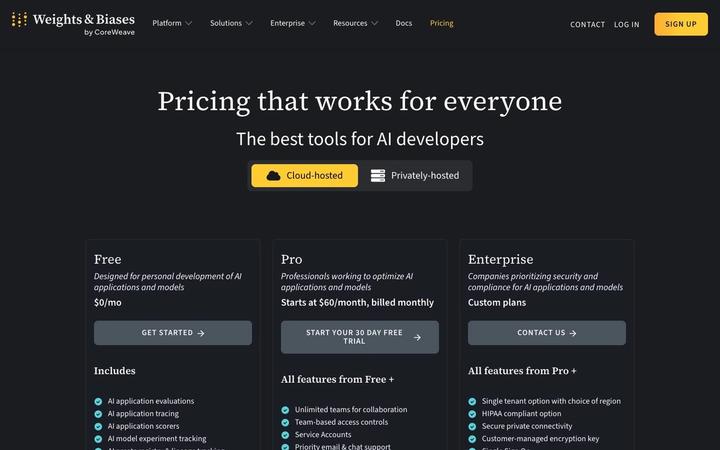
Weights & Biases pairs seats with usage: Pro 'Starts at $60/month, billed monthly' with up to 10 Model seats, then storage at $0.03/GB above 100 GB and Weave data ingestion at $0.10/MB above 1.5 GB a month. The model splits the seat by workload, Model seats for training and fine-tuning and Weave seats for GenAI applications, and a Cloud-hosted and Privately-hosted toggle settles deployment before any price appears.
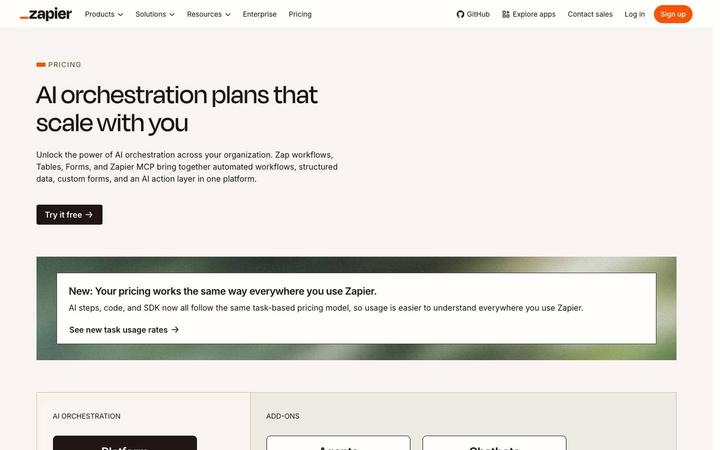
Zapier prices its whole platform on one unit, the task, drawn from a single pool by Zap workflows, AI steps, code, MCP and SDK. A slider from 100 to 2M tasks sits above four plans, Free at '$0 /month', Professional 'Starting from $19.99 /month', Team 'Starting from $69 /month' and Enterprise 'Contact for pricing', and a launch banner announces that AI steps, code and SDK now follow the same task-based model.

dbt sells developer seats with a models-built allowance attached, from a free Developer plan to Starter at $100 per user/month and two custom Enterprise tiers. The two products whose cost tracks workload, dbt State and dbt Wizard, sit in their own add-on section under 'No seats, no minimums.', and can be bought even by teams running self-hosted dbt. dbt State introduces a new unit, the Daily Active Target Table, defines it in one sentence and prices it at $0.094.
Eight practices with examples, from understanding the customer base to free plans generous enough to attract users and limited enough to prompt an upgrade.
Orb's CEO on the main SaaS pricing models, from flat rate and per seat to usage-based and hybrid, how each structures the way customers pay, and how to choose among them.
Orb's CEO on enterprise pricing: how it differs from SMB pricing, the main enterprise models, and what to weigh when prices are set deal by deal.