An AI founder's guide to prepaid credits
Orb's CTO on the choice between committing a dollar amount and buying custom credits, how commitments earn a better rate per credit, and how usage past a commitment bills at an overage rate.
Pricing pages that sell credits: a prepaid or included balance that features and agents draw down. Credits put many meters behind one number, and the pages show how they are allotted, topped up and controlled.
Of the 57, 46 show a free tier, 42 include a comparison table, 19 a calculator and 49 keep a contact-sales tier.
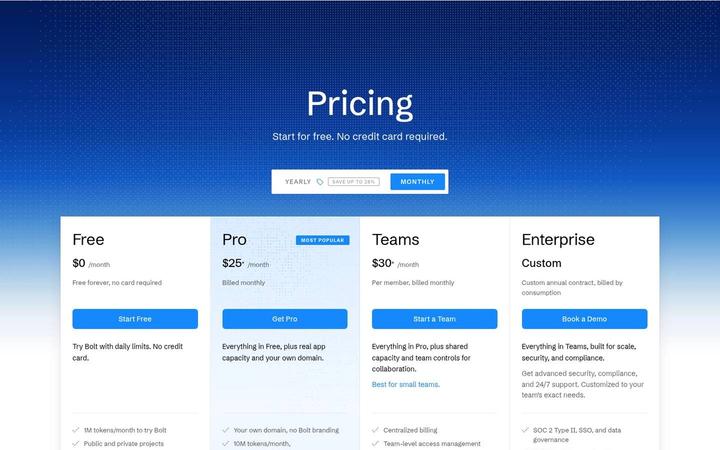
Bolt sells its AI app builder on tokens, the unit of model work behind every prompt. Free offers '1M tokens/month to try Bolt', Pro at $25 a month carries the MOST POPULAR badge with '10M tokens/month, rollover included', Teams adds a per-member price, and Enterprise moves to 'Unlimited tokens, priced by consumption'. The page now runs from cards through logos, security credentials and a full Compare table to a closing call to action, so one URL serves the solo builder and the procurement team.
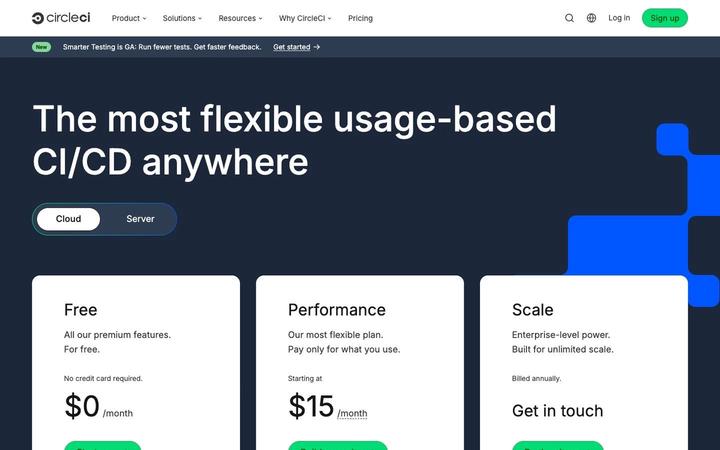
CircleCI sells one currency: credits that pay for compute, seats and features alike. Free includes '30,000 free credits/month', Performance is 'Starting at $15 /month' behind a 'Build your plan' configurator, and Scale is 'Billed annually.' with 'Get in touch'. A three-step explainer, 'Buy', 'Build' and 'Repeat', sets out the model before the comparison table.
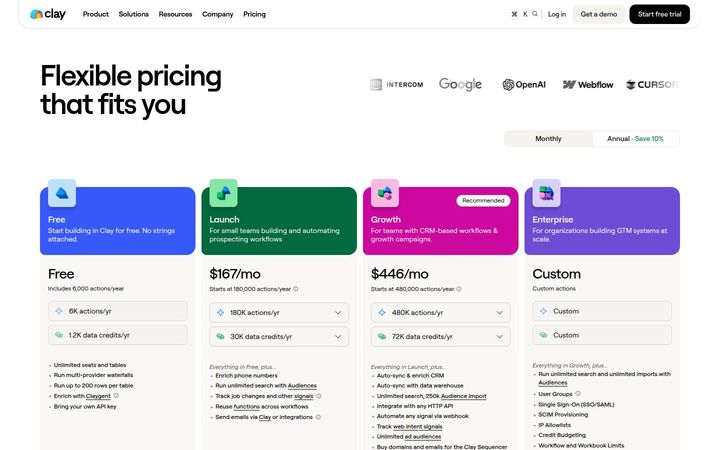
Clay prices on two meters and no seats. Every plan carries unlimited seats and tables, and the bill is Actions for work done on the platform plus Data Credits for data bought from its marketplace. Each paid card is a live configurator whose two dropdowns add up to the headline price, and Enterprise is now packaged as a governance tier built around access controls and credit budgeting.
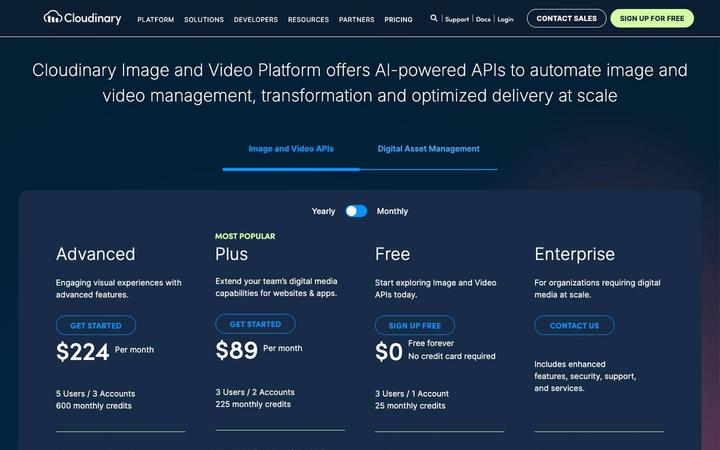
Cloudinary sells monthly credit bundles, 25 on Free, 225 on Plus at $89 and 600 on Advanced at $224, and defines the credit in one visual row: 1 credit equals 1,000 transformations, 1GB managed storage, 1GB image bandwidth or, on paid plans, 2GB video bandwidth. One fungible unit covers processing, storage and delivery, so each customer spends its allowance on whatever its media workload needs.
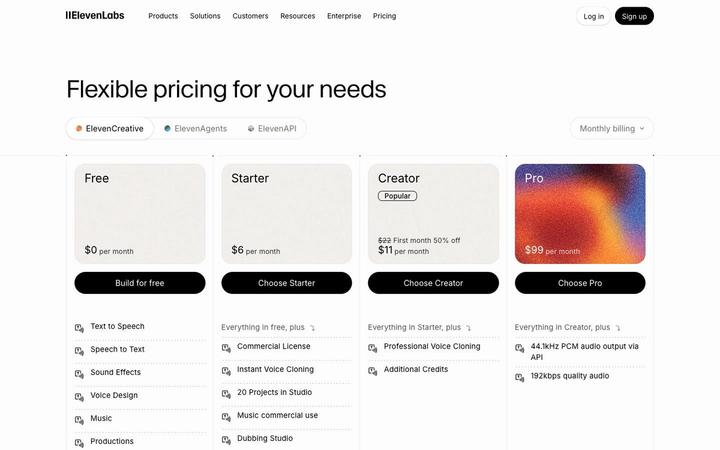
ElevenLabs sells monthly credit bundles across seven plans, from Free with 10k credits per month to Business at $990 per month with 6M credits and 10 seats, split into an individual row and a For Businesses row. One credit currency meters speech, music, dubbing, image and video, and the page translates it into minutes of audio twice: in a calculator that recommends a plan and in a table that prints the price of an extra minute for every tier. Seats arrive at Scale, so the model is credits first with team access layered on for businesses.
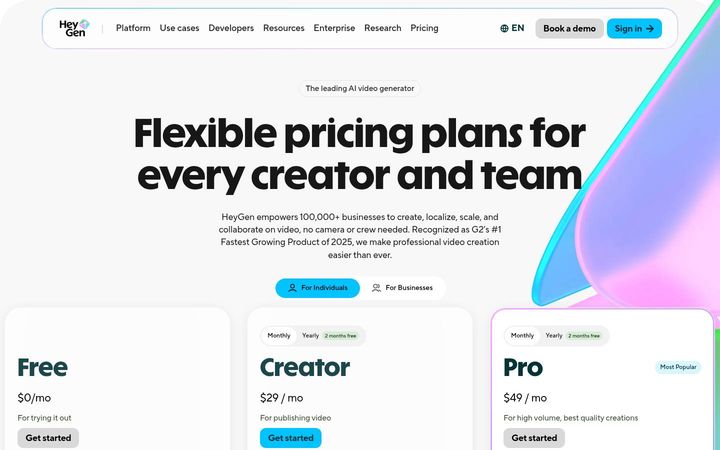
HeyGen prices AI video on credits, a monthly allocation spent across every feature, and packages its three individual plans around which AI models each one unlocks. Free caps output at '3 videos a month, watermarked', Creator at '$29 / mo' carries '600 credits' and 'Avatar V, with limited usage', and Pro at '$49 / mo' wears the 'Most Popular' badge, opens a dropdown of credit tiers and adds a 'PRO ONLY FEATURES' panel with Seedance 2.5 and Cinematic Avatars.

A launch page for a pricing model: HubSpot Credits are announced like a product, with the controls around spend as the headline. Three principles, one public rate of $10/1,000 credits, an outcomes-first estimator and four controls customers hold themselves make the case that credits are safe to adopt.
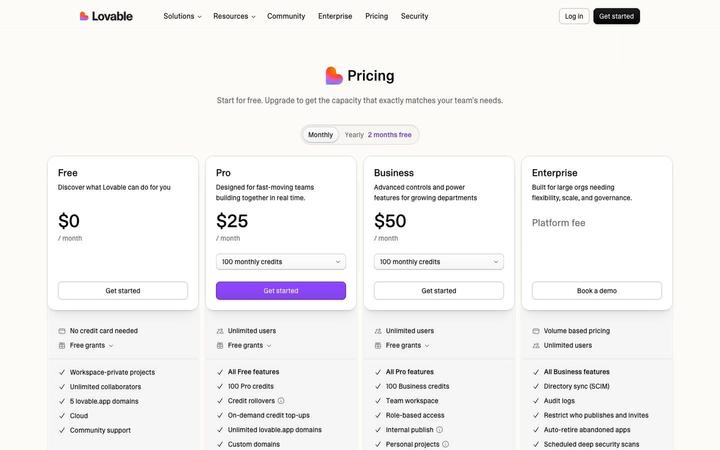
Lovable prices per workspace, not per seat: Pro at $25 / month and Business at $50 / month each carry 'Unlimited users' and a dropdown that sets monthly credits, starting at 100. The tier sets the features and the dropdown sets the capacity, so a team chooses its controls and its volume as two separate decisions, and Enterprise pairs a 'Platform fee' with 'Volume based pricing'.

Make sells credits, one per module action, and lets the buyer set the volume first with a 'How many credits per month?' slider above five plans. Each paid card prints its rate per 1,000 credits, '$1.20' on Core, '$2.10' on Pro and '$3.80' on Teams, so the plans price their features through the cost of a credit rather than a separate platform fee.

Netlify prices its platform in credits and keeps headcount out of the bill: Pro is '$20 /month with unlimited members', and what scales is a monthly credit allowance. Five infrastructure meters, from production deploys to web requests, draw down that one balance, and a dropdown on the Pro card lets a team choose its credit tier from 3,000 to 20,000 a month.
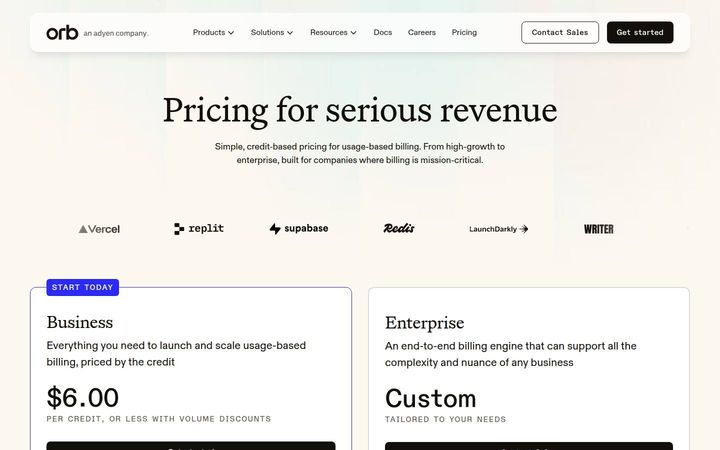
Orb sells two plans: a self-serve Business plan at '$6.00' 'PER CREDIT, OR LESS WITH VOLUME DISCOUNTS' and a custom-priced Enterprise plan, with an Enterprise Support Bundle sold as an add-on. The FAQ ties the credit to the meter, 'The cost of 1 credit works out to 0.60% of billing volume, plus event ingestion and other metered dimensions', so Orb's revenue still grows with the revenue its customers bill.
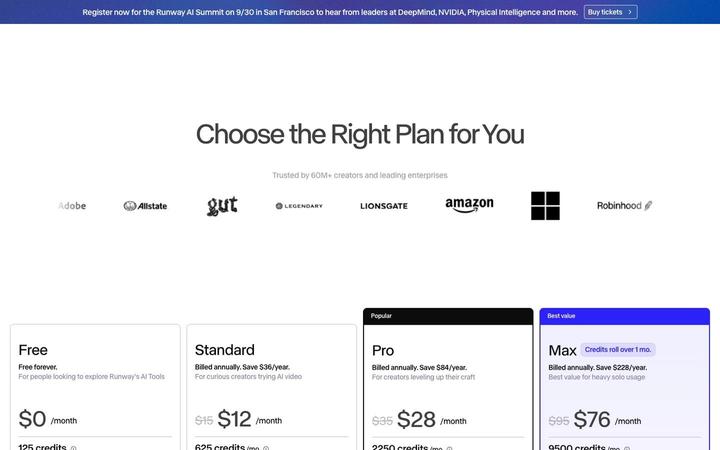
Runway sells monthly credit allowances on four individual plans, Free, Standard at $12, Pro at $28 and Max at $76 a month billed annually, and translates every allowance into output on the card: '625 credits monthly = 52s of Gen-4.5, 104s of Gen-4 Turbo, or 78 Gen-4 Images (1080p).' One credit currency covers Runway's own models and partner models such as Kling, Seedance and Nano Banana Pro.
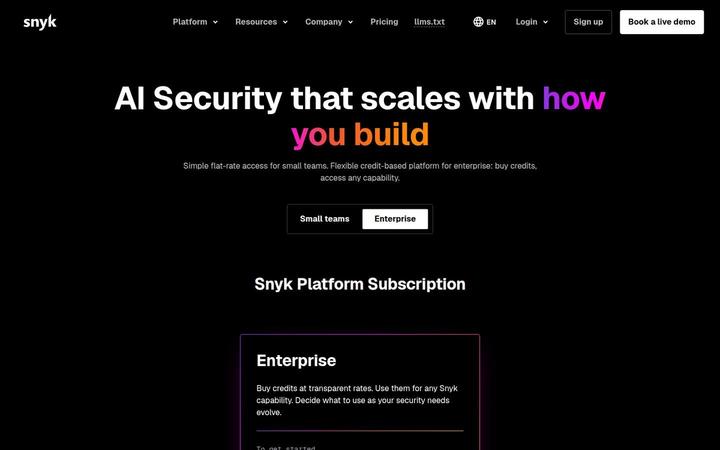
Snyk now presents its platform as one Enterprise Snyk Platform Subscription bought in prepaid credits, where '1 credit = $1' and a Platform Rate Card prices each capability in its own unit, from 'per Active Contributor / per Day' to 'per Assessment'. A Small teams tab sits beside it, and the page is built to explain the credit pool step by step: buy credits, use any capability, read the rate.

Suno sells music generation on credits, with three plans that pair a credit allowance with download counts and commercial rights. Free refills '50 credits per day', Pro at '$8 /month' carries '2,500 credits per month' and the 'MOST POPULAR' badge, and Premier at '$24 /month' carries '10,000 credits per month' and Suno Studio, with annual billing selected by default at 'SAVE 20%'.

Synthesia sells AI video on a credit pool that sits on top of a free monthly allowance, and every paid card converts its credits into minutes of video, minutes of dubbing, survey responses and Syren videos. Basic is $0 with 500 credits a month, Starter is $14/mo ($168 billed yearly) with 15,000 credits a year, Pro is $59/mo ($708 billed yearly) with 72,000 credits a year at a selectable credit level, and Enterprise moves to custom credit volumes. The cards lead straight into a 'Compare plans' table, an API pricing band and an Enterprise block.
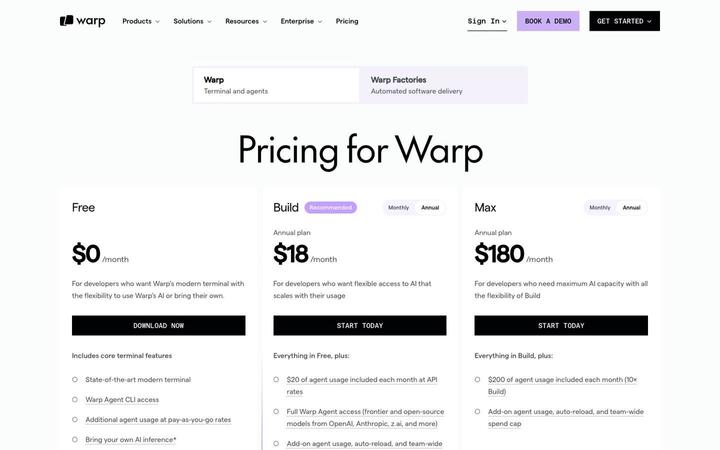
Warp prices AI work as a dollar balance converted to credits: Build at $18 a month includes '$20 of agent usage included each month at API rates', Max at $180 includes $200, and Business at $45 per user includes $20 per seat. The free plan keeps the terminal and opens AI through pay-as-you-go top-ups or the buyer's own inference, so the subscription prices access and the credits price the agent's work.
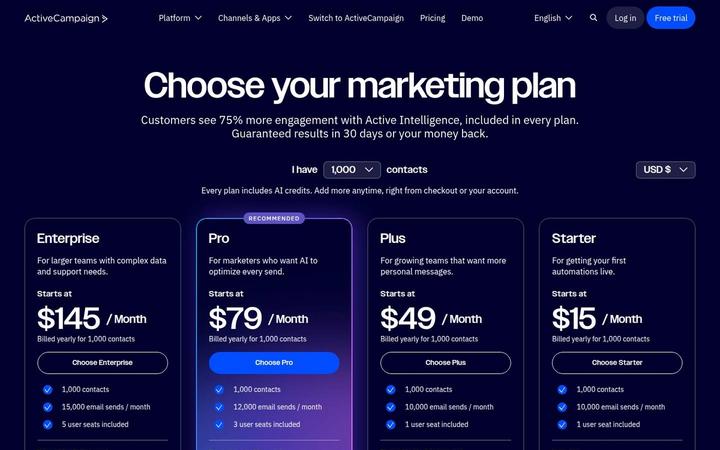
ActiveCampaign prices four plans by contact band, each with a printed starting price and a 'Choose' button, and now adds AI credits as a second meter: every plan includes 500, with more available from checkout or the account. A single contact selector sits above the cards, and each card translates its plan into concrete numbers, from '15,000 email sends / month' to '1 user seat included'. Email sends still scale as a multiple of the contact limit, from '10x' to '15x'.
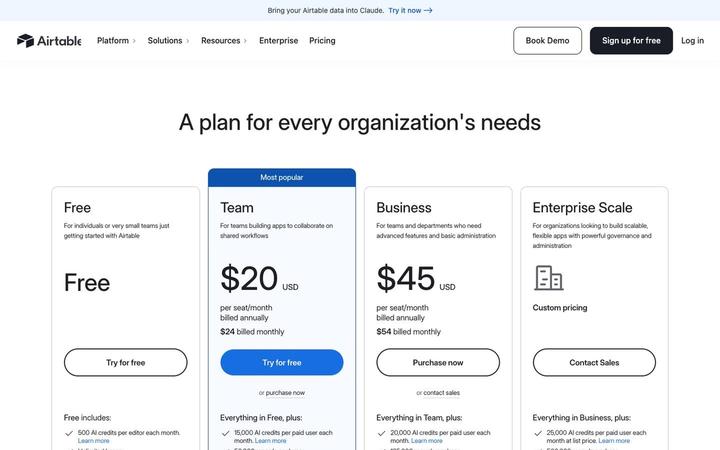
Airtable prices four plans per seat, Free, Team at $20, Business at $45 and Enterprise Scale on custom pricing, and attaches a monthly pool of AI credits to every seat. Credits are the first bullet on each card and step from 500 per editor on Free to 25,000 per paid user, with top-up packs priced in the table. Annual and monthly prices print together on each card, so the commitment discount is visible at a glance.
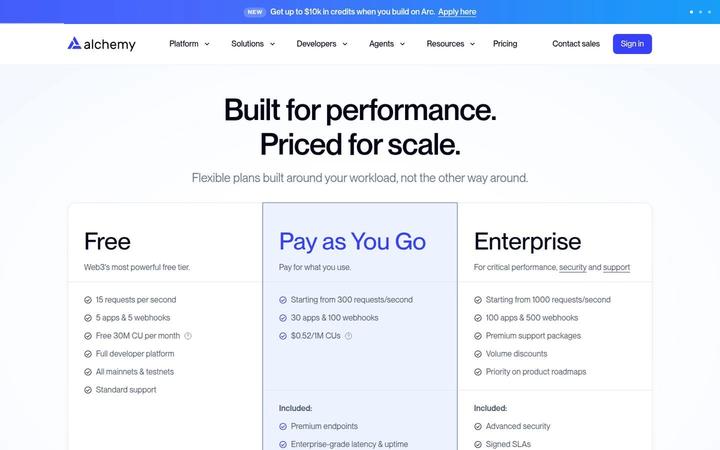
Alchemy prices blockchain infrastructure on one published rate, $0.52 per 1 million compute units, and sells peak throughput as its own meter: $160 for each 5,000 CU/s block above the 300 RPS that Pay as You Go includes. A working estimator itemizes compute, included capacity and overage into a monthly total, so a developer can model the bill before signing up.
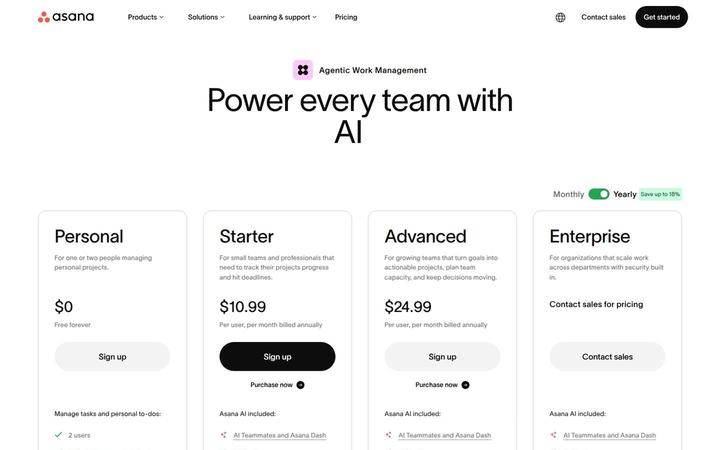
Asana pairs a per-user ladder, Personal at $0, Starter at $10.99, Advanced at $24.99 and Enterprise through sales, with a metered AI layer priced in the open. Each paid plan includes a pool of AI requests, and more cost $0.50 each in prepaid usage packs or $0.60 each pay as you go, under the banner 'One flat rate for every AI request'. Seats price the work management product, requests price the work AI Teammates and Asana Dash do, and optional modules such as Timesheets and Budgets extend down to Starter.

Attio prices its CRM per user and runs usage on credits in two pools: seat credits that grow with headcount, from 100 to 2,500 per user per month, and a shared workspace pool. A published top-up ladder sells more workspace credits from +5,000 a month at $70 annually to +50,000 at $475, so a growing bill can be modeled from the page. Credits open the comparison table, ahead of every feature.
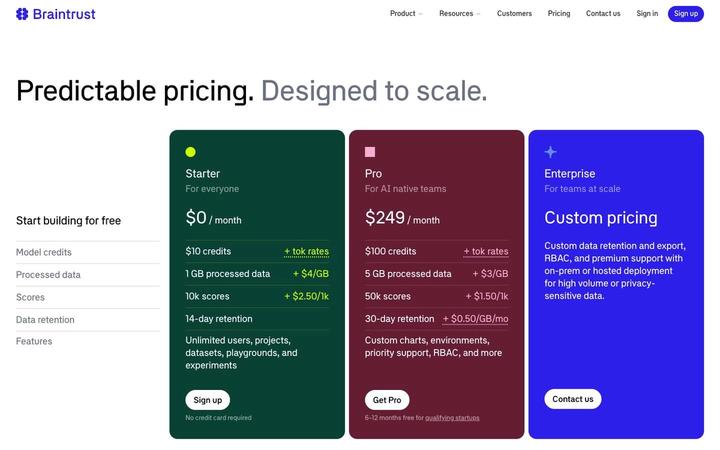
Braintrust pairs a flat platform fee, $0 on Starter and $249 a month on Pro, with four metered dimensions: model credits, processed data, scores and data retention. Each included allowance sits on the card beside its overage rate, and users, projects and experiments are Unlimited on every tier, so the bill follows traced traffic while headcount stays free.
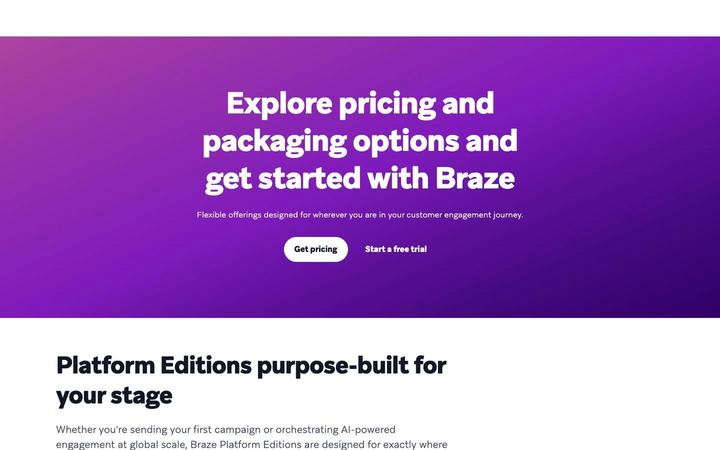
Braze prices on two axes: Monthly Active Users set the scale of the subscription, and Action Credits are a pooled currency spent across every channel and certain BrazeAI products. Four Platform Editions, Go, Select, Pro and Enterprise, are named for company stage, and every edition is priced in a conversation, which lets each contract fit the brand's audience and channel mix.
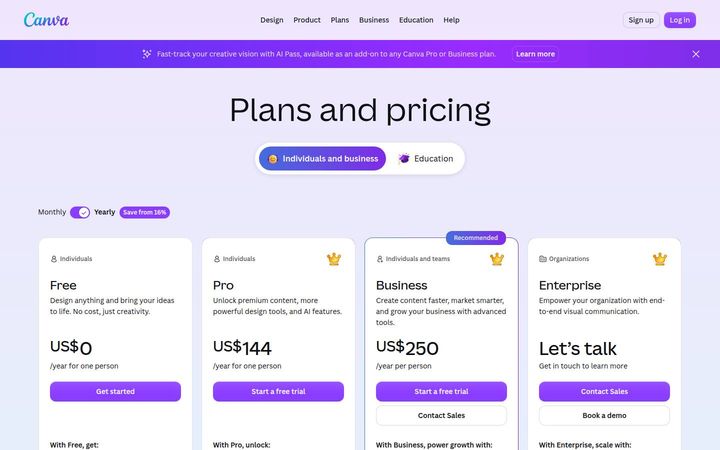
Canva sells a seat ladder, Free, Pro at US$144 a year for one person, Business at US$250 a year per person and Enterprise on 'Let’s talk', and inside every seat sits a shared AI allowance. Allowances are stated as multiples, 10x and 20x more AI than Canva Free, and a footnote explains that Standard, Premium and Ultra AI tools draw on the pool at different rates, a credit system running behind a seat price.
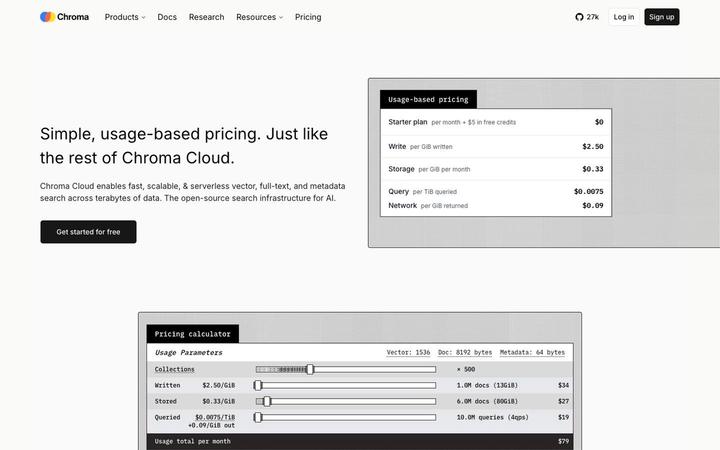
Chroma prints all four metered rates in the hero, Write at $2.50 per GiB, Storage at $0.33 per GiB per month, Query at $0.0075 per TiB and Network at $0.09 per GiB returned, then hands the reader a calculator that turns documents and queries into a $79 monthly total. Plans sit on top of the meter: Starter at $0 plus usage, Team at $250 a month plus usage with $100 in credits, and Enterprise on custom terms.

ClickUp prices on seats with AI built into every plan: Free Forever at $0, Core at $9 and Business at $17 per 'user / mo · billed yearly' against struck regular prices, Enterprise at 'Custom', and a MAX plan at $100. Each tier carries its own pooled credit allowance, with top-ups at '$10 per 10K credits', framed by a '100% Money-back Guarantee', a written 'SUPER FAIR BILLING POLICY' and a savings calculator that ends in 'Get a quote'.

Close sells four per-user plans, Solo at $9 through Scale at $139 per user per month on annual billing, and attaches a pool of AI credits to every seat, from 500 to 2,000 a month. Its AI sales agent, Chloe, is included on every plan and paid for by the work she does, while calling and SMS pass through at cost.

Customer.io meters on profiles, people plus objects, and starts at '$100 per month / billed monthly for 5k profiles' with a profile selector built into the entry card. Seats are unlimited on every plan, and the Usage + Billing block prints the marginal rates: $0.009 per additional profile, $0.12 per additional 1,000 emails and $10 / 100K AI credits. From Premium up, profile and email volume are priced per customer, which is where the sales team shapes each deal.
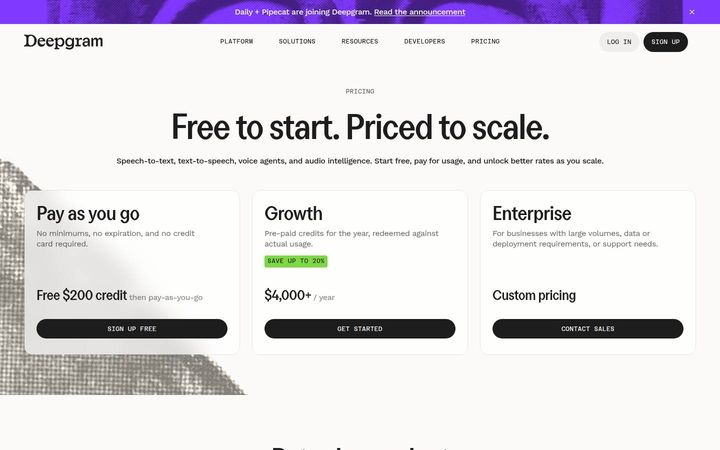
Deepgram's page opens on "Free to start. Priced to scale." and three cards: Pay as you go with a Free $200 credit, Growth at $4,000+ / year in pre-paid credits for up to 20% off, and Enterprise at Custom pricing. A tabbed "Rates by product" section names the meter for each product, per second of audio, per 1,000 characters, or per minute of connection time, and a sixteen-question FAQ carries the billing mechanics, from hourly rates to the 10% overage premium.

Descript prices per person and attaches two monthly allowances to every seat, media hours and AI credits: Hobbyist at $16 with '10 media hours / month' and '400 AI credits / month', Creator at $24 with 30 and 800, Business at $50 with 40 and 1500, on annual billing. Each paid plan also caps team size, and Enterprise is 'Custom', with 'AI credits and media hours: sized to your team'.
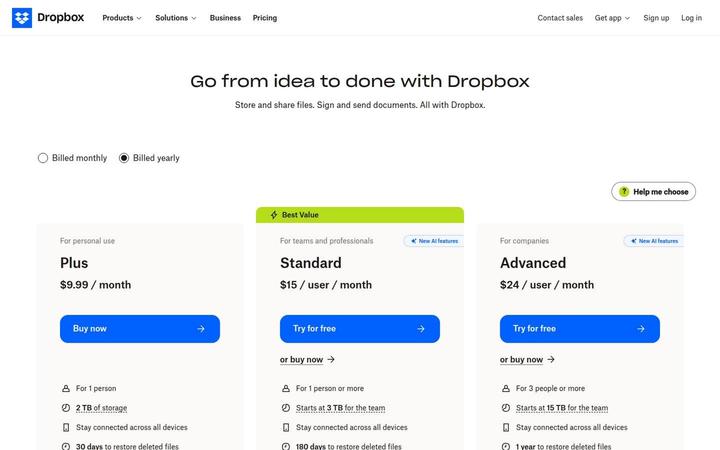
Dropbox shows three paid cards, Plus at $9.99 / month for one person, Standard at $15 / user / month tagged Best Value, and Advanced at $24 / user / month for 3 people or more, with Basic Free and Enterprise in a compact row beneath. Storage is pooled at the team level, 'Starts at 3 TB for the team' on Standard and 15 TB on Advanced, and both team plans now carry 'AI in Dropbox' with a monthly AI credit allowance that scales by tier. Seats buy access, while the plan sets both the storage pool and the credit pool.

Exa prices its search API per thousand requests, with a rate for each endpoint: Lite Search $4, Auto Search $7, Deep Search $12, Contents $1 per 1k pages, Monitors $2 and Answer $5, plus $1 per 1k for each result above ten and for AI page summaries. Agent runs offer metered compute at $0.10 per ACU and six effort levels: five fixed from $0.012 to $1.00 per request and an Ultra level billed on usage. The plan cards divide access, throughput and compliance, and the rate card below them carries the price.

Figma prices a matrix: four plans, Starter, Professional, Organization and Enterprise, by three seat types, Full, Dev and Collab, with every price printed down to Enterprise at $90/mo for a Full seat. Each seat carries a monthly allotment of AI credits, which makes a credit pool attached to each seat the second layer of the model.

Framer sells a flat site subscription at $0, $10 and $30 a month and Custom, and layers a monthly AI credit allowance that the buyer picks from a dropdown inside each paid card, with '2× credits first month' on both paid plans. Its comparison table prints overage rates and hard ceilings together, such as '150 then $20 per 100 (700 max)' for pages, so a buyer can model both the next increment and the worst case.
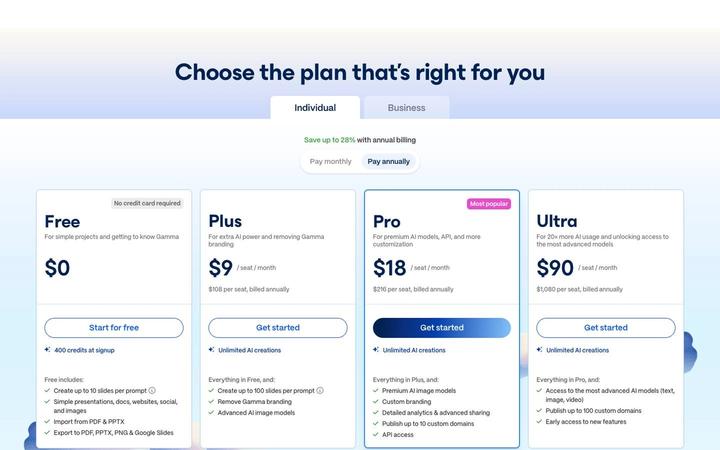
Gamma prices per seat across four plans, $0, $9, $18 and $90 per seat per month on annual billing, and pairs every paid seat with 'Unlimited AI creations' under fair use. Credits run underneath: Free starts with '400 credits at signup', and the footnote states that 'Premium features (Agent, advanced models, & API) require credits'. The page is compact, cards then an eleven-question FAQ, and every plan is bought online.
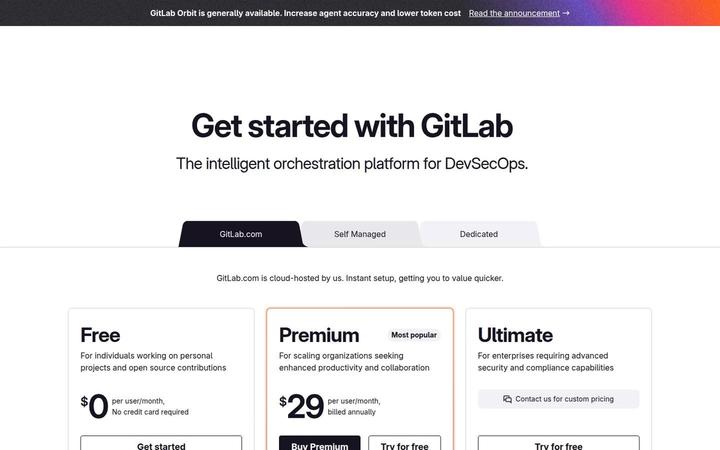
GitLab runs a seat license at its core, $0 Free and $29 per user per month for Premium, with Ultimate set through 'Contact us for custom pricing'. Around the seats sit priced meters for AI, CI, storage and now platform capacity: GitLab Credits at $1 each, compute minutes at $10 per 1,000, storage at $5 per 10GiB and a Coming soon Advanced Capacity add-on at $12,000 per top-level group per year. GitLab Orbit, sold in query packs, and GitLab Flex, one annual commitment for seats and credits, complete a catalog built for agent-scale workloads.

Hex bills per Editor, "$36 per Editor / month" on Professional and "$75 per Editor / month" on Team, and opens its comparison table with "Unlimited users", so the people who read published apps carry no seat cost. Alongside the seat, AI credits and compute profiles step up by plan, from Limited to Premium credits and from Small compute to advanced compute add-ons, a hybrid of seats for builders and capacity for the work they run.
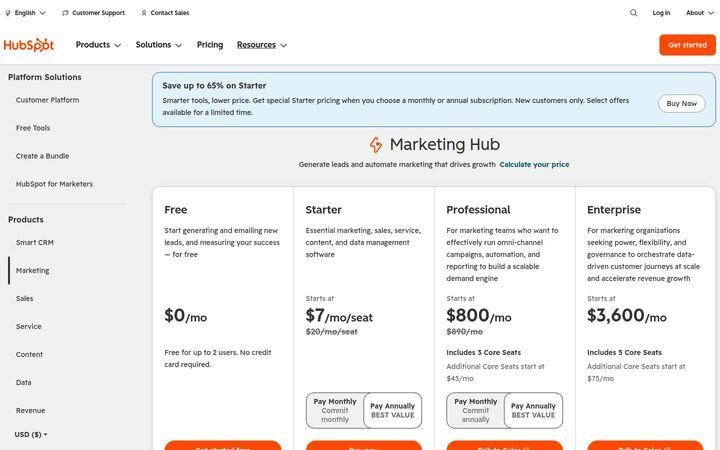
HubSpot's Marketing Hub blends four meters into one plan, a platform price, Core Seats, a marketing contact tier and a pool of HubSpot Credits for AI agents, and adds a one-time onboarding fee at Professional and Enterprise. Seat expansion, onboarding fees and the Enterprise floor are all printed, and the HubSpot Credits section frames AI usage around buying choice and control: 'Buy credits in packs to easily plan your spend or Pay-as-You-Go for added flexibility', backed by action-level spend limits.

Jasper sells two plans: Pro at $59 per seat per month on the yearly term, scoped to one seat with 2 Brand Voices, 5 Knowledge assets and 3 Audiences, and Business at custom pricing with unlimited customization and team features. The FAQ adds the usage layer: GEO Hub reports and Agents 'run on credits, which sit alongside seat-based pricing on the Business plan', a seat-plus-credits model for AI work.

Jira prices per user with volume tiers. The page opens with a 'Team size' input and a Monthly or Annually switch that reprice the cards in place: Standard at '$8.48 per user / month' and Premium at '$15.56 per user / month' for the team size entered. Each seat carries automation steps and Rovo AI credits per user per month, and data analysis now runs through the tiers, from 'Cross-source data analysis' on Standard to 'Advanced data analysis' on Enterprise.

LangSmith sells three plans: Developer at $0 per seat, Plus at $39 per seat and a custom Enterprise, with the two self-serve plans followed by 'then pay as you go'. Every service beyond the seat meters in one unit, 'LangChain Standard Units. $1.00 / LSU', at a published rate per resource. A usage calculator built as a stack picker turns those rates into a monthly estimate a buyer can share.

Linear prices per user, with annual billing switched on by default and a free plan that caps scope, not headcount: 'Unlimited members', '2 teams' and '250 issues'. The Free card now carries the agent layer too, 'Agent platform', 'Linear Agent' and 'Loops', while agent work such as coding sessions and loops draws on a separate AI credit meter. Four cards run from $0 to Custom, and a long comparison table marks each feature 'Included' or 'Not included' and prints real limits.
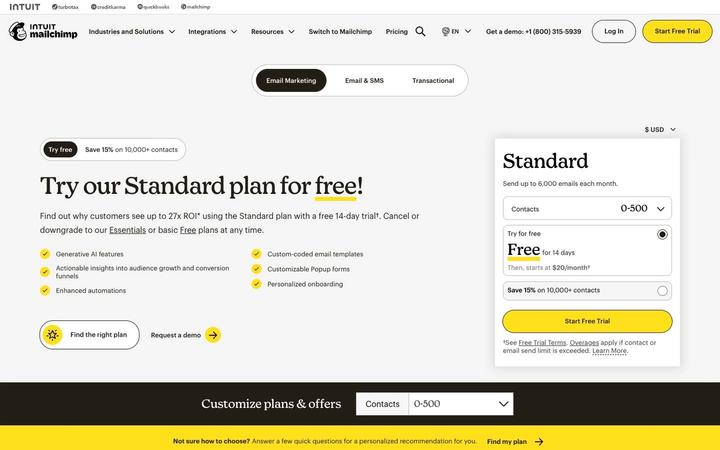
Mailchimp prices email marketing by contact band, twenty of them from '0-500' to '1,000,000+', and sets sending capacity as a multiple of the same number: '15X contacts', '12X contacts' or '10X contacts' a month by plan. The page is built as a trial funnel around Standard, which is the hero offer, the 'Best value' plan and the default 14-day trial.
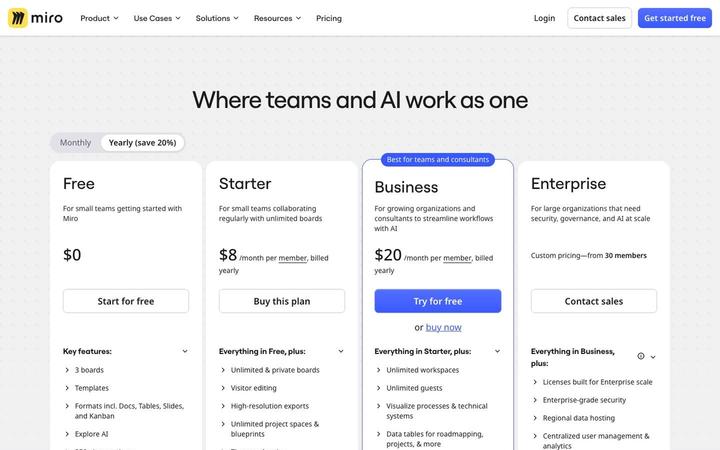
Miro sells seats with AI on top: Starter at $8 and Business at $20 per member per month billed yearly, each adding AI credits per member and a daily allowance of MCP calls for connected AI tools. At Enterprise, from 30 members, the credits become an org-wide pool that 'Starts from 2500 credits per month', a clear view of seat pricing taking on AI usage.
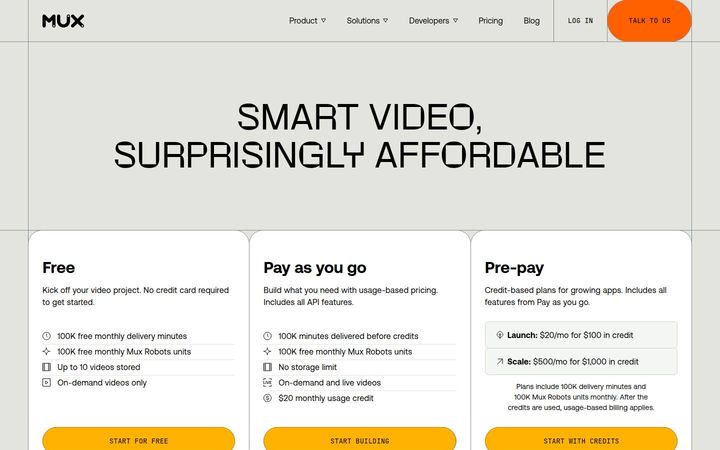
Mux prices video by the minute and teaches the unit on the page: a 'What the minute?' explainer, a scenario switcher for what $100 of credit buys, a full rate sheet and an inline estimator with SHOW ME THE MATH. Every plan includes 100K free delivery minutes and 100K Mux Robots units a month, resolution and quality work as multipliers on one base rate, and a dedicated 'AI workflows (Mux Robots)' list prices thirteen AI jobs by minute, job and, for generated text, artifact.

Neon prices serverless Postgres on raw resources, $0.106 per CU-hour and $0.35 per GB-month on Launch, and turns those rates into a budget with a Typical spend figure on each paid card, set by a workload dropdown. Compute scales to zero when idle, so the meter follows real work, and the Free plan states every allowance per project. A rewritten 'Included in every Neon project' section and new FAQ answers on Free plan limits, Claimable Neon and idle compute frame the backend around the database as part of every plan.
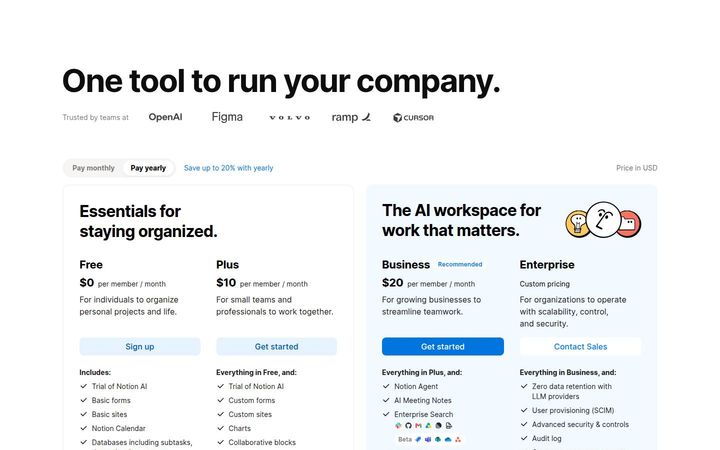
Notion sells four per-member plans in two framed groups, 'Essentials for staying organized' for Free and Plus and 'The AI workspace for work that matters' for Business and Enterprise, so the line between organizing and AI runs straight through the plan row. AI agents carry their own meter: Custom Agents are 'Free to try, then $10 per 1,000 monthly Notion credits', and the Workers beta runs on the same credits, which lets autonomous work scale apart from seats.

Perplexity's Enterprise view prices per seat with a credit allowance attached to each one: Enterprise Pro at '$34 / month per seat when billed annually' with '500 monthly Computer credits/seat', and Enterprise Max at $271 with '15,000 monthly Computer credits/seat'. A third card for 'Additional security and governance' reads 'Custom pricing', and an organization can mix Pro and Max seats in one account.

PostHog prices a suite of developer tools as one signup with two states, Free and Pay-as-you-go, and a monthly free allowance on every product. Each product meters in its own unit, from 1M analytics events to 10 GB of logs, with per-unit rates such as '$0.000198 each after the first 1M' and a Logs custom retention rate of '$0.05' per GB for every month kept. 'Set billing limits' is the primary button on the paid card.

Postman sells seats with AI credits attached: Free at $0, Solo at $9 a month and Team at $19 per user a month billed annually, with Enterprise set through 'Contact sales for pricing'. Overage steps down by plan, from '$0.05 / credit' on Solo to '$0.035 / credit (volume pricing available)' on Enterprise, and a new Context Graph meter adds included API queries on every plan, then '$0.01 / query'.

Replit sells subscriptions that carry a dollar allowance for AI models, '$20 towards more powerful models' on Core and '$100 towards most powerful models' on Pro, with metering behind it on Effort-Based Pricing. The Pro card holds a credit dropdown that steps from '$90 / month' to '$2,000 / month', and the Enterprise card reads as a governance package led by 'SSO, SCIM & audit logs'.

Retool prices two seat types as a sum on each card, $10 a month per builder plus $5 a month per internal user on Team and $50 plus $15 on Business, and layers workflow runs, pooled AI credits and agent hours on top. The cards read as aligned checklists of included and not-included features, and the comparison table publishes the secondary meters, from an external user volume curve to additional workflow runs at '$75 per 5,000 runs per month'.
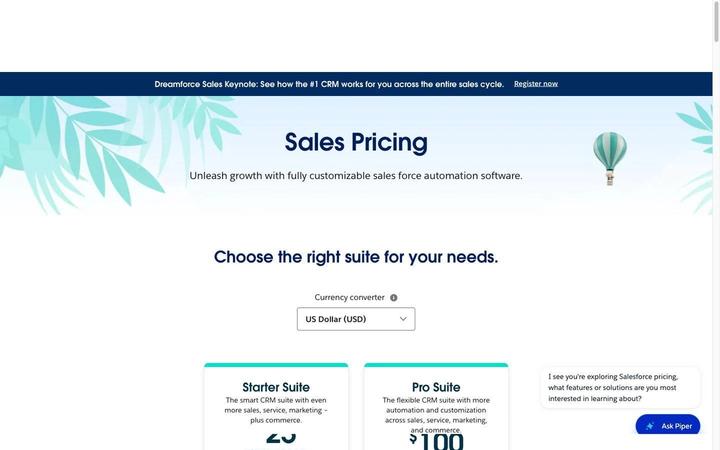
Salesforce prints a per-user list price for every Sales Cloud edition, from Starter Suite at $25 to Max at $550 USD/User/Month, then prices the layers around the seat: add-ons with 'From' floors, a Premier Success Plan at '30% of net license fees', and '2.75M Flex Credits per org per year' on Max. The seat stays the core metric while AI arrives as a consumption meter alongside it.

Socure prices identity verification per evaluation, and each evaluation is a bundle of named checks: $0.80 for document verification, $0.90 with a watchlist screen, $1.00 for KYC, fraud and watchlist with a document step-up, and $1.30 with prefill added. Socure Launch tops that with $1,000 in free credits every month, and Socure Enterprise moves to volume and spend-based pricing for the full RiskOS platform.
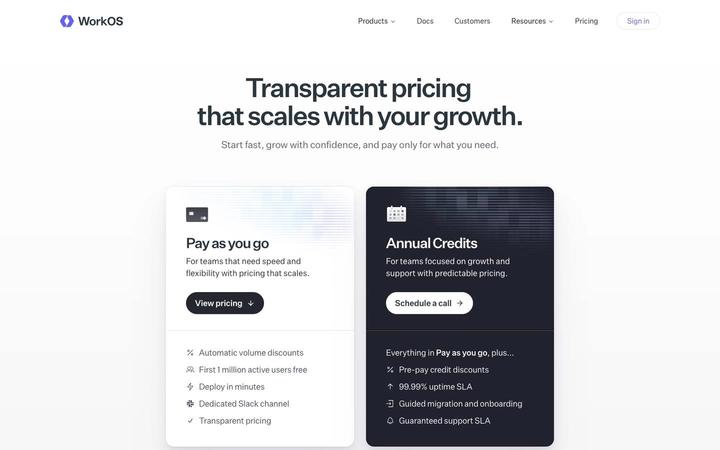
WorkOS turns its pricing page into a live estimator: six product modules, each with a slider, a rate panel and a running monthly total. SSO and Directory Sync are priced per connection, $125 each and falling to $65 at 51 to 100 connections, and AuthKit is free to 1 million monthly active users, so the meter is the enterprise customer a WorkOS user has just signed.
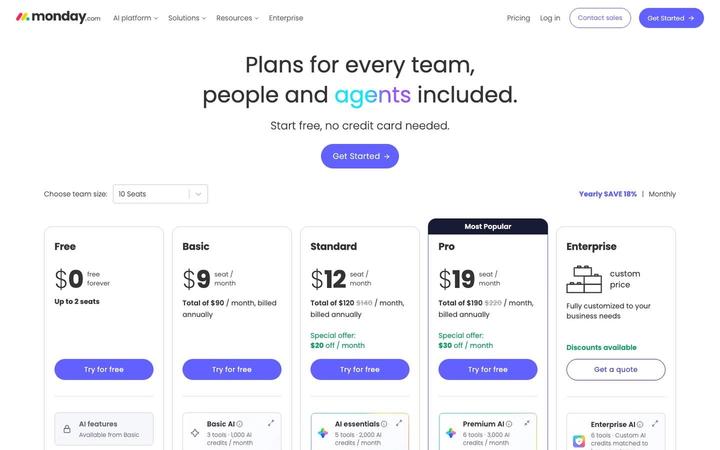
monday.com prices work management per seat with a pool of AI credits on every paid plan, and the headline says why: 'Plans for every team, people and agents included.' A team-size selector turns each seat price into a monthly total, so Basic at $9 a seat reads 'Total of $90 / month, billed annually' at 10 seats. The same page carries full pricing for monday CRM, monday service and monday dev.

n8n prices on one unit, the workflow execution, and states the rule in its second line: 'Pricing based on monthly workflow executions, regardless of complexity.' Users, workflows and integrations are unlimited on every plan, so four tiers from '$20' to 'Contact Sales' separate by execution volume, governance and where n8n runs, Cloud or self-hosted.
Orb's CTO on the choice between committing a dollar amount and buying custom credits, how commitments earn a better rate per credit, and how usage past a commitment bills at an overage rate.
How Orb represents a commitment to a dollar amount as a minimum, adding the difference to the invoice when usage falls short, and how plan phases step committed spend up on a schedule.
Selling credit balances that customers draw down: how credit rates and the credit model behind them shape where value is captured, from plans built on credit allocations to bulk discounts on larger commitments.