Pricing pages with a calculator
Pricing pages with a calculator or estimator: usage, seats or outcomes in, a monthly price out. The tool that makes a usage-based price concrete before anyone signs up.
Of the 44, 26 price by usage, 36 show a free tier, 28 include a comparison table and 38 keep a contact-sales tier.
Alchemy
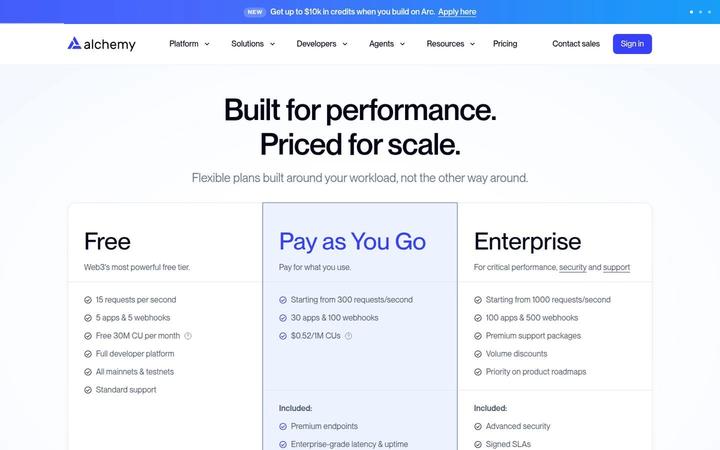
$0.52/1M CUAlchemy prices blockchain infrastructure on one published rate, $0.52 per 1 million compute units, and sells peak throughput as its own meter: $160 for each 5,000 CU/s block above the 300 RPS that Pay as You Go includes. A working estimator itemizes compute, included capacity and overage into a monthly total, so a developer can model the bill before signing up.

Algolia
From $0.50/1K search requests (after 10K free)Algolia prices hosted search on two meters, search requests and records, and prints the included allowance and the overage rate for both on every pay-as-you-go card. Grow and Grow Plus share the same allowances and record rate, and the request rate carries the AI: '$0.50 per additional 1K search requests' for keyword search, '$1.75' for keyword search with AI capabilities. A usage estimator with sliders for both meters now turns those rates into a starting monthly price per plan, while Elevate sits apart as an annual plan with volume-based discounts.
Auth0
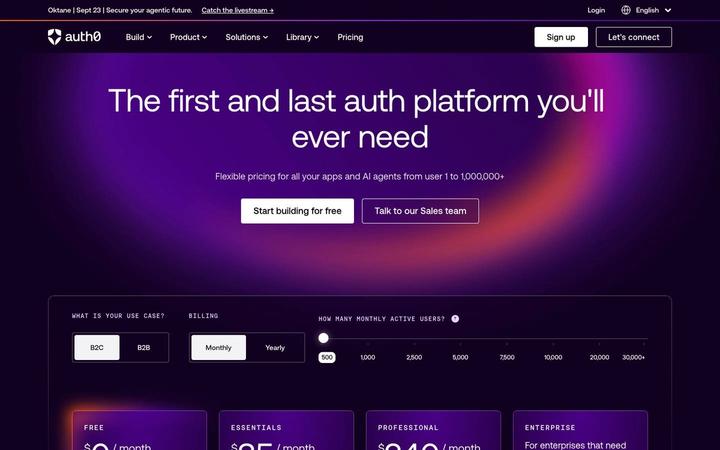
$35/mo (up to 500 MAU)Auth0 prices customer identity on monthly active users, and a three-part configurator, B2C or B2B, Monthly or Yearly, and an MAU slider from 500 to 30,000+, reprices the cards live. Free carries 'Up to 25,000 monthly active users' with 'No credit card needed to sign up', and the paid plans start at $35 a month and $240 a month at 500 MAU and scale with the slider. Feature depth, from MFA to AI agent security, separates the plans.
Braintrust
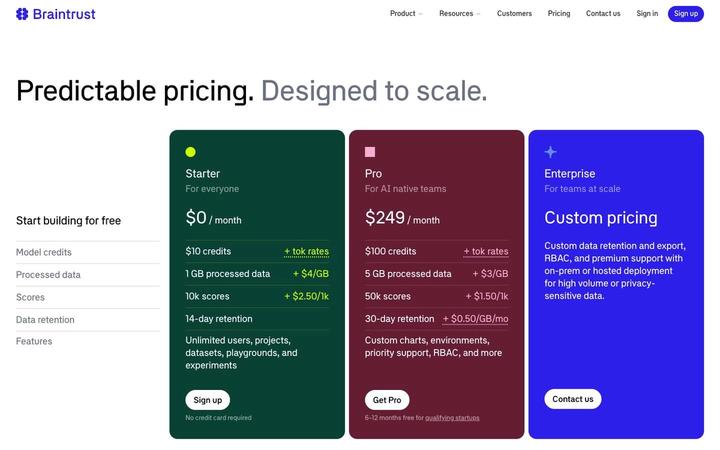
$249/moBraintrust pairs a flat platform fee, $0 on Starter and $249 a month on Pro, with four metered dimensions: model credits, processed data, scores and data retention. Each included allowance sits on the card beside its overage rate, and users, projects and experiments are Unlimited on every tier, so the bill follows traced traffic while headcount stays free.
Brevo
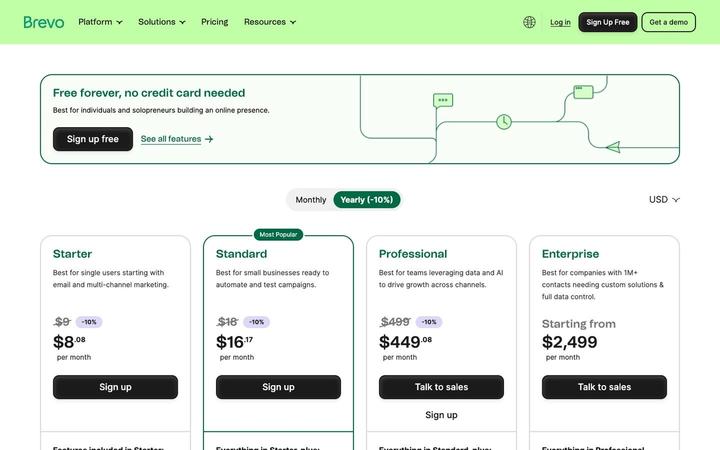
$9/mo for 5,000 emailsBrevo bills on monthly email volume, with contacts included at no charge, and the 'Customize your plan' configurator turns that meter into a live total with a slider from 5k to 100k emails. The card ladder, Starter $9, Standard $18, Professional $499 and Enterprise 'Starting from $2,499 per month', separates on capability, while volume is sized inside each plan.
Chroma
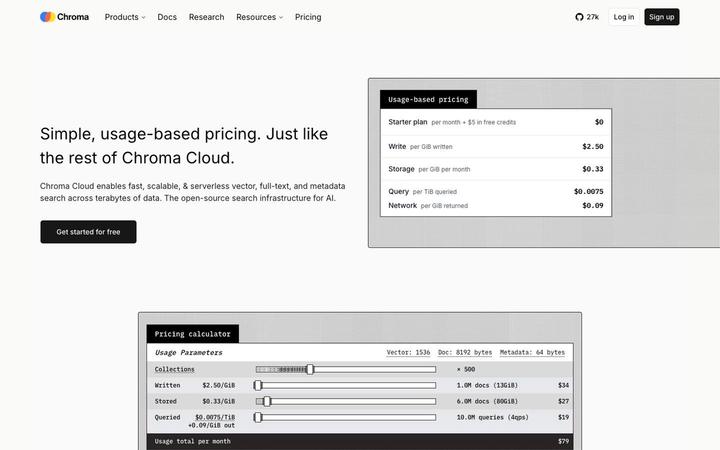
$250/mo + usageChroma prints all four metered rates in the hero, Write at $2.50 per GiB, Storage at $0.33 per GiB per month, Query at $0.0075 per TiB and Network at $0.09 per GiB returned, then hands the reader a calculator that turns documents and queries into a $79 monthly total. Plans sit on top of the meter: Starter at $0 plus usage, Team at $250 a month plus usage with $100 in credits, and Enterprise on custom terms.
Clay
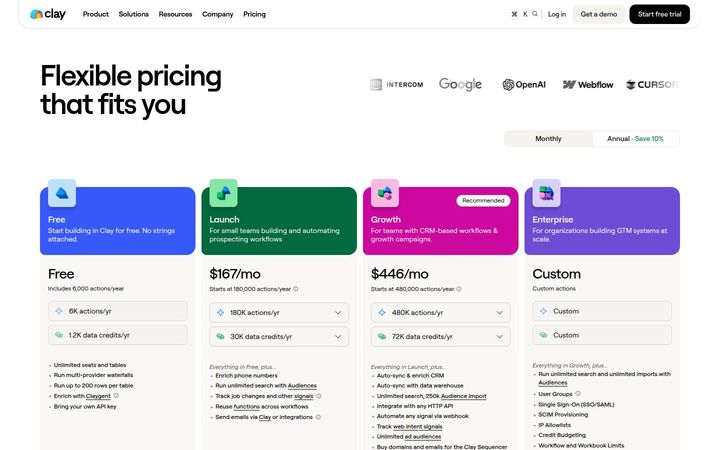
$167/moClay prices on two meters and no seats. Every plan carries unlimited seats and tables, and the bill is Actions for work done on the platform plus Data Credits for data bought from its marketplace. Each paid card is a live configurator whose two dropdowns add up to the headline price, and Enterprise is now packaged as a governance tier built around access controls and credit budgeting.
Clerk
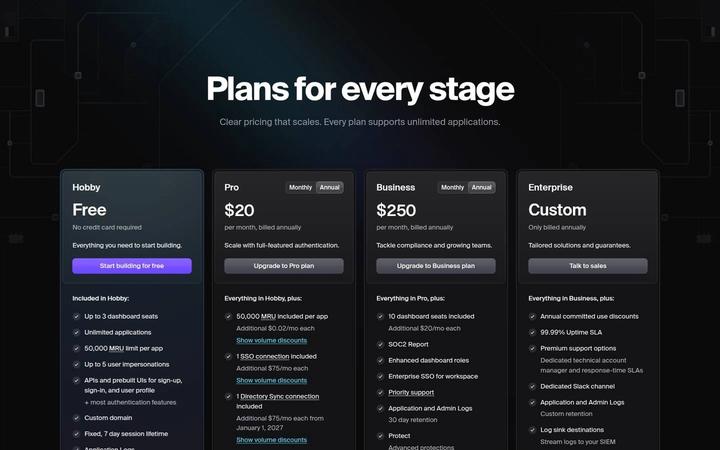
$25/mo ($20/mo annual)Clerk charges a base plan fee, $25/mo for Pro and $300/mo for Business ($20 and $250 billed annually), plus usage on monthly retained users above 50,000 per app. It prints the rate card in detail: MRU bands from $0.02 down to $0.012 a month each, SSO and Directory Sync connections on a ladder from '$75/mo each' to '$48/mo each' before '251+ Contact us', a new Protect add-on at '10,000 free per month, then $0.002 per check' with its own slider, and a 0.7% Billing fee stacked on Stripe's. The metric itself is the idea to study: a user counts once they return 24+ hours after signing up.
ClickHouse
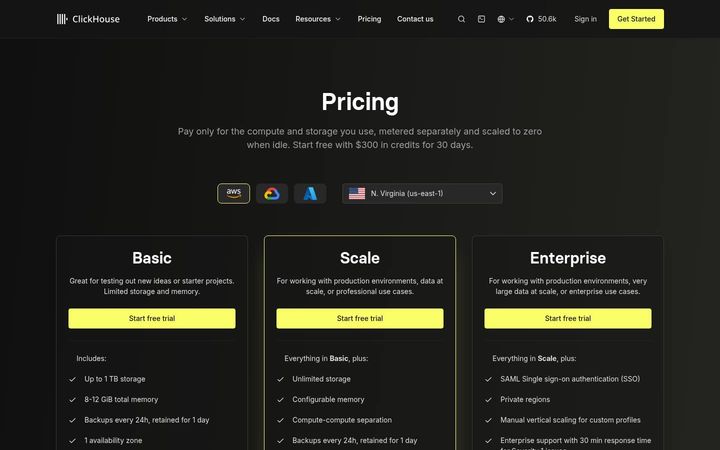
$0.2181/compute unit/hrClickHouse opens with its model in one line, 'Pay only for the compute and storage you use, metered separately and scaled to zero when idle.', sets the cloud and region, then gives every tier the same two meters: storage flat at '$25.30 Per 1TB / mo' and compute at $0.2181, $0.2985 and $0.3903 per unit per hour. The estimator opens pre-filled with a 1 TB real-time analytics workload at '$658' a month, and an eight-question FAQ explains each line that can appear on the bill.

ClickUp
$9/seat/moClickUp prices on seats with AI built into every plan: Free Forever at $0, Core at $9 and Business at $17 per 'user / mo · billed yearly' against struck regular prices, Enterprise at 'Custom', and a MAX plan at $100. Each tier carries its own pooled credit allowance, with top-ups at '$10 per 10K credits', framed by a '100% Money-back Guarantee', a written 'SUPER FAIR BILLING POLICY' and a savings calculator that ends in 'Get a quote'.
Cloudinary
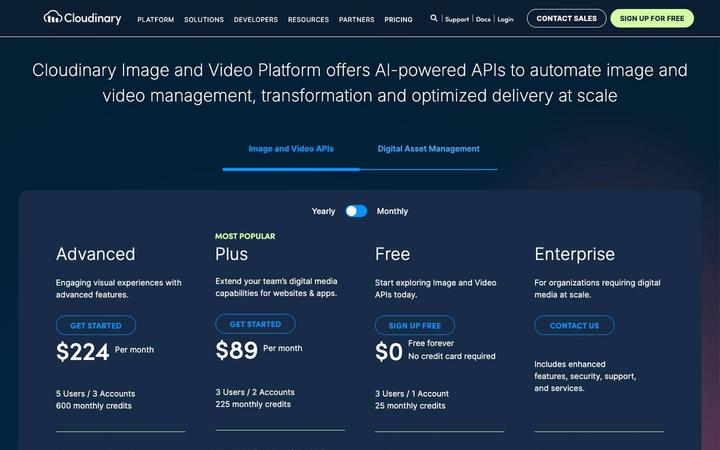
$89/moCloudinary sells monthly credit bundles, 25 on Free, 225 on Plus at $89 and 600 on Advanced at $224, and defines the credit in one visual row: 1 credit equals 1,000 transformations, 1GB managed storage, 1GB image bandwidth or, on paid plans, 2GB video bandwidth. One fungible unit covers processing, storage and delivery, so each customer spends its allowance on whatever its media workload needs.

Customer.io
$100/mo for 5k profilesCustomer.io meters on profiles, people plus objects, and starts at '$100 per month / billed monthly for 5k profiles' with a profile selector built into the entry card. Seats are unlimited on every plan, and the Usage + Billing block prints the marginal rates: $0.009 per additional profile, $0.12 per additional 1,000 emails and $10 / 100K AI credits. From Premium up, profile and email volume are priced per customer, which is where the sales team shapes each deal.
ElevenLabs
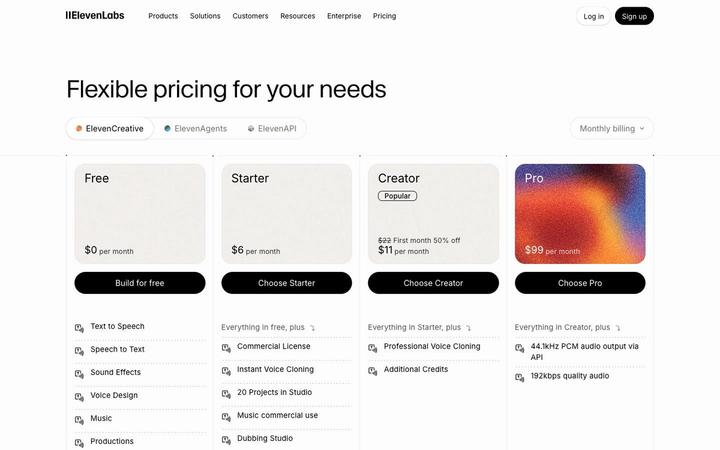
$6/moElevenLabs sells monthly credit bundles across seven plans, from Free with 10k credits per month to Business at $990 per month with 6M credits and 10 seats, split into an individual row and a For Businesses row. One credit currency meters speech, music, dubbing, image and video, and the page translates it into minutes of audio twice: in a calculator that recommends a plan and in a table that prints the price of an extra minute for every tier. Seats arrive at Scale, so the model is credits first with team access layered on for businesses.
Fivetran
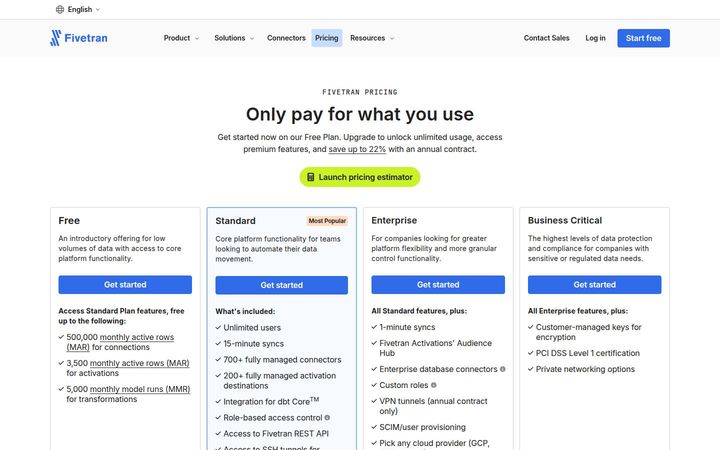
QuoteFivetran meters three products, Connections, Transformations and Activations, on monthly active rows and monthly model runs, and sells them under one plan with consolidated usage-based pricing. The four plan cards separate capability, and the dollars arrive through a pricing estimator and a worked example that totals four named connectors to $511.15.
Fly.io
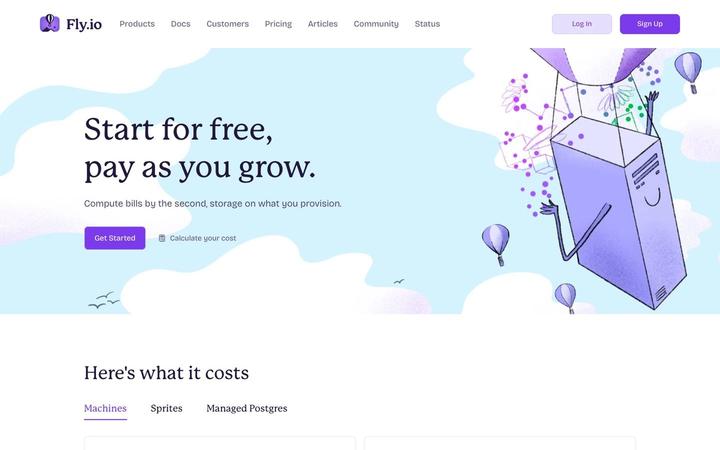
From $0.0030/hr (shared-cpu-1x, 256MB)Fly.io prices raw infrastructure: Machines 'Billed by the second while a Machine runs', volumes on provisioned capacity, and egress by region, with prices set per region through a selector. Support is sold as its own ladder at '$29 / mo', '$199 / mo' and 'From $2,500 / mo', compliance is a '$99/mo' add-on, and a Custom plan covers committed spend and volume discounts.

Framer
$10/moFramer sells a flat site subscription at $0, $10 and $30 a month and Custom, and layers a monthly AI credit allowance that the buyer picks from a dropdown inside each paid card, with '2× credits first month' on both paid plans. Its comparison table prints overage rates and hard ceilings together, such as '150 then $20 per 100 (700 max)' for pages, so a buyer can model both the next increment and the worst case.

Ghost
$15/moGhost(Pro) prices four hosting plans on audience size, registered members, with an audience slider above the cards that sets the member count the plans are quoted for. The hero promises 'No payment fees', and the table's Transaction fees row reads 0% on every plan that takes payments, so Ghost earns a flat fee while the publisher keeps subscription revenue.
Grafana
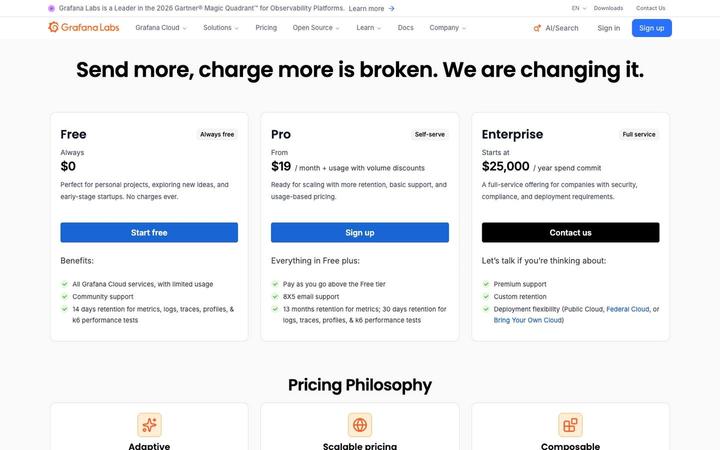
$19/moGrafana Cloud prices on a $19 per month platform fee that carries an allowance on every product, then a usage meter chosen per product, with volume tiers that lower the marginal rate as a customer grows. The hero states the thesis, 'Send more, charge more is broken. We are changing it.', and the page backs it with an embedded calculator that draws the tier curve and a cost-reduction band under the rates. Enterprise prints its entry point: 'Starts at $25,000 / year spend commit'.
Help Scout
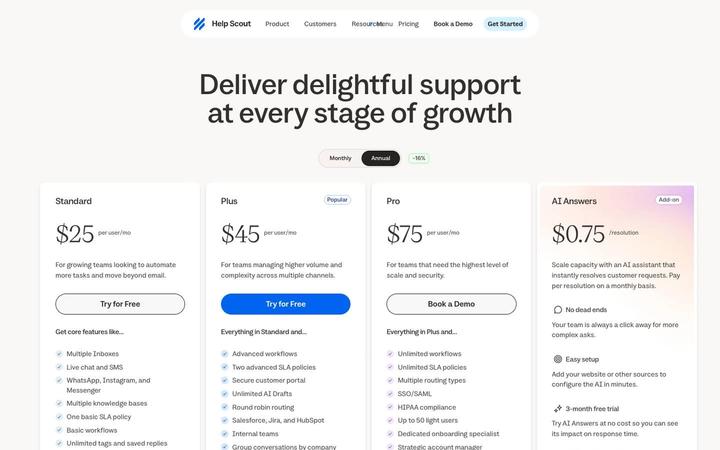
$25/user/moHelp Scout prices the helpdesk per user, Standard at $25, Plus at $45 and Pro at $75 per user/mo on annual billing, and sells its AI agent as a fourth card, AI Answers at $0.75 per resolution. A savings calculator, a monthly spending cap and a 3-month free trial all serve the outcome meter, and a free plan for 5 users sits one line below the cards.

HubSpot Credits
$10/1,000 creditsA launch page for a pricing model: HubSpot Credits are announced like a product, with the controls around spend as the headline. Three principles, one public rate of $10/1,000 credits, an outcomes-first estimator and four controls customers hold themselves make the case that credits are safe to adopt.
Intercom
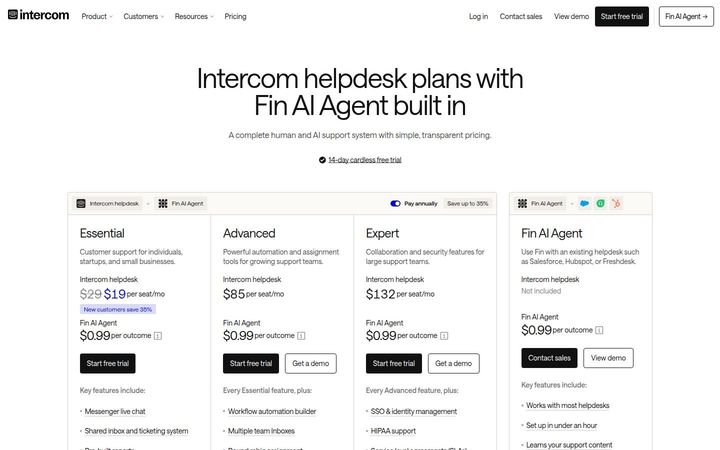
$19/seat/moIntercom prints two price lines on every card: an Intercom helpdesk seat price of $19, $85 or $132 per seat/mo with 'Pay annually' on, and 'Fin AI Agent $0.99 per outcome' for the AI agent's resolved work. A fourth card sells Fin on its own with the helpdesk 'Not included', and a live cost estimator plus a section of outcome rules sit between the cards and the add-ons.

Jira
$8.48/user/moJira prices per user with volume tiers. The page opens with a 'Team size' input and a Monthly or Annually switch that reprice the cards in place: Standard at '$8.48 per user / month' and Premium at '$15.56 per user / month' for the team size entered. Each seat carries automation steps and Rovo AI credits per user per month, and data analysis now runs through the tiers, from 'Cross-source data analysis' on Standard to 'Advanced data analysis' on Enterprise.
Kit
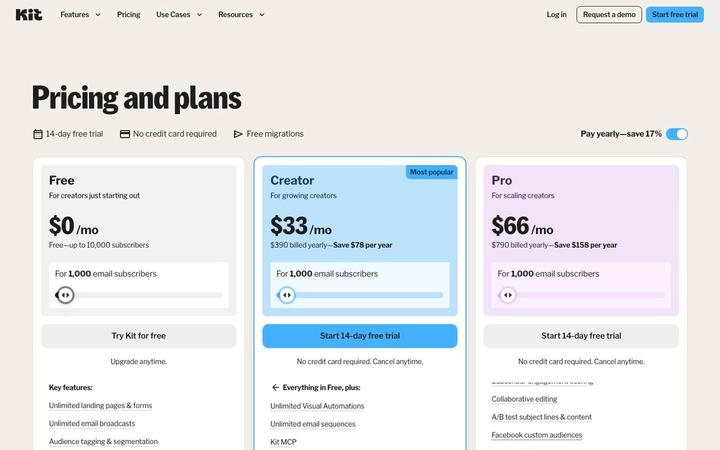
$33/mo for 1,000 subscribersKit prices on email subscribers and puts a slider inside every card, so all three prices move together as a creator drags their list size. Free carries a list of up to 10,000 subscribers, Creator is '$33/mo' and Pro '$66/mo' at 1,000 subscribers, and paid plans sell automation, analytics and team access, so the free plan builds the audience and the paid plans grow the business on top of it.

LangChain
$39/seat/moLangSmith sells three plans: Developer at $0 per seat, Plus at $39 per seat and a custom Enterprise, with the two self-serve plans followed by 'then pay as you go'. Every service beyond the seat meters in one unit, 'LangChain Standard Units. $1.00 / LSU', at a published rate per resource. A usage calculator built as a stack picker turns those rates into a monthly estimate a buyer can share.

Lemon Squeezy
5% + 50¢Lemon Squeezy prices its merchant-of-record commerce at one rate, '5% + 50¢' per transaction with no monthly fee, and sells email marketing on a separate subscriber meter that is free for up to 500 subscribers. The most interesting thing on the page is a cost table that prices the do-it-yourself stack line by line, so the take rate is read against the whole cost of selling online.
Lob
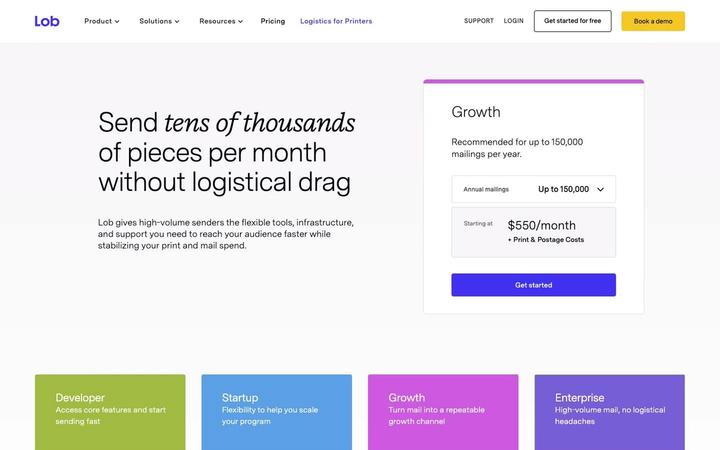
$260/moLob prices direct mail as a two-part bill and says so: a platform subscription from $0 to $550 per month, plus an all-in per-piece rate for print, postage and envelope that falls as the plan rises. A hero volume selector recommends a plan from annual mailings, and per-format rate rows, postcards from $0.905 down to $0.615, let a buyer turn a mail program into a budget.
Mailchimp
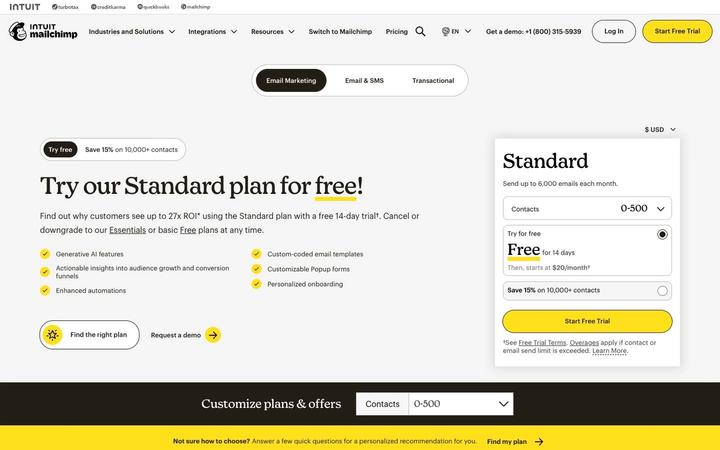
$13/moMailchimp prices email marketing by contact band, twenty of them from '0-500' to '1,000,000+', and sets sending capacity as a multiple of the same number: '15X contacts', '12X contacts' or '10X contacts' a month by plan. The page is built as a trial funnel around Standard, which is the hero offer, the 'Best value' plan and the default 14-day trial.
Mailgun
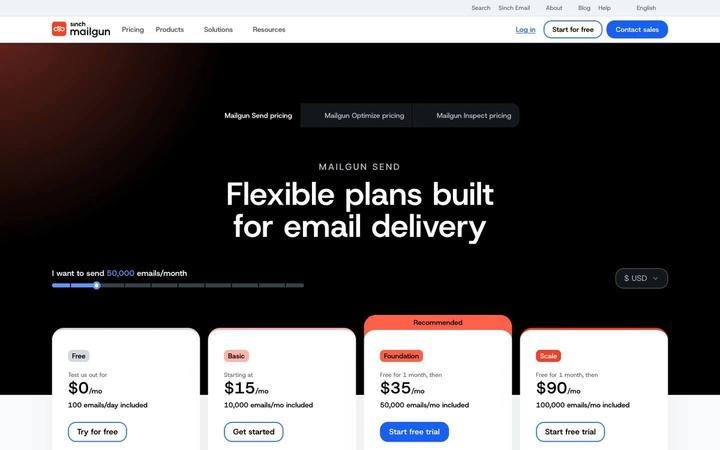
$15/moMailgun sells email sending as prepaid monthly allowances with an overage rate printed on every paid card, falling from $1.80 to $1.30 to $1.10 per 1,000 emails as the commitment rises. A hero slider, 'I want to send 50,000 emails/month', starts the page from volume, and a free month on Foundation and Scale lets a sender try the higher tiers at real volume.

Make
$12/moMake sells credits, one per module action, and lets the buyer set the volume first with a 'How many credits per month?' slider above five plans. Each paid card prints its rate per 1,000 credits, '$1.20' on Core, '$2.10' on Pro and '$3.80' on Teams, so the plans price their features through the cost of a credit rather than a separate platform fee.
Mistral AI
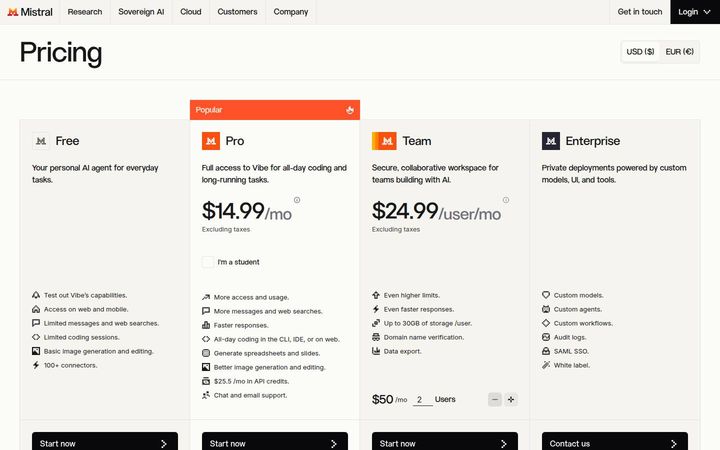
$14.99/moMistral's pricing page sells Vibe through plans that are bands of usage: Free is a capped entry, Pro at '$14.99 /mo' includes '$25.5 /mo in API credits', and Team at '$24.99 /user/mo' adds 'Even higher limits.' and workspace controls. Allowances written as multiples of Free, an included API credit allowance and a pay-as-you-go row tie each subscription to the token meter the FAQ sets out.
Mixpanel
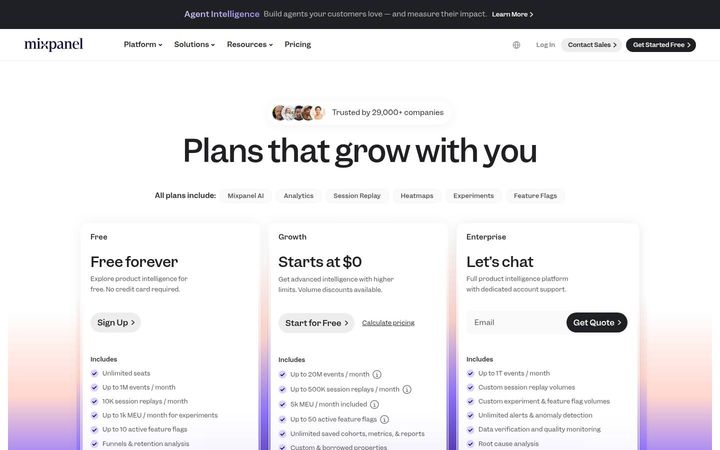
From $0/mo (Growth, first 1M events free)Mixpanel prices product analytics on monthly events, with unlimited seats on every plan, so the bill follows how much a product is instrumented and used, not how many people read the reports. Growth 'Starts at $0' with the first 1M events free, and a slider turns event volume into a dollar figure: '$100 / month' on yearly billing at 1.5M events a month, shown as '18M events per year' with a '$1,200 total annual cost'.
Mux
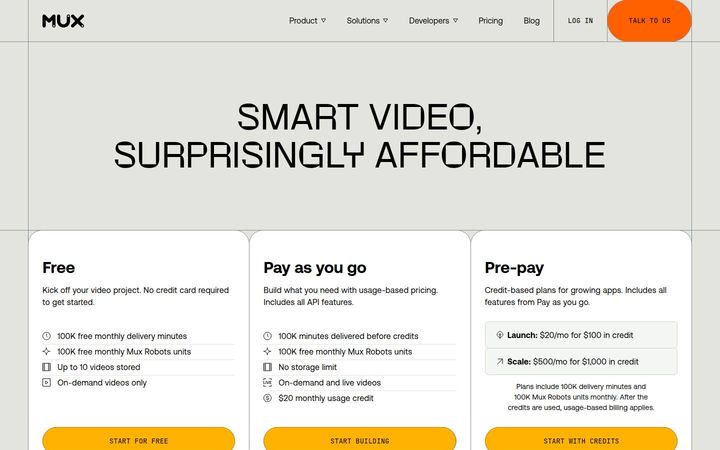
$20/moMux prices video by the minute and teaches the unit on the page: a 'What the minute?' explainer, a scenario switcher for what $100 of credit buys, a full rate sheet and an inline estimator with SHOW ME THE MATH. Every plan includes 100K free delivery minutes and 100K Mux Robots units a month, resolution and quality work as multipliers on one base rate, and a dedicated 'AI workflows (Mux Robots)' list prices thirteen AI jobs by minute, job and, for generated text, artifact.

Neon
$0.106/CU-hourNeon prices serverless Postgres on raw resources, $0.106 per CU-hour and $0.35 per GB-month on Launch, and turns those rates into a budget with a Typical spend figure on each paid card, set by a workload dropdown. Compute scales to zero when idle, so the meter follows real work, and the Free plan states every allowance per project. A rewritten 'Included in every Neon project' section and new FAQ answers on Free plan limits, Claimable Neon and idle compute frame the backend around the database as part of every plan.

PostHog
From $0.000198/event (after 1M free)PostHog prices a suite of developer tools as one signup with two states, Free and Pay-as-you-go, and a monthly free allowance on every product. Each product meters in its own unit, from 1M analytics events to 10 GB of logs, with per-unit rates such as '$0.000198 each after the first 1M' and a Logs custom retention rate of '$0.05' per GB for every month kept. 'Set billing limits' is the primary button on the paid card.
Resend
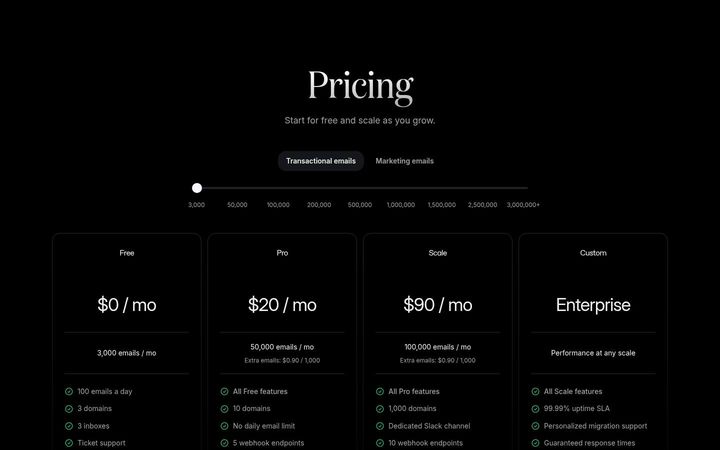
$20/mo (50,000 emails)Resend sells email volume in monthly quotas, '$0 / mo' for 3,000, '$20 / mo' for 50,000 and '$90 / mo' for 100,000, with one overage rate, 'Extra emails: $0.90 / 1,000', printed on both paid cards. Overage is opt-in through 'Enable pay-as-you-go' switches that now cover three meters, emails, automation runs and inboxes at '$1 / inbox', and a volume slider above the cards points each buyer to the tier that fits.
Sentry
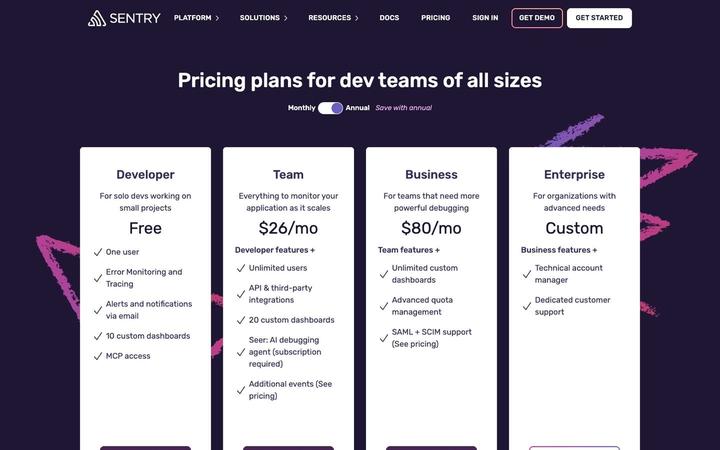
$26/mo (Team, annual)Sentry sells a base plan with a quota on every telemetry type, Developer free, Team '$26/mo', Business '$80/mo' and Enterprise 'Custom', and bills usage above the quota at published pay-as-you-go rates, with errors priced on five volume tiers. The comparison table prints each quota and its overage rate in the same cell, and the estimator turns usage into an itemized receipt, so the base plan, the meters and the bill all read off one page.
Supabase
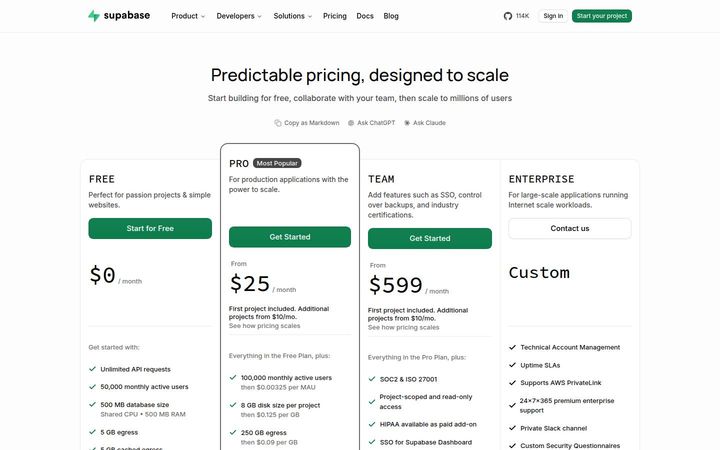
From $25/moSupabase prices its Postgres platform as a plan fee plus metered usage: Free at $0, Pro from $25 a month, Team from $599 and Enterprise on contact, with every metered line on the Pro card printing the included quota and the rate beyond it. Compute is a published ladder from Micro at $10 to 16XL at $3,730, a $10 monthly credit covers the first instance, and logs are now metered too, with Log Ingestion at '20 GB included then $0.50 per GB' on paid plans. A spend cap on by default makes 'Predictable pricing, designed to scale' a literal promise.
Tinybird
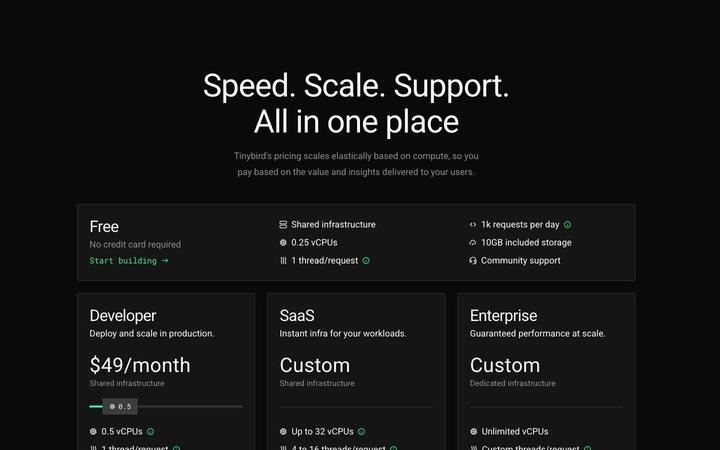
$25/moTinybird prices managed ClickHouse on compute, and the vCPU slider inside the Developer card puts that metric in the buyer's hand: the card reads $49/month at 0.5 vCPUs and moves as the slider does. Around compute sit flat unit rates that hold across every paid plan, storage at $0.058/GB and three egress rates, with vCPU overages at $0.0002/second on Developer and SaaS, while SaaS and Enterprise are priced as Custom with a yearly commitments discount.
Together AI
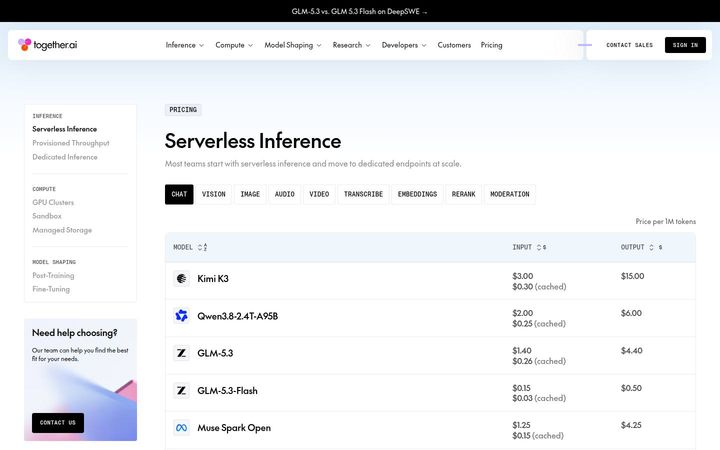
From $0.04/1M tokensTogether AI prices eight products on one page, each on the unit that drives its cost: per-token serverless rates across 29 chat models, reserved throughput in PTUs at $0.05 per minute, GPU hours banded by commitment length, post-training GPU hours billed per minute, sandbox vCPU and RAM hours, filesystem storage per GiB and fine-tuning per million tokens with a per-job minimum. The page shows its working throughout, from cached input rates inline to the stated assumptions behind the PTU estimator and the rule for counting fine-tuning tokens.

Weaviate
From $45/moWeaviate bills its vector database on total vector dimensions stored, plus storage, backup and data transfer, above a $45 monthly minimum on Flex, with Premium's floor now set with sales. The three plans are three ways to buy, labeled Forever, Pay-as-you-go and Prepaid contract, and a dated 'Weaviate Cloud pricing update: September 2026' FAQ explains a rebased backup rate and a new RQ-4 compression price.
WorkOS
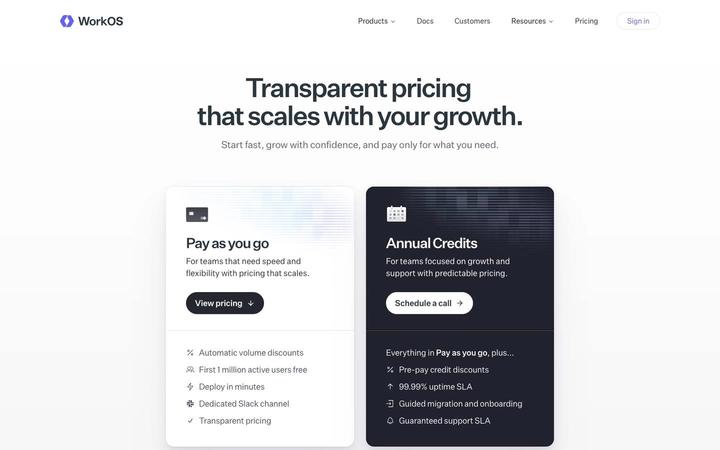
$125/connection/moWorkOS turns its pricing page into a live estimator: six product modules, each with a slider, a rate panel and a running monthly total. SSO and Directory Sync are priced per connection, $125 each and falling to $65 at 51 to 100 connections, and AuthKit is free to 1 million monthly active users, so the meter is the enterprise customer a WorkOS user has just signed.
Zapier
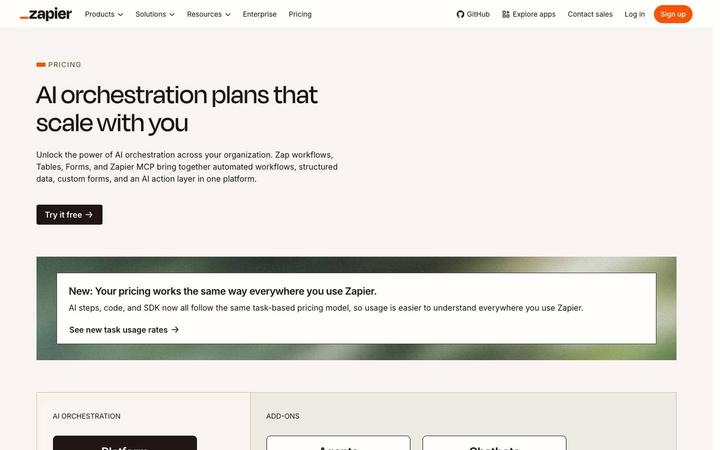
From $19.99/moZapier prices its whole platform on one unit, the task, drawn from a single pool by Zap workflows, AI steps, code, MCP and SDK. A slider from 100 to 2M tasks sits above four plans, Free at '$0 /month', Professional 'Starting from $19.99 /month', Team 'Starting from $69 /month' and Enterprise 'Contact for pricing', and a launch banner announces that AI steps, code and SDK now follow the same task-based model.
monday.com
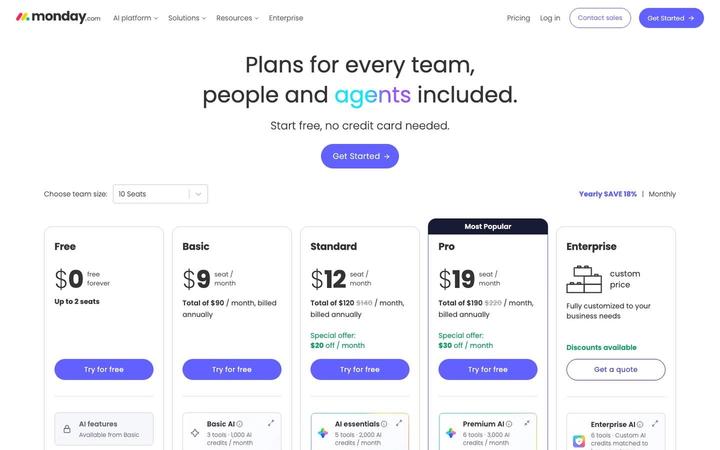
$9/seat/momonday.com prices work management per seat with a pool of AI credits on every paid plan, and the headline says why: 'Plans for every team, people and agents included.' A team-size selector turns each seat price into a monthly total, so Basic at $9 a seat reads 'Total of $90 / month, billed annually' at 10 seats. The same page carries full pricing for monday CRM, monday service and monday dev.
turbopuffer
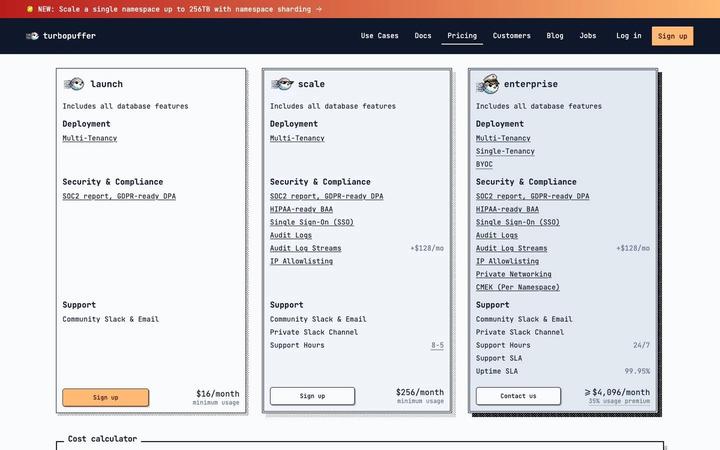
$16/mo minimumturbopuffer meters its search database on three resources, data stored per GB, data written per GB and data queried per PB, and its three plans differ in deployment, compliance and support while every one 'Includes all database features'. Each plan is a monthly minimum, $16, $256 and $4,096 and up, and the enterprise card prints its '35% usage premium' outright.