Pricing pages with a free trial
Pricing pages that offer a time-limited trial of a paid plan, so buyers can test the full product before they commit.
Of the 61, 20 price per seat, 37 show a free tier, 47 include a comparison table, 14 a calculator and 49 keep a contact-sales tier.
1Password
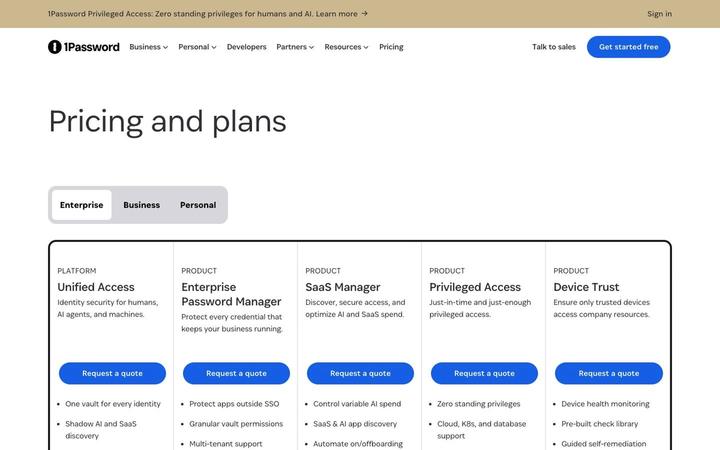
Quote1Password's pricing page opens on its Enterprise tab, where a platform and four products sit side by side and each ends in 'Request a quote'. The packaging is the story: Unified Access is labeled PLATFORM, its four components are labeled PRODUCT, and the FAQ confirms a buyer can take the whole platform or any part of it. Business and Personal tabs carry the self-serve plans on the same URL.

ActiveCampaign
$15/moActiveCampaign prices four plans by contact band, each with a printed starting price and a 'Choose' button, and now adds AI credits as a second meter: every plan includes 500, with more available from checkout or the account. A single contact selector sits above the cards, and each card translates its plan into concrete numbers, from '15,000 email sends / month' to '1 user seat included'. Email sends still scale as a multiple of the contact limit, from '10x' to '15x'.
Airtable
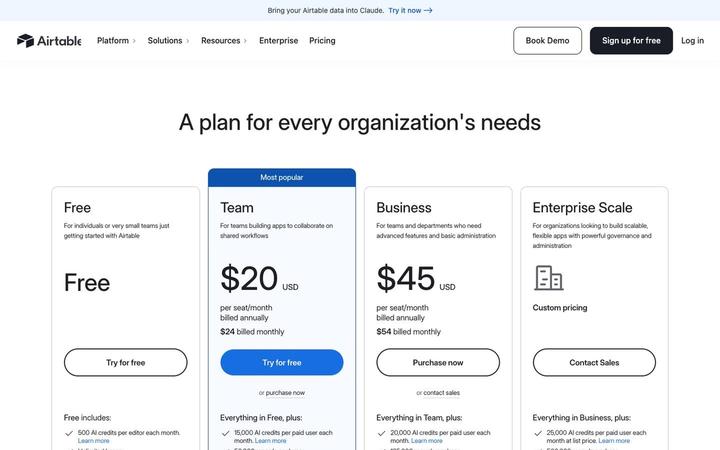
$20/seat/moAirtable prices four plans per seat, Free, Team at $20, Business at $45 and Enterprise Scale on custom pricing, and attaches a monthly pool of AI credits to every seat. Credits are the first bullet on each card and step from 500 per editor on Free to 25,000 per paid user, with top-up packs priced in the table. Annual and monthly prices print together on each card, so the commitment discount is visible at a glance.
Basecamp
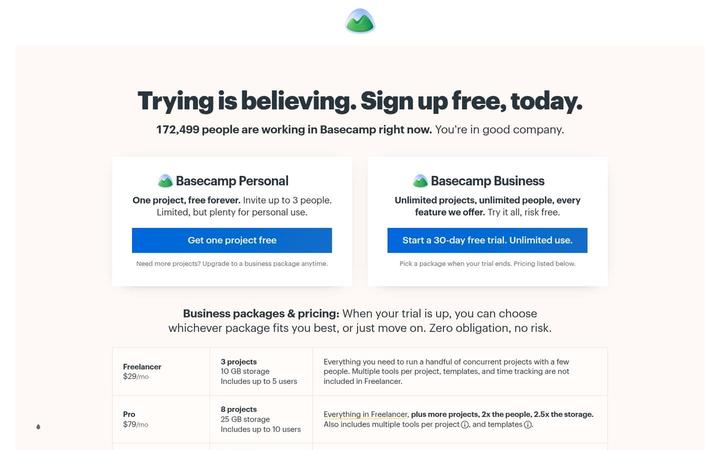
$29/moBasecamp leads with the trial: 'Trying is believing. Sign up free, today.' A free Basecamp Personal card sits beside a 30-day Basecamp Business trial with every feature, and a four-row table sets out the packages to choose from when the trial ends, from Freelancer at '$29/mo' to Pro Unlimited at '$199/mo, billed annually'. Each step adds projects, users and storage, and the upper packages add tools, time tracking and admin services.
BigCommerce
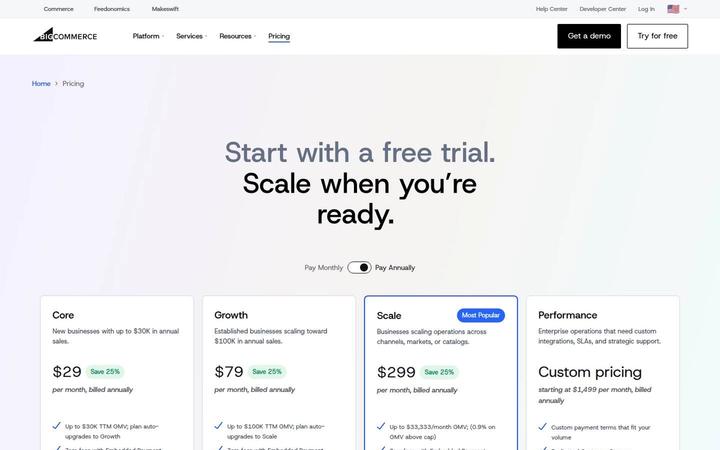
$29/moBigCommerce prices its plans by how much a store sells: Core covers 'Up to $30K TTM GMV', Growth 'Up to $100K TTM GMV' and Scale 'Up to $33,333/month GMV' with a '0.9%' overage above the cap, and each band moves a store up automatically as its sales grow. The upper cards name their buyer by operations, from multichannel scaling on Scale to 'custom integrations, SLAs, and strategic support' on Performance, and the footnotes spell out the GMV formula, the monthly list prices and the card processing rate.
Braze
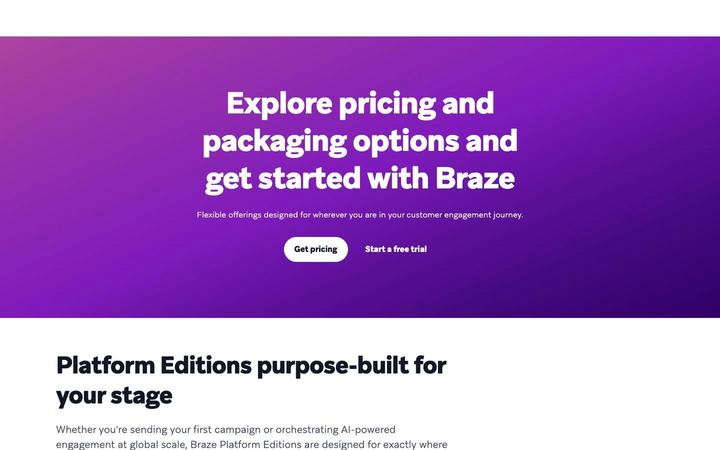
QuoteBraze prices on two axes: Monthly Active Users set the scale of the subscription, and Action Credits are a pooled currency spent across every channel and certain BrazeAI products. Four Platform Editions, Go, Select, Pro and Enterprise, are named for company stage, and every edition is priced in a conversation, which lets each contract fit the brand's audience and channel mix.
Canva
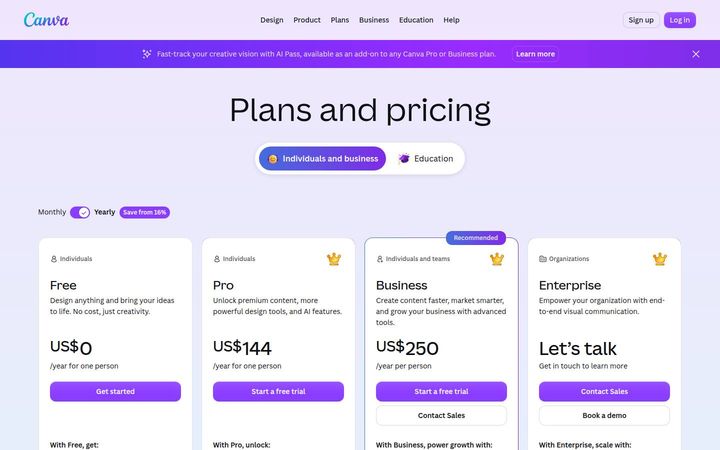
US$144/person/yrCanva sells a seat ladder, Free, Pro at US$144 a year for one person, Business at US$250 a year per person and Enterprise on 'Let’s talk', and inside every seat sits a shared AI allowance. Allowances are stated as multiples, 10x and 20x more AI than Canva Free, and a footnote explains that Standard, Premium and Ultra AI tools draw on the pool at different rates, a credit system running behind a seat price.
Clay
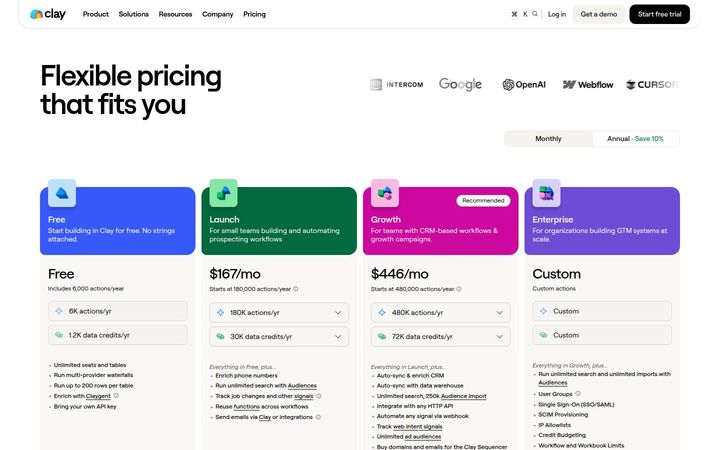
$167/moClay prices on two meters and no seats. Every plan carries unlimited seats and tables, and the bill is Actions for work done on the platform plus Data Credits for data bought from its marketplace. Each paid card is a live configurator whose two dropdowns add up to the headline price, and Enterprise is now packaged as a governance tier built around access controls and credit budgeting.
ClickHouse
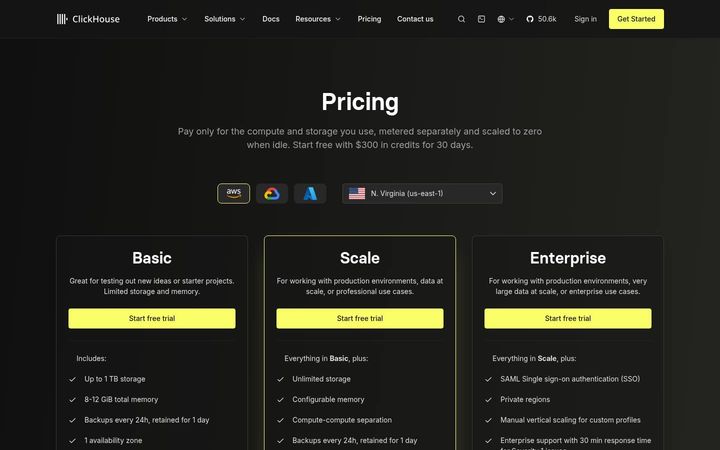
$0.2181/compute unit/hrClickHouse opens with its model in one line, 'Pay only for the compute and storage you use, metered separately and scaled to zero when idle.', sets the cloud and region, then gives every tier the same two meters: storage flat at '$25.30 Per 1TB / mo' and compute at $0.2181, $0.2985 and $0.3903 per unit per hour. The estimator opens pre-filled with a 1 TB real-time analytics workload at '$658' a month, and an eight-question FAQ explains each line that can appear on the bill.

Close
$9/user/moClose sells four per-user plans, Solo at $9 through Scale at $139 per user per month on annual billing, and attaches a pool of AI credits to every seat, from 500 to 2,000 a month. Its AI sales agent, Chloe, is included on every plan and paid for by the work she does, while calling and SMS pass through at cost.
Databricks
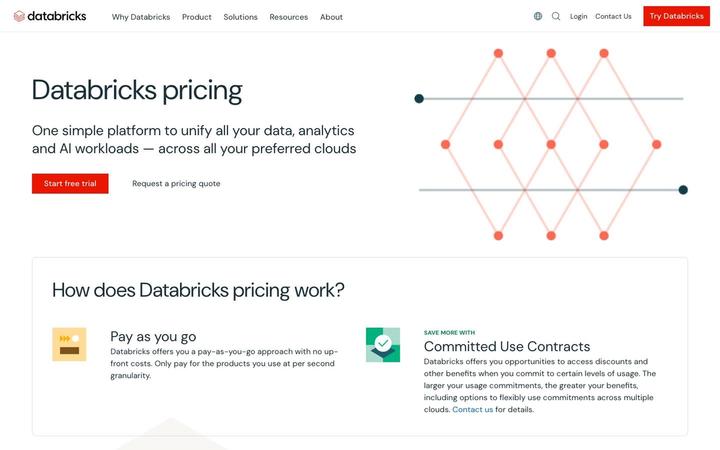
From $0.069/CUDatabricks prices a whole data platform on one consumption unit, the DBU, with seven workload tiles that each print a 'Starting at' rate and link to a full SKU price list. Billing runs 'at per second granularity' on pay-as-you-go, and Committed Use Contracts trade larger commitments for discounts that can flex across clouds. The page works as the front door to a rate table, organized by the job a customer is doing.

Datadog
$15/host/moDatadog publishes a rate card per product, with every billable SKU listed in a left-hand navigator from AI Credits to Workflow Automation. Infrastructure Monitoring prices per host across three host levels: Basic, set with sales, beside Pro starting at $ 15 and Enterprise at $ 23 billed annually, with on-demand rates printed beside them and allotments of containers, custom metrics and custom events attached to each paid host. The bill is the sum of the products a customer adopts, and Basic hosts let one account price noncritical workloads at their own level.
Deepgram
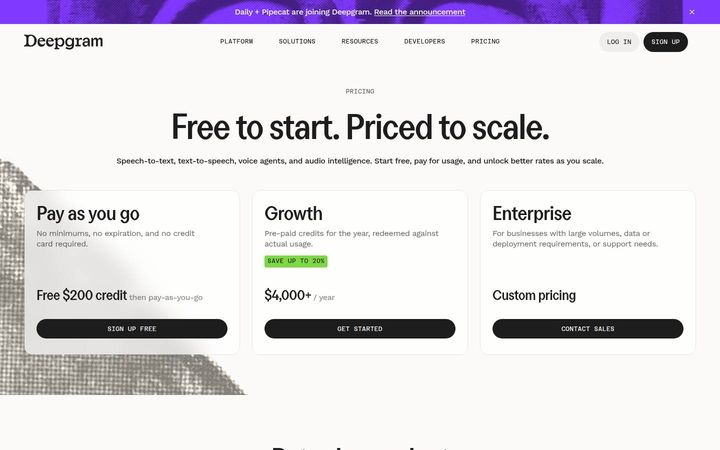
$0.0077/minDeepgram's page opens on "Free to start. Priced to scale." and three cards: Pay as you go with a Free $200 credit, Growth at $4,000+ / year in pre-paid credits for up to 20% off, and Enterprise at Custom pricing. A tabbed "Rates by product" section names the meter for each product, per second of audio, per 1,000 characters, or per minute of connection time, and a sixteen-question FAQ carries the billing mechanics, from hourly rates to the 10% overage premium.

Dremio
$0.20/DCUDremio prices its lakehouse on one compute meter, '$0.20 per DCU (Dremio Compute Unit)', and organizes the page around a deployment choice: Dremio Cloud, fully managed on AWS, or Dremio Enterprise, self-managed anywhere. Both options are 'Consumption based', so the decision is about who runs the infrastructure. Every path leads to a conversation, including a Cloud trial that comes with '$400 credit for 30 days'.
Dropbox
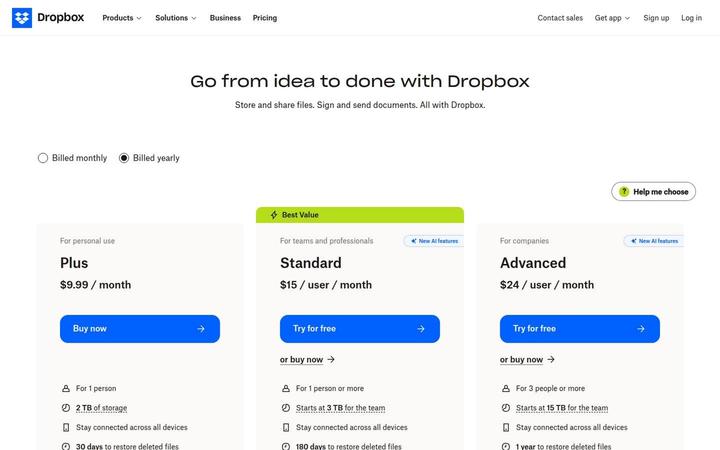
$9.99/moDropbox shows three paid cards, Plus at $9.99 / month for one person, Standard at $15 / user / month tagged Best Value, and Advanced at $24 / user / month for 3 people or more, with Basic Free and Enterprise in a compact row beneath. Storage is pooled at the team level, 'Starts at 3 TB for the team' on Standard and 15 TB on Advanced, and both team plans now carry 'AI in Dropbox' with a monthly AI credit allowance that scales by tier. Seats buy access, while the plan sets both the storage pool and the credit pool.
Fivetran
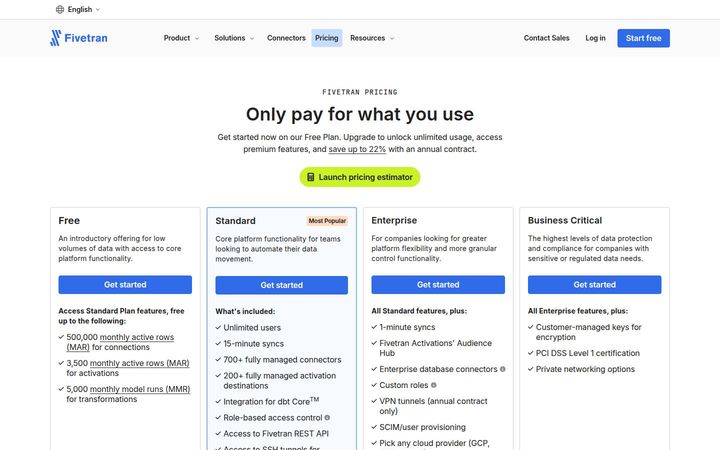
QuoteFivetran meters three products, Connections, Transformations and Activations, on monthly active rows and monthly model runs, and sells them under one plan with consolidated usage-based pricing. The four plan cards separate capability, and the dollars arrive through a pricing estimator and a worked example that totals four named connectors to $511.15.
Freshdesk
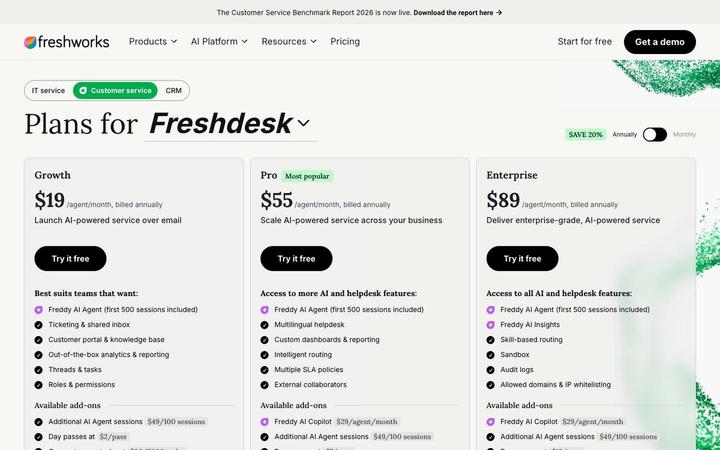
$19/agent/moFreshdesk prices per agent across three plans at $19, $55 and $89 per agent per month billed annually, and puts a metered AI layer on every one: 500 Freddy AI Agent sessions included, then printed rates for more sessions, MCP actions and connector tasks. Each card carries its own add-on list, so the seat, the AI meters and part-time access are priced side by side.

Front
$25/seat/moFront prices three seat tiers at $25, $65 and $105 per seat per month and layers Front AI on top: Copilot at $20 per seat on Starter and Professional, and Autopilot metered at $0.05 per conversation. Every rate is printed, Enterprise included, and Enterprise carries Copilot, Smart QA and Smart CSAT in its seat price, which makes the top tier the home of the full AI suite. External AI agents and Compass are included on every plan.

Ghost
$15/moGhost(Pro) prices four hosting plans on audience size, registered members, with an audience slider above the cards that sets the member count the plans are quoted for. The hero promises 'No payment fees', and the table's Transaction fees row reads 0% on every plan that takes payments, so Ghost earns a flat fee while the publisher keeps subscription revenue.
GitHub
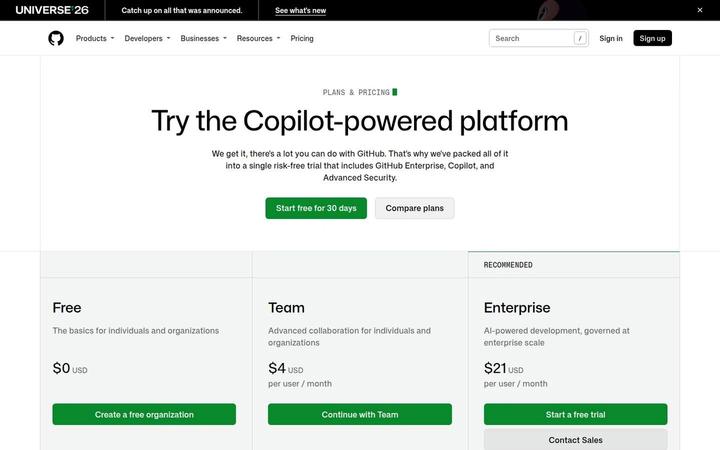
$4/user/moGitHub sells three per-user plans, Free at $0, Team at $4 and Enterprise at $21, under the headline 'Try the Copilot-powered platform' and a single 30-day trial of GitHub Enterprise, Copilot and Advanced Security. Enterprise now carries Copilot inside the seat, with 'GitHub Copilot access' and 'Agent governance' on its list, while security is sold as modular add-ons: GitHub Code Quality, GitHub Code Security and GitHub Secret Protection. Usage allowances for CI/CD minutes and Packages storage ride on each seat, and the table keeps many paid features free on public repositories.
GitLab
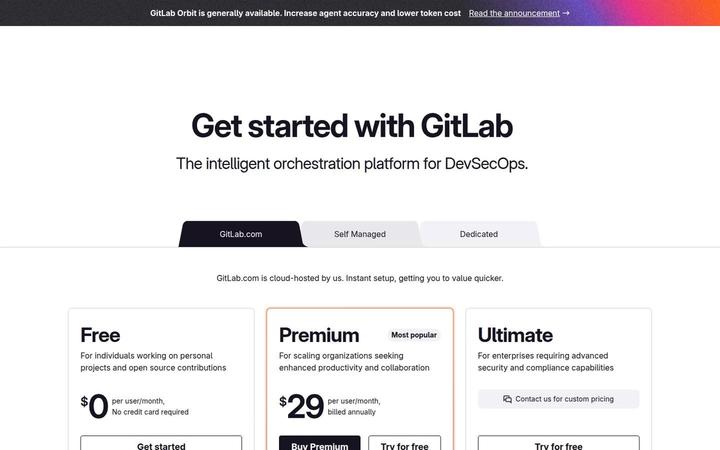
$29/user/moGitLab runs a seat license at its core, $0 Free and $29 per user per month for Premium, with Ultimate set through 'Contact us for custom pricing'. Around the seats sit priced meters for AI, CI, storage and now platform capacity: GitLab Credits at $1 each, compute minutes at $10 per 1,000, storage at $5 per 10GiB and a Coming soon Advanced Capacity add-on at $12,000 per top-level group per year. GitLab Orbit, sold in query packs, and GitLab Flex, one annual commitment for seats and credits, complete a catalog built for agent-scale workloads.

Grammarly
$12/seat/moGrammarly sells three plans, Free, Pro and Enterprise, and measures the step between them in AI prompts: 100 a month on Free, 2,000 per member per month on Pro and unlimited on Enterprise. The page is built around the Pro trial, with '$12 USD' struck through beside a 'Try for free' chip and the trial terms written into the card. Enterprise is 'available through Superhuman Go', which places the top plan inside the wider Superhuman platform.

HashiCorp
$0.10/resource/moHashiCorp prices HCP Terraform per managed resource, a quantity every Terraform user already tracks, and prints each rate twice: '$0.10 per month per resource' with '*Rated hourly at $0.00013 per hour' beneath it. Above the products, a band sets the contract shape first, Pay-as-You-Go, Flex or Enterprise Self Managed, so the page separates how a customer commits from what it buys.
Help Scout
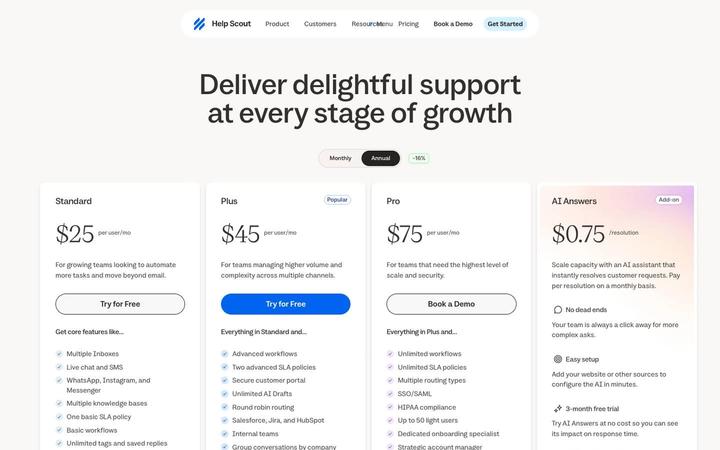
$25/user/moHelp Scout prices the helpdesk per user, Standard at $25, Plus at $45 and Pro at $75 per user/mo on annual billing, and sells its AI agent as a fourth card, AI Answers at $0.75 per resolution. A savings calculator, a monthly spending cap and a 3-month free trial all serve the outcome meter, and a free plan for 5 users sits one line below the cards.

Hex
$36/editor/moHex bills per Editor, "$36 per Editor / month" on Professional and "$75 per Editor / month" on Team, and opens its comparison table with "Unlimited users", so the people who read published apps carry no seat cost. Alongside the seat, AI credits and compute profiles step up by plan, from Limited to Premium credits and from Small compute to advanced compute add-ons, a hybrid of seats for builders and capacity for the work they run.
HubSpot
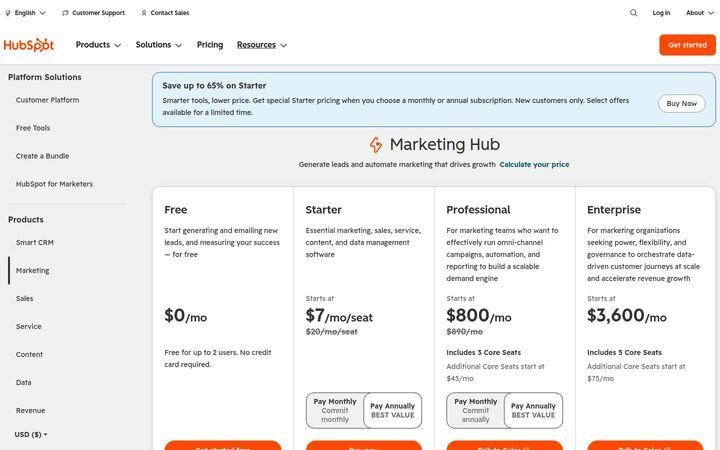
$20/seat/moHubSpot's Marketing Hub blends four meters into one plan, a platform price, Core Seats, a marketing contact tier and a pool of HubSpot Credits for AI agents, and adds a one-time onboarding fee at Professional and Enterprise. Seat expansion, onboarding fees and the Enterprise floor are all printed, and the HubSpot Credits section frames AI usage around buying choice and control: 'Buy credits in packs to easily plan your spend or Pay-as-You-Go for added flexibility', backed by action-level spend limits.
Intercom
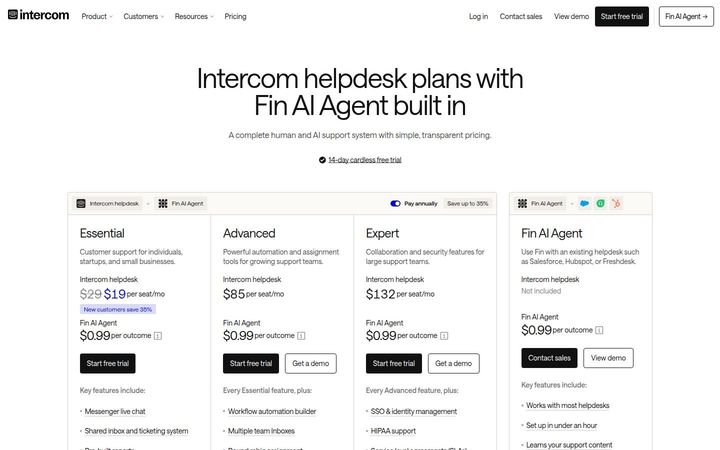
$19/seat/moIntercom prints two price lines on every card: an Intercom helpdesk seat price of $19, $85 or $132 per seat/mo with 'Pay annually' on, and 'Fin AI Agent $0.99 per outcome' for the AI agent's resolved work. A fourth card sells Fin on its own with the helpdesk 'Not included', and a live cost estimator plus a section of outcome rules sit between the cards and the add-ons.

Jasper
$59/seat/moJasper sells two plans: Pro at $59 per seat per month on the yearly term, scoped to one seat with 2 Brand Voices, 5 Knowledge assets and 3 Audiences, and Business at custom pricing with unlimited customization and team features. The FAQ adds the usage layer: GEO Hub reports and Agents 'run on credits, which sit alongside seat-based pricing on the Business plan', a seat-plus-credits model for AI work.

Jira
$8.48/user/moJira prices per user with volume tiers. The page opens with a 'Team size' input and a Monthly or Annually switch that reprice the cards in place: Standard at '$8.48 per user / month' and Premium at '$15.56 per user / month' for the team size entered. Each seat carries automation steps and Rovo AI credits per user per month, and data analysis now runs through the tiers, from 'Cross-source data analysis' on Standard to 'Advanced data analysis' on Enterprise.
Kit
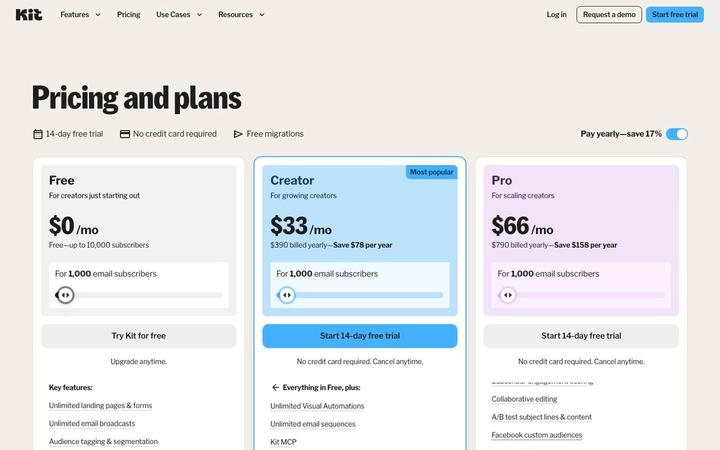
$33/mo for 1,000 subscribersKit prices on email subscribers and puts a slider inside every card, so all three prices move together as a creator drags their list size. Free carries a list of up to 10,000 subscribers, Creator is '$33/mo' and Pro '$66/mo' at 1,000 subscribers, and paid plans sell automation, analytics and team access, so the free plan builds the audience and the paid plans grow the business on top of it.

LaunchDarkly
$10/Service Connection/moLaunchDarkly prices the software it serves rather than the people who use it: Developer is '$0 / mo, forever' with 'Unlimited seats', Foundation is pay as you go with 'No platform or seat fees', and Enterprise is custom with a trial. Foundation meters three things, '$10 per Service Connection / mo', '$8.33 per 1k client-side MAU / mo' on yearly billing and '$5 per additional 1k runs' of AI, and the comparison table spells out what happens at each plan's limit.
Lob
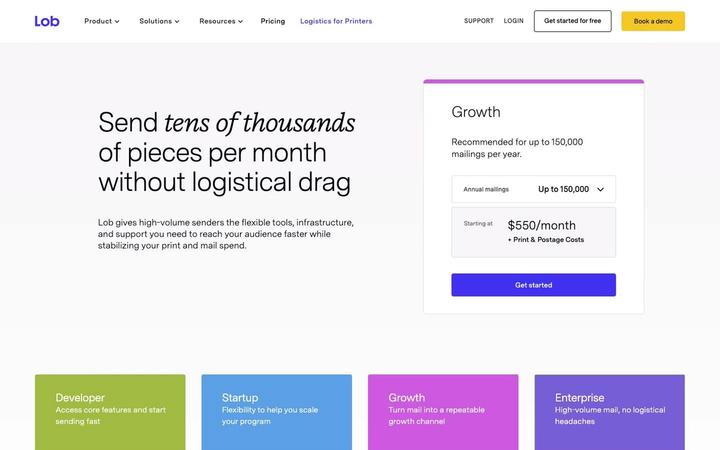
$260/moLob prices direct mail as a two-part bill and says so: a platform subscription from $0 to $550 per month, plus an all-in per-piece rate for print, postage and envelope that falls as the plan rises. A hero volume selector recommends a plan from annual mailings, and per-format rate rows, postcards from $0.905 down to $0.615, let a buyer turn a mail program into a budget.

Loom
$18/user/moLoom prices per user across four plans, and its AI is a tier of its own: Business at '$18 per user / month' and Business + AI at '$24 per user / month', marked 'MOST POPULAR'. Starter is free with '25 videos' and '5 minute screen recordings', Enterprise is a conversation, and a dedicated Loom AI band sells the AI tier between the cards and a long comparison table.
Mailchimp
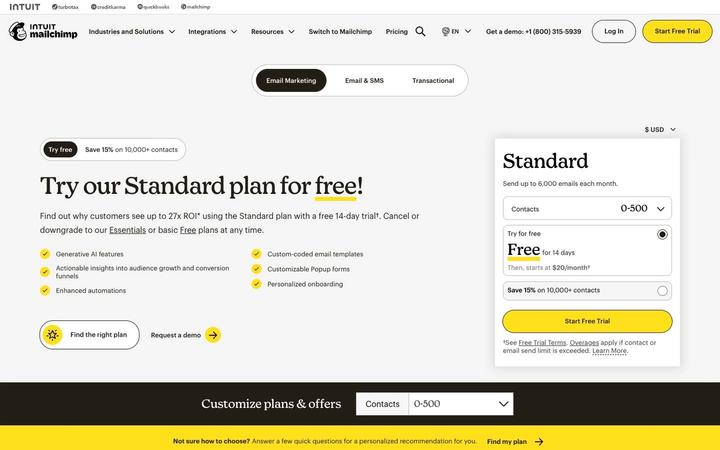
$13/moMailchimp prices email marketing by contact band, twenty of them from '0-500' to '1,000,000+', and sets sending capacity as a multiple of the same number: '15X contacts', '12X contacts' or '10X contacts' a month by plan. The page is built as a trial funnel around Standard, which is the hero offer, the 'Best value' plan and the default 14-day trial.
Mailgun
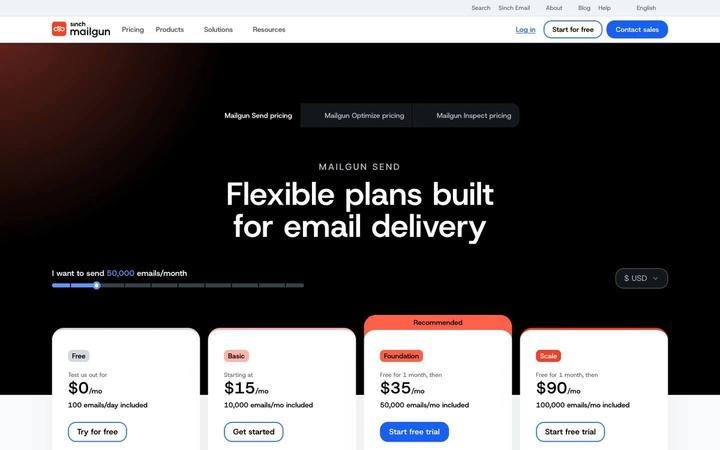
$15/moMailgun sells email sending as prepaid monthly allowances with an overage rate printed on every paid card, falling from $1.80 to $1.30 to $1.10 per 1,000 emails as the commitment rises. A hero slider, 'I want to send 50,000 emails/month', starts the page from volume, and a free month on Foundation and Scale lets a sender try the higher tiers at real volume.
Miro
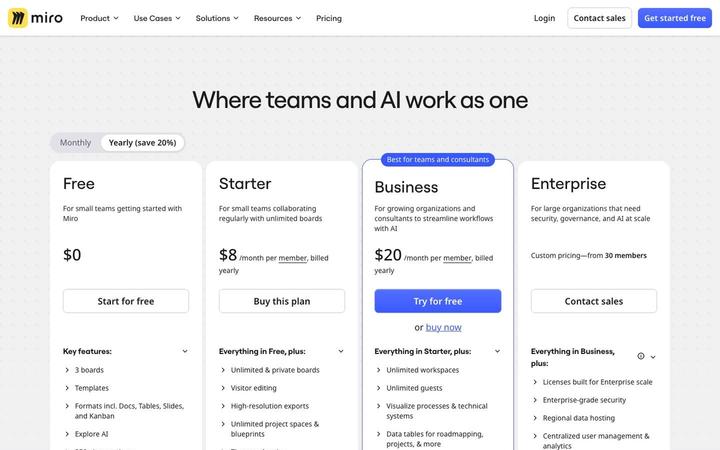
$8/member/moMiro sells seats with AI on top: Starter at $8 and Business at $20 per member per month billed yearly, each adding AI credits per member and a daily allowance of MCP calls for connected AI tools. At Enterprise, from 30 members, the credits become an org-wide pool that 'Starts from 2500 credits per month', a clear view of seat pricing taking on AI usage.

Neo4j
From $0.09/GB/hrNeo4j AuraDB prices on one metric, provisioned memory, now printed in the unit it is metered in: 'Starting at $0.09 /GB/hour*' on Professional and 'Starting at $0.20 /GB/hour*' on Business Critical. Storage, IO, backups and data transfer ride inside the rate, so a graph database bill is GB times hours times one number, and pausing a database cuts its running cost by 80%.
Okta
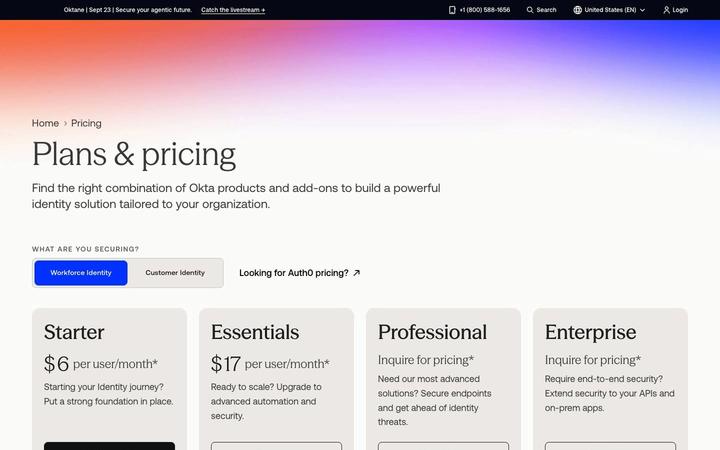
$6/user/moOkta sells Workforce Identity as per-user suites billed annually: Starter at $6 per user a month, Core Essentials at $14, Essentials at $17, and Professional and Enterprise at 'Inquire for pricing*'. Every product in a suite shares one license count, and a catalog of add-ons lets a buyer build out any suite, so the bill grows with headcount and with the depth of identity security a company takes on.
Pinecone
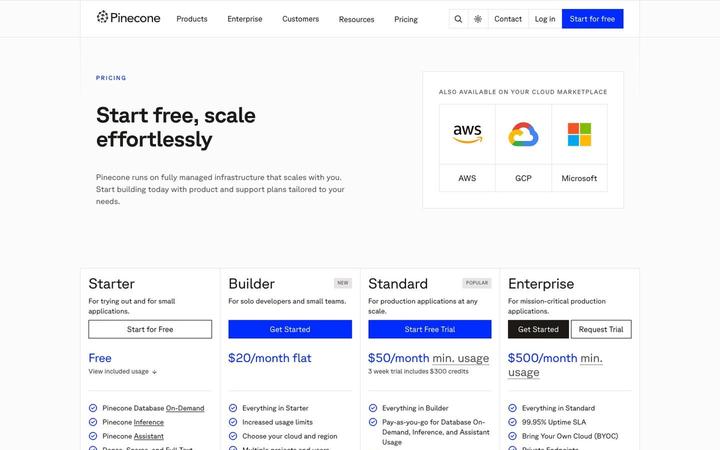
$20/mo flatPinecone runs a four-step ladder for its vector database: Starter free, Builder at '$20/month flat', and Standard and Enterprise at $50 and $500 a month minimum usage, each card explaining that usage above the minimum is pay as you go. Read units, write units and storage are the meters, and a set of worked Starter workloads turns those units into recommendations and searches per day.

Pipedrive
$14/seat/moPipedrive sells four per-seat plans, Lite at US$ 14 through Ultimate at US$ 79 per seat per month billed annually, and every card leads to the same 'Free 14-day trial. No credit card required.' Packaging stacks cleanly, each plan opening with the one below it plus a short list, and five add-ons with 'Starting from' prices, Projects now at $16, extend any plan without moving the buyer up a tier.
Plaid
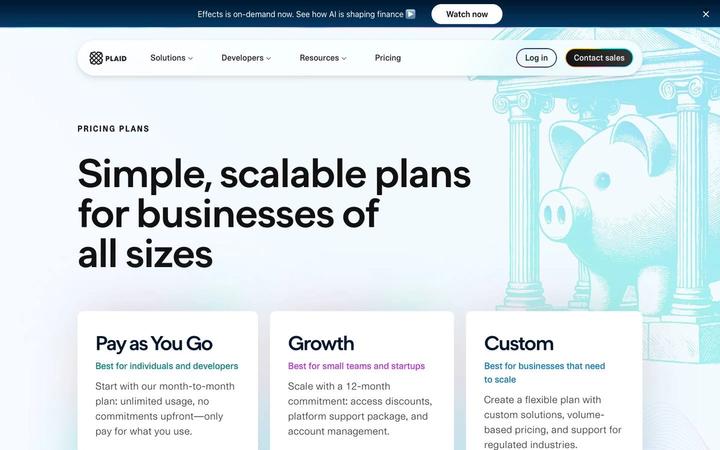
QuotePlaid sells three plans defined by contract shape: Pay as You Go month to month, Growth on a 12-month commitment with 'Discounted product rates', and Custom with 'Volume discounts' and support for regulated industries. Rates are set per product and per customer, and the FAQ names the three billing models behind them: one-time per connected account, subscription per connected account, and per successful API call.
Railway
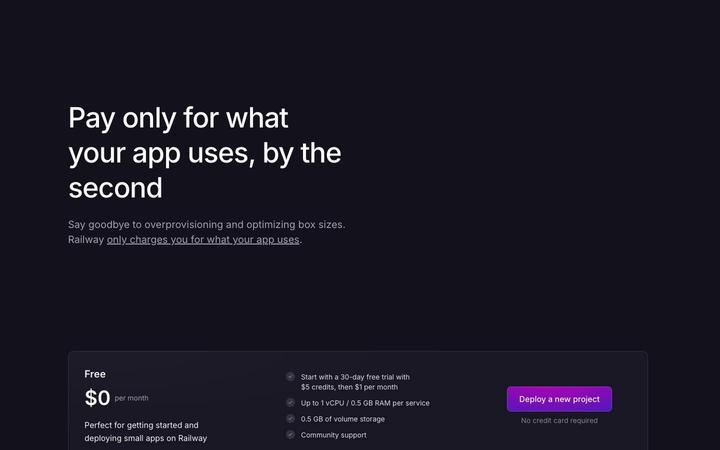
$5/mo minimum usageRailway bills compute by the second and wraps that meter in plans defined by a minimum usage floor that comes back in full as credits: '$5 minimum usage' on Hobby and '$20 minimum usage' on Pro. Further down, an 'Unlock more as you grow' ladder turns enterprise features into published monthly commitments, from $1,000 for HIPAA BAAs to $10,000 for Dedicated VMs.
Ramp
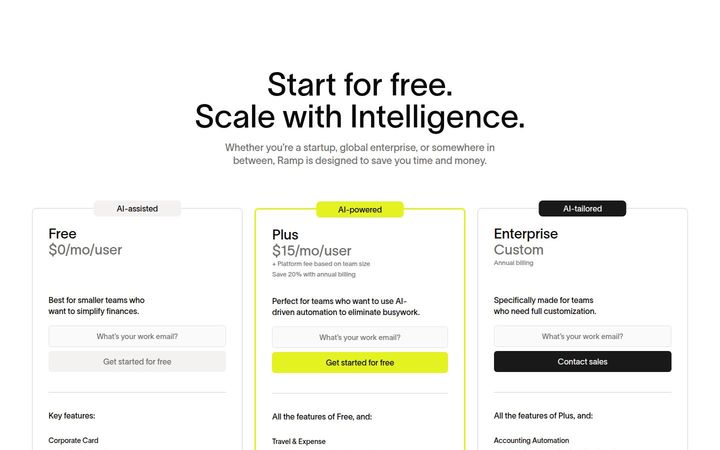
$15/seat/moRamp prices spend management per user with a platform fee on top: Free at '$0/mo/user', Plus at '$15/mo/user' plus a 'Platform fee based on team size', and a custom Enterprise. The Free column now carries Accounts Receivable alongside unlimited cards, bill pay and banking yield, while revenue recognition and recurring billing sit behind an 'Accounts Receivable Add-on'.
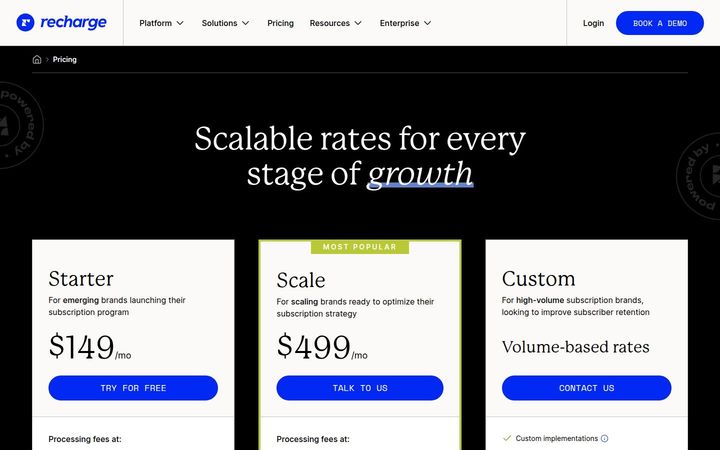
Recharge
$149/mo + 1.50% + 20¢Recharge charges a monthly platform fee plus a processing fee on every subscription transaction, and the fee steps down as the plan steps up: '1.50% + 20¢' on Starter at '$149/mo', '1.25% + 20¢' on Scale at '$499/mo', and 'Volume-based rates' on Custom. The take rate ties Recharge's revenue to the subscription revenue it helps a brand keep, and Scale now carries the optimization tools, from A/B testing to the Remi AI agent, that grow that revenue.

Retool
$10/builder/moRetool prices two seat types as a sum on each card, $10 a month per builder plus $5 a month per internal user on Team and $50 plus $15 on Business, and layers workflow runs, pooled AI credits and agent hours on top. The cards read as aligned checklists of included and not-included features, and the comparison table publishes the secondary meters, from an external user volume curve to additional workflow runs at '$75 per 5,000 runs per month'.
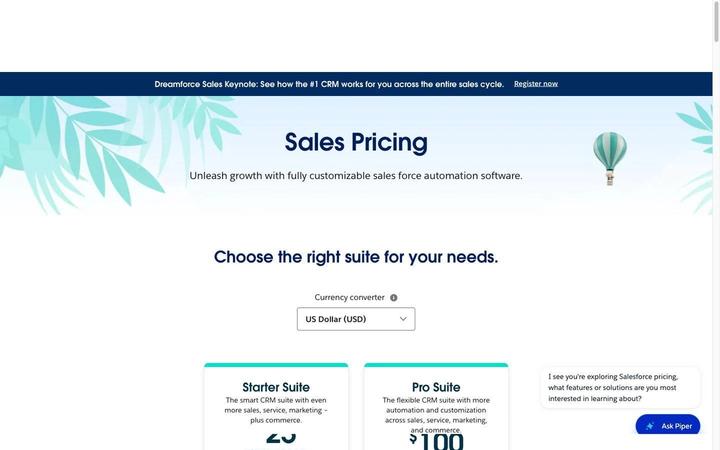
Salesforce
$25/user/moSalesforce prints a per-user list price for every Sales Cloud edition, from Starter Suite at $25 to Max at $550 USD/User/Month, then prices the layers around the seat: add-ons with 'From' floors, a Premier Success Plan at '30% of net license fees', and '2.75M Flex Credits per org per year' on Max. The seat stays the core metric while AI arrives as a consumption meter alongside it.
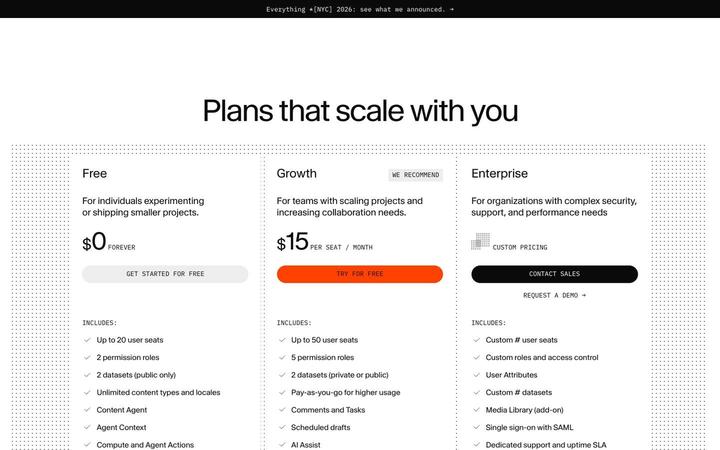
Sanity
$15/seat/moSanity charges '$15 PER SEAT / MONTH' on Growth and meters the content platform underneath: documents, API requests, bandwidth, assets, embeddings, AI credits, functions and compute each carry a printed overage rate in the comparison table. Seats price the editorial team, usage prices the delivery workload, and three add-ons price support, quota and datasets as fixed monthly blocks.
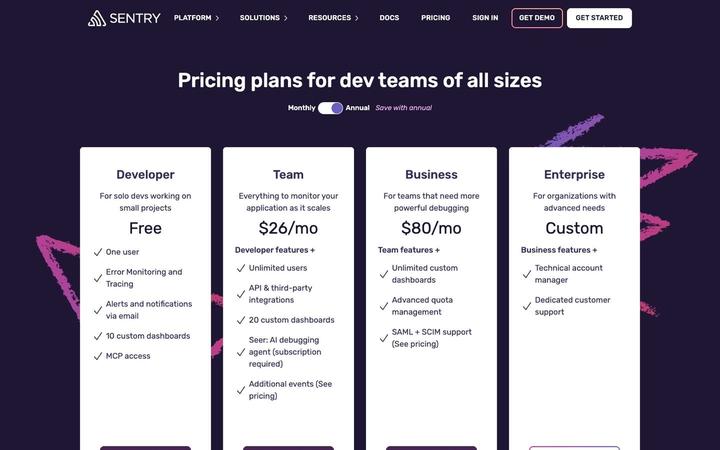
Sentry
$26/mo (Team, annual)Sentry sells a base plan with a quota on every telemetry type, Developer free, Team '$26/mo', Business '$80/mo' and Enterprise 'Custom', and bills usage above the quota at published pay-as-you-go rates, with errors priced on five volume tiers. The comparison table prints each quota and its overage rate in the same cell, and the estimator turns usage into an itemized receipt, so the base plan, the meters and the bill all read off one page.
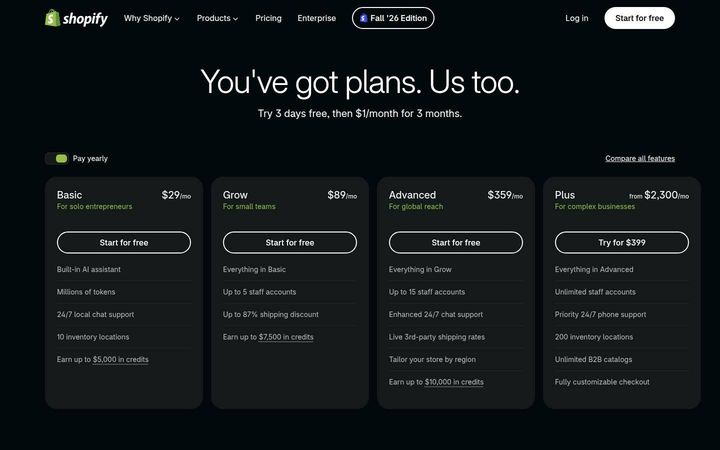
Shopify
$29/moShopify sells four flat monthly plans on yearly billing, Basic at $29/mo, Grow at $89/mo, Advanced at $359/mo and Plus from $2,300/mo, and pairs each with a payment take rate that falls as the plan fee rises, from 2.9% + 30¢ down to 2.25% + 30¢. The cards sell operations, staff accounts, support level and inventory locations, while the comparison table carries the full rate card, so the plan decision blends team size with sales volume.
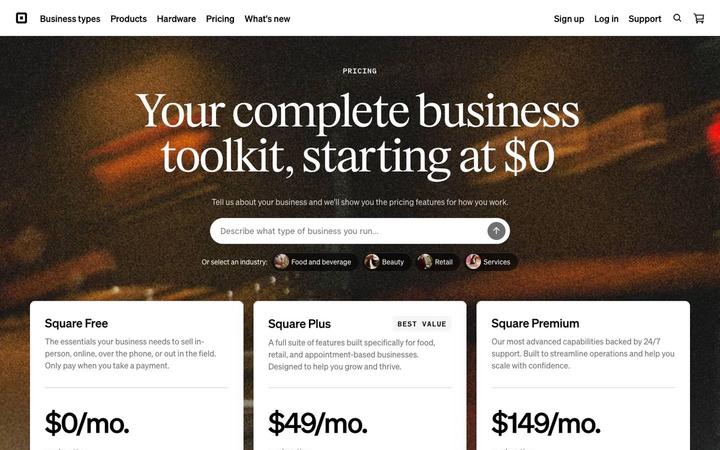
Square
2.6% + 15¢Square sells a software subscription and a processing rate as one package: Square Free at $0, Plus at $49 and Premium at $149 per month per location, each card printing its own in-person and online rates under the price. The subscription buys software and basis points together, and a printed threshold of $250,000 a year marks where custom pricing begins.
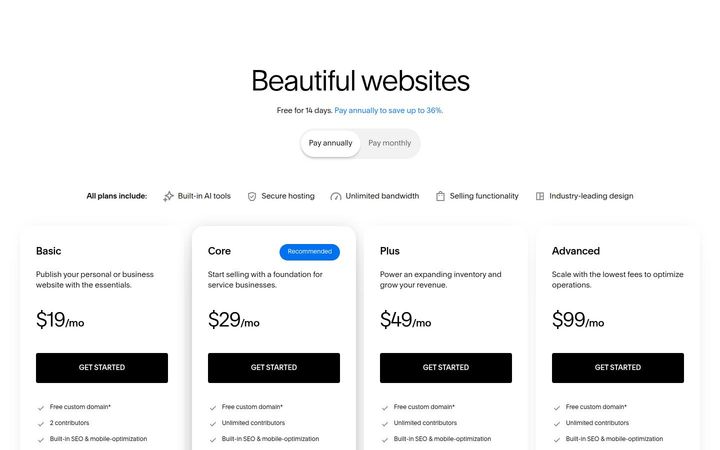
Squarespace
$19/moSquarespace sells four flat plans at $19, $29, $49 and $99 a month with Core recommended, and each card pairs the subscription with a falling card rate, from 2.9% + $0.30 down to 2.5% + $0.30, and a growing AI credit allowance, from 10 one-time credits to 120 a month. Higher plans buy down the share Squarespace takes on sales and add commerce tools, and every plan is bought online through the same 'GET STARTED' button.
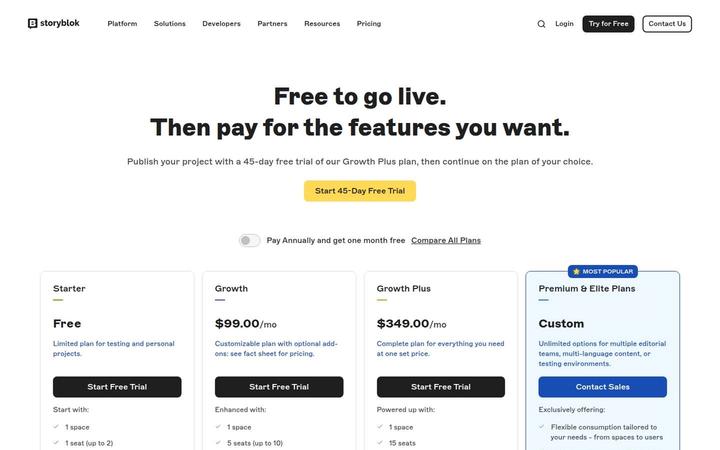
Storyblok
$99/moStoryblok prices its headless CMS as a base plan plus five meters, seats, traffic, API requests, locales and AI credits, and each card prints the allowance with its ceiling. Growth at $99.00 /mo is a 'Customizable plan with optional add-ons: see fact sheet for pricing.', Growth Plus at $349.00 /mo is a fixed bundle positioned as 'Complete value', and the 'MOST POPULAR' star sits on the custom Premium & Elite plans.
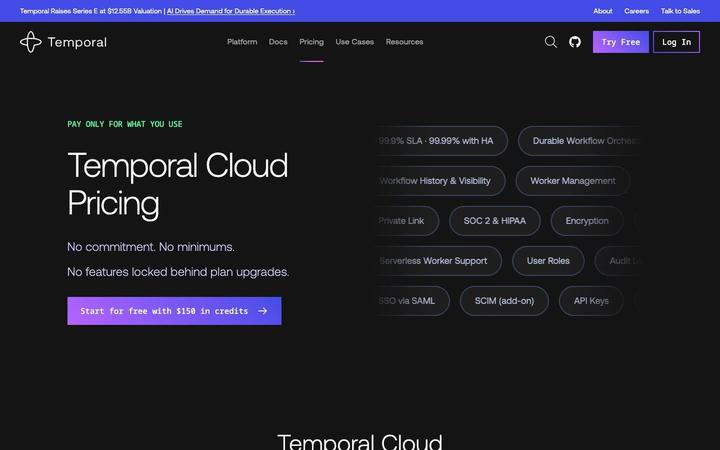
Temporal
$50/M actionsTemporal sells Temporal Cloud on one meter, the Action, and prints both ends of the self-serve curve: 'STARTING AT $50 per million actions' and 'SELF SERVICE DOWN TO $25 per million actions', with storage priced separately for open and closed workflows. Every feature comes with every account, stated in the hero as 'No features locked behind plan upgrades', so the commercial levers are volume and support, and support is priced as a share of usage.
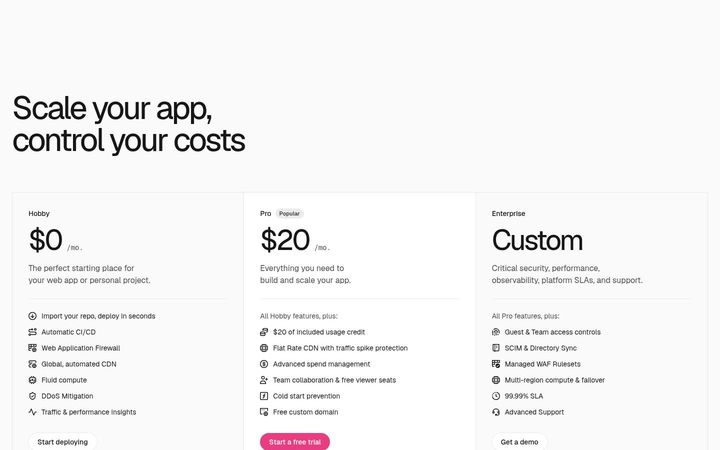
Vercel
$20/moVercel prices a cloud platform as a seat plus usage: Pro is $20 a month per developer seat and includes '$20 of included usage credit', so the seat fee doubles as a usage allowance before metered rates apply. Beneath three plan cards sits a full rate card in which every metered resource prints its included quota and its overage price on the same row, from CDN Requests to build minutes, and it now extends to Vercel Drives, Vercel Daemons, Deployment Storage and Tracing Spans.
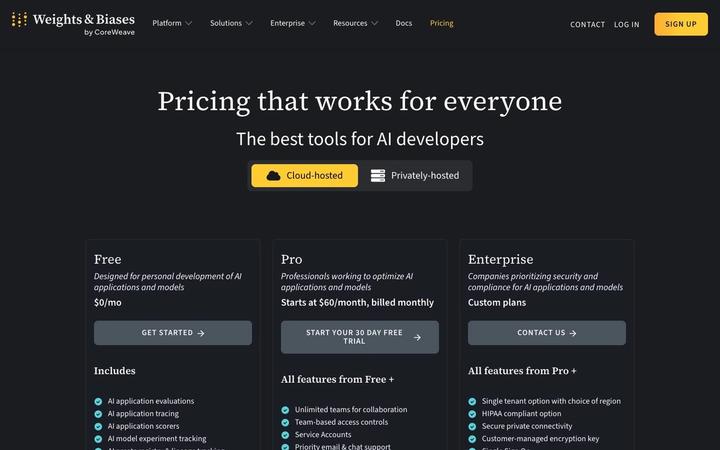
Weights & Biases
From $60/moWeights & Biases pairs seats with usage: Pro 'Starts at $60/month, billed monthly' with up to 10 Model seats, then storage at $0.03/GB above 100 GB and Weave data ingestion at $0.10/MB above 1.5 GB a month. The model splits the seat by workload, Model seats for training and fine-tuning and Weave seats for GenAI applications, and a Cloud-hosted and Privately-hosted toggle settles deployment before any price appears.
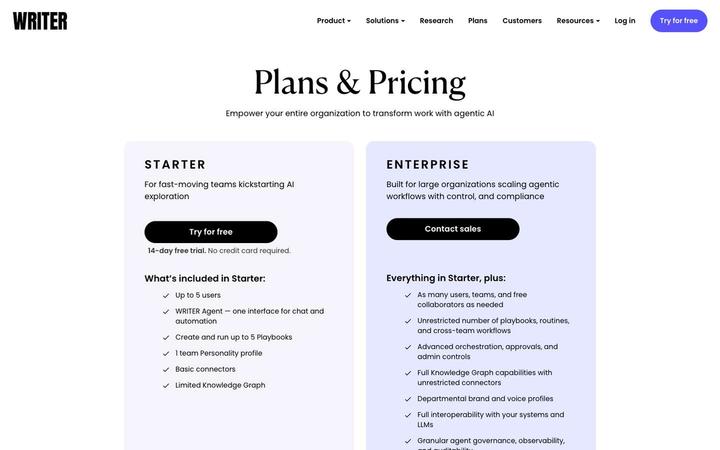
Writer
QuoteWriter sells two plans, Starter for a team of up to five and Enterprise for the whole organization, and presents them through capability: two cards, a long matrix in seven blocks and a FAQ that states the model. Per the FAQ, Starter is 'monthly or annual per-seat plans with fixed credit limits', and Enterprise adds unlimited free users, a Lite seat for new users, and solution packs and services as the account grows.
Zapier
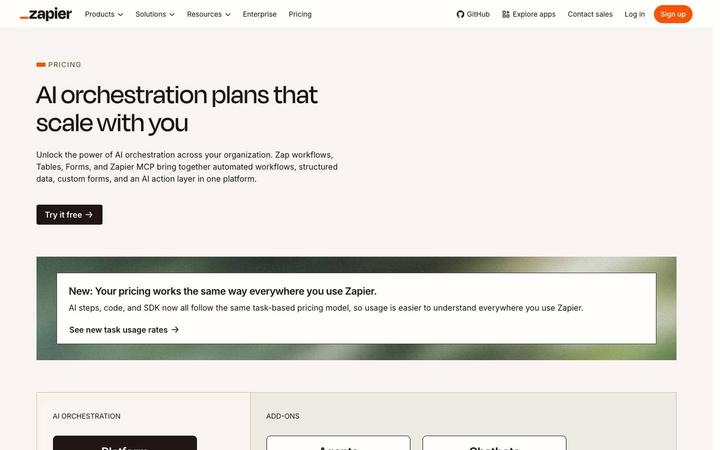
From $19.99/moZapier prices its whole platform on one unit, the task, drawn from a single pool by Zap workflows, AI steps, code, MCP and SDK. A slider from 100 to 2M tasks sits above four plans, Free at '$0 /month', Professional 'Starting from $19.99 /month', Team 'Starting from $69 /month' and Enterprise 'Contact for pricing', and a launch banner announces that AI steps, code and SDK now follow the same task-based model.

Zendesk
$19/agent/moZendesk sells four per-agent plans, from Support Team at $19 to Suite Professional at $115, marked MOST POPULAR, and Suite Enterprise + Copilot through sales, and prints its add-ons at $50, $50 and $83 per agent. Beneath the seat price sits an outcome meter: AI agents come with every plan and bill by the Automated Resolution, a request the AI resolved with no escalation to a human agent.

dbt
$100/user/modbt sells developer seats with a models-built allowance attached, from a free Developer plan to Starter at $100 per user/month and two custom Enterprise tiers. The two products whose cost tracks workload, dbt State and dbt Wizard, sit in their own add-on section under 'No seats, no minimums.', and can be bought even by teams running self-hosted dbt. dbt State introduces a new unit, the Daily Active Target Table, defines it in one sentence and prices it at $0.094.
monday.com
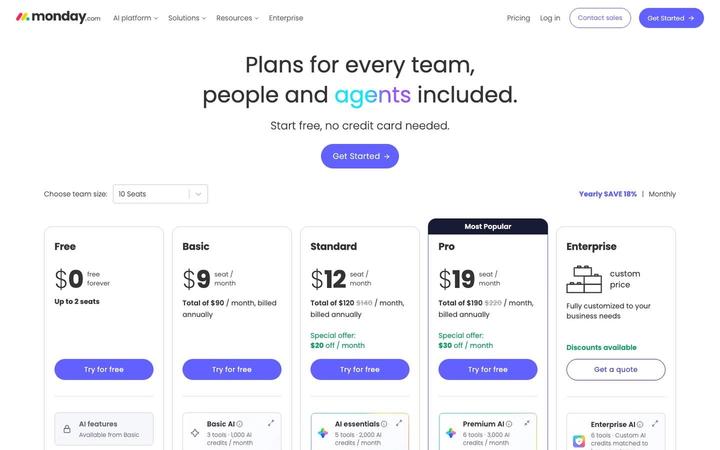
$9/seat/momonday.com prices work management per seat with a pool of AI credits on every paid plan, and the headline says why: 'Plans for every team, people and agents included.' A team-size selector turns each seat price into a monthly total, so Basic at $9 a seat reads 'Total of $90 / month, billed annually' at 10 seats. The same page carries full pricing for monday CRM, monday service and monday dev.

n8n
$20/mon8n prices on one unit, the workflow execution, and states the rule in its second line: 'Pricing based on monthly workflow executions, regardless of complexity.' Users, workflows and integrations are unlimited on every plan, so four tiers from '$20' to 'Contact Sales' separate by execution volume, governance and where n8n runs, Cloud or self-hosted.